
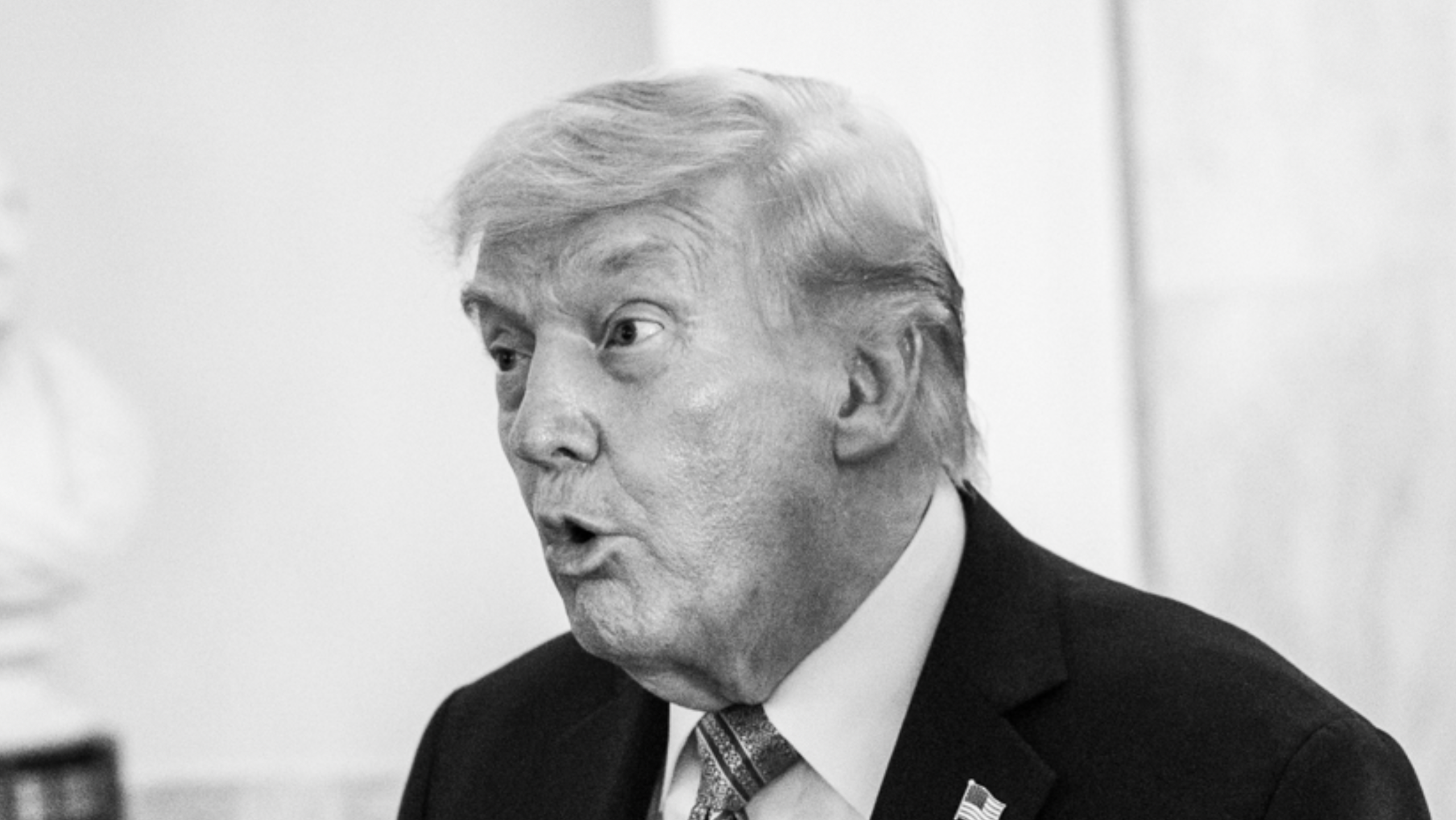
WASHINGTON, May 30, 2026 — President Donald Trump used a sprawling Truth Social post Saturday to declare the American court system “RIGGED” — invoking a federal judge’s decision to block his Kennedy Center renovation as the latest front in what he characterized as an ongoing judicial war against his presidency, one with consequences he said already include a $149 billion tariff defeat and will likely extend to a coming loss on birthright citizenship.
The nearly 600-word post — signed “President DONALD J. TRUMP” — came hours after U.S. District Judge Christopher Cooper issued a sweeping 94-page ruling blocking the administration’s plan to close the Kennedy Center for a two-year overhaul and ordering Trump’s name removed from the building. While the ruling itself centered on arts law and congressional authority, Trump’s response rapidly escalated into a full-scale indictment of the federal judiciary, Democratic Party influence over the courts, and what he called an unaccountable legal system operating against the will of the American people.
The Judge and the Conflict of Interest Allegation
Trump directed much of his fire at Judge Cooper personally — and at Cooper’s wife, attorney Amy Jeffress. Trump described Jeffress as “a Radical Left Democrat” who worked as a federal prosecutor and as a counselor to Obama Attorney General Eric Holder, worked behind the scenes for what Trump called the “January 6th Unselect Committee of Political Hacks and Thugs,” was involved in the representation of former FBI attorney Lisa Page during the Russia investigation and its subsequent settlement, and is currently representing former President Joe Biden in connection with the release of his audio tapes from the special counsel investigation.
Trump also alleged that Jeffress’s law firm represented E. Jean Carroll, whose civil suit against Trump resulted in a judgment he is currently appealing. “Amy is totally wired into the Left System, from her husband down, and it is impossible for me to be treated fairly,” Trump wrote. He called for Cooper to “be brought up on charges for not revealing these facts,” arguing the undisclosed conflicts amounted to a structural corruption of the judicial process.
Cooper is an Obama appointee. The judge’s ruling found that the Kennedy Center’s board had no statutory authority to rename or unilaterally close the congressionally chartered institution. Cooper wrote in his 94-page decision: “Congress gave the Kennedy Center its name, and only Congress can change it.”
The Tariff Ruling — $149 Billion
Trump’s post did not stay confined to the Kennedy Center. He pivoted to a separate federal court ruling — on tariffs — that he said cost the United States $149 billion. “That is why, at a different level, and with different players, our Country lost the TARIFF Case, and is forced to pay back 149 Billion Dollars in money received from people who hate everything we stand for,” Trump wrote. “They are laughing all the way to the Bank at how stupid we are.”
Trump suggested that a single intervention by the Supreme Court could have prevented the tariff loss, writing: “One half sentence clause from the Supreme Court would have saved us this incalculable amount of money!” The reference underscored a recurring theme in Trump’s second term — an executive branch that views itself as embattled by a judicial branch it considers both politically hostile and structurally compromised.
Birthright Citizenship — A Defeat He Says Is Coming
Trump extended his judicial critique further, predicting that the courts would also rule against his administration in the ongoing birthright citizenship litigation. “That is probably why our Country will lose the Birthright Citizenship Case,” Trump wrote, arguing that the United States is unique in maintaining the policy. “No other Country in the World has this — It is totally unaffordable!”
The birthright citizenship executive order — signed in the earliest days of Trump’s second term — has faced sustained legal challenges in multiple federal circuits, with courts repeatedly blocking its implementation. Trump has argued the order is a necessary correction of what he characterizes as a misreading of the Fourteenth Amendment, while opponents contend it violates the Constitution on its face.
The Kennedy Center — And the Decision to Walk Away
The immediate trigger for Trump’s post was Cooper’s ruling blocking the Kennedy Center renovation and ordering the removal of Trump’s name from the building within 20 days. Trump argued the renovation was an urgent structural necessity — describing 65-year-old HVAC systems, deteriorating marble, and steel beams in need of replacement — and said the building posed genuine safety risks to the public. The White House noted that $257 million had been secured by Trump and approved by Congress for the restoration project.
Faced with the injunction, Trump announced he was withdrawing from the project and directing his administration to transfer control of the Kennedy Center back to Congress. “Unless I am free to do what I do better than anyone else, bring this Institution back, physically, financially, and artistically, I have no interest in continuing what could only be a hopeless journey into ‘NEVER NEVER LAND,'” Trump wrote. He warned the building would likely close and “probably never” reopen.
“FIGHT, FIGHT, FIGHT”
Trump closed his post by tying the judicial rulings to the broader political and democratic legitimacy of his presidency — arguing that the American people’s awareness of a rigged system is precisely why he won reelection. “Our Court System is RIGGED, no different than our Political System is RIGGED, and the people of our Country know it, and that is why I got overwhelmingly elected President, in Record Numbers, and will FIGHT, FIGHT, FIGHT!” he wrote.
The escalating rhetoric reflects a pattern in Trump’s second term of treating adverse judicial rulings not merely as legal setbacks but as evidence of a coordinated institutional resistance to his agenda — one he argues validates the mandate he received at the ballot box. The administration is expected to appeal Cooper’s ruling, which stands as a preliminary injunction subject to further review. Rep. Joyce Beatty, D-Ohio, whose lawsuit brought the case, called the ruling “a win for the rule of law and the American people.”