
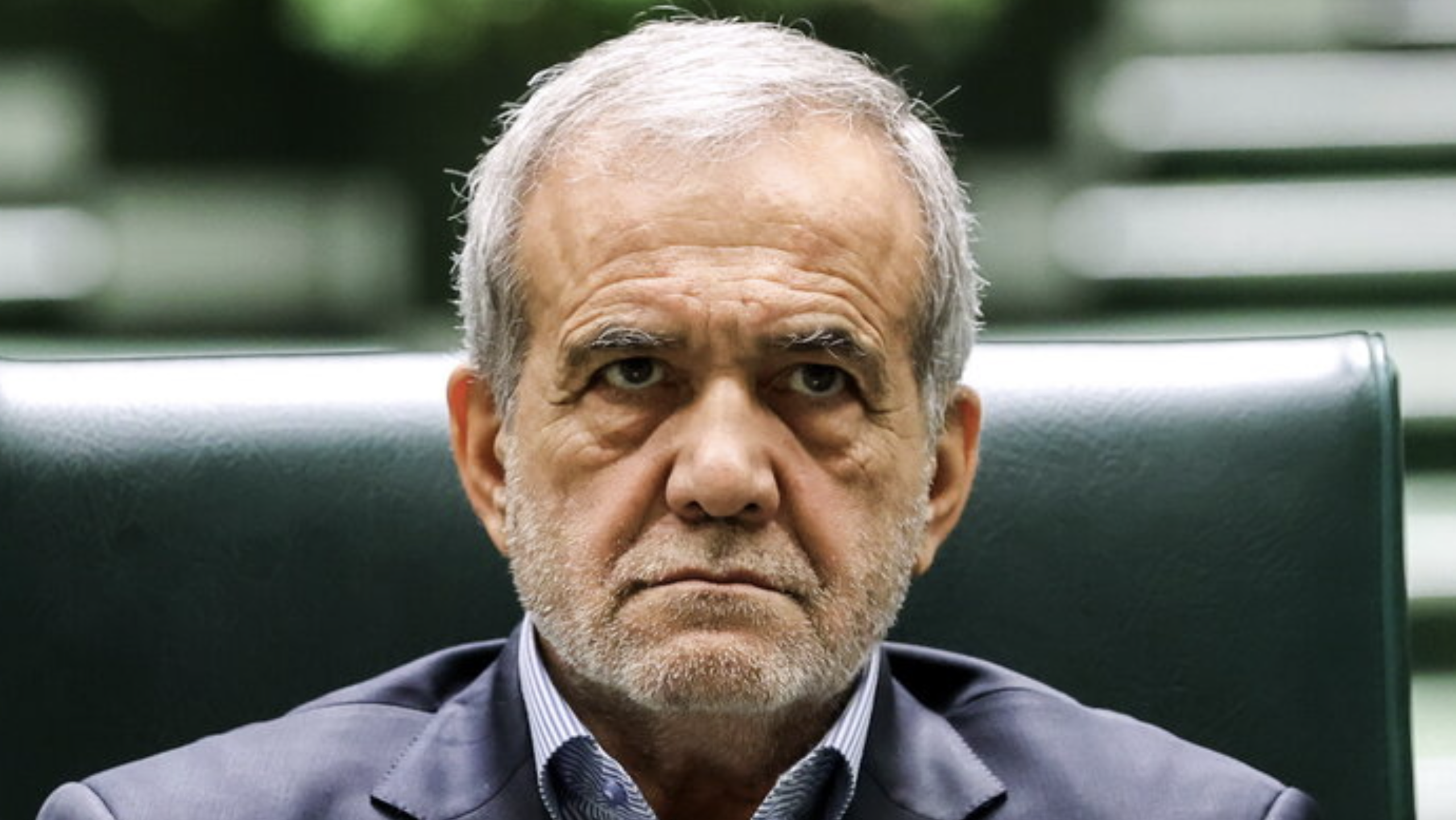
Iranian President Masoud Pezeshkian said Sunday that any potential agreement with the United States would require what he described as a fundamental shift in Washington’s approach, accusing the U.S. government of “totalitarianism” following the collapse of high-level negotiations.
In a post published April 12, Pezeshkian wrote, “If the American government abandons its totalitarianism and respects the rights of the Iranian nation, ways to reach an agreement will certainly be found.” He also praised members of Iran’s negotiating team, adding, “I commend the members of the negotiating team, especially my dear brother Mr. Dr. Qalibaf, and say ‘God gives you strength.’” The reference was to Mohammad Bagher Qalibaf, a senior Iranian figure involved in the talks.
اگر دولت آمریکا دست از تمامیتخواهی بردارد و به حقوق ملت ایران احترام بگذارد حتما راههایی برای دستیابی به توافق پیدا میشود.
— Masoud Pezeshkian (@drpezeshkian) April 12, 2026
به اعضای هیئت مذاکره کننده به ویژه برادر عزیزم آقای دکتر قالیباف خدا قوت میگویم.
“If the American government abandons its totalitarianism and respects the rights of the Iranian nation, ways to reach an agreement will certainly be found. I commend the members of the negotiating team, especially my dear brother Mr. Dr. Qalibaf, and say “God gives you strength.”
The remarks came one day after 21 hours of closed-door negotiations in Islamabad ended without progress. U.S. officials, led by Vice President JD Vance, said the discussions failed because Iran refused to accept core American conditions, particularly requirements tied to abandoning nuclear weapons capabilities. Vance described the U.S. position as both firm and clearly communicated, stating that the Iranians “have chosen not to accept our terms.”
Vance: We have not reached an agreement. They have chosen not to accept our terms. pic.twitter.com/4715qb5oSm
— Acyn (@Acyn) April 12, 2026
According to the U.S. account, the proposal presented during the talks was intended as a final framework, combining limited flexibility on secondary issues with strict, non-negotiable demands on long-term nuclear disarmament. After nearly a full day of negotiations, Vance concluded that no meaningful headway had been made, leaving the outcome unresolved and placing the next move with Tehran.
President Donald Trump reinforced that position in remarks earlier the same day, insisting that any deal must involve total compliance from Iran. “I want everything. I don’t want 90%. I don’t want 95%. I told them I want everything,” Trump said, framing the negotiations as a binary choice for Tehran. He also pointed to recent U.S. military operations that have significantly degraded Iran’s military infrastructure, arguing that the pressure campaign had left the country with limited leverage.
Trump: They haven't left the bargaining table. I predict they come back and they give us everything we want. I want with everything. I don't want 90%, I don't want 95%. They have no cards. 158 ships are at the bottom of the sea, good ones, new. pic.twitter.com/aXOZACoWFS
— Acyn (@Acyn) April 12, 2026
Pezeshkian’s statement signals a sharply different interpretation of the breakdown, placing responsibility on Washington and asserting that respect for Iranian sovereignty remains a prerequisite for any agreement. With both sides publicly reaffirming incompatible positions following the failed talks, the prospect of a near-term diplomatic breakthrough appears increasingly uncertain.