
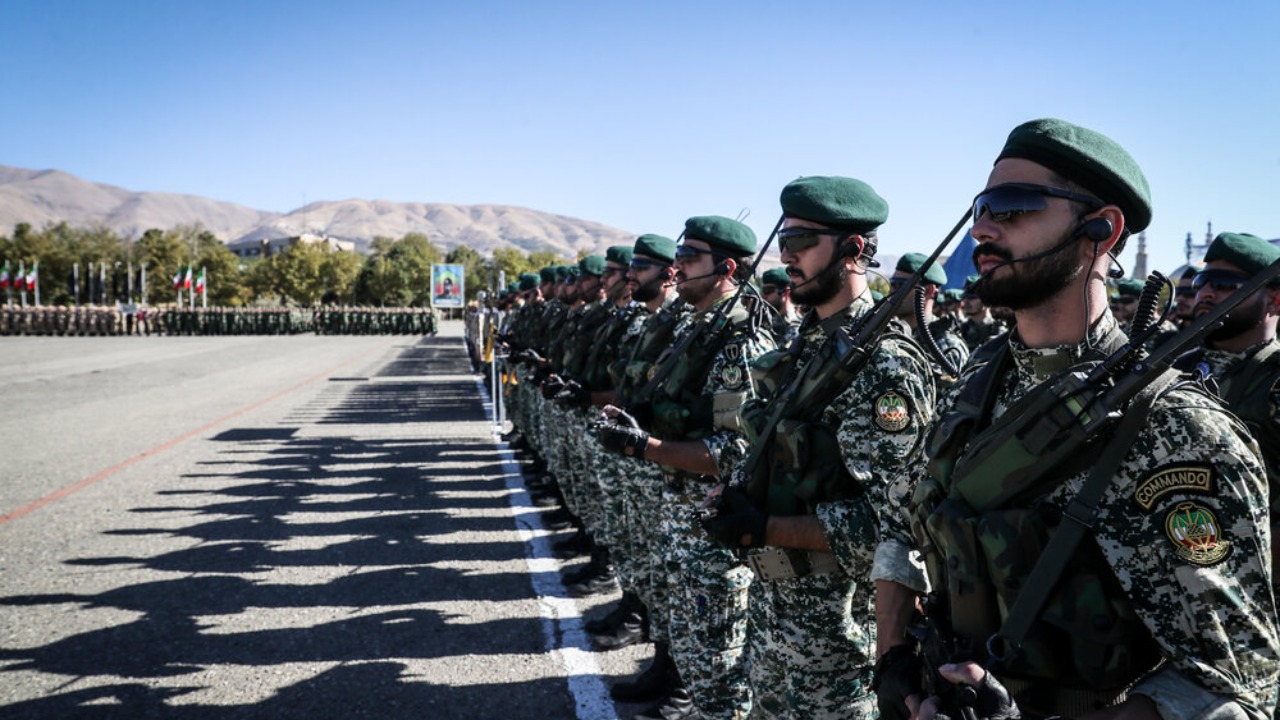
Iran has escalated its confrontation with Europe by formally categorising the armed forces of all European Union member states as terrorist organisations, a direct response to the bloc’s move against the Islamic Revolutionary Guard Corps. The decision turns a long‑running war of words into a legal and diplomatic clash, raising the stakes for military, economic, and political engagement between Tehran and European capitals. It signals that Iran intends to respond in kind to the European Union’s designation of the IRGC.
By extending the terrorism label to entire national militaries, Iranian authorities are not only challenging the European Union’s legal framing of the Islamic Revolutionary Guard Corps but also testing how far both sides are ready to go in weaponising counterterrorism designations. The tit‑for‑tat posture risks hardening a cycle of retaliation that could complicate crisis management across the Middle East and within Europe’s own neighbourhood.
How the EU’s IRGC decision triggered Tehran’s retaliation
Iran’s move is explicitly framed as a mirror image of the European Union’s decision to list the Islamic Revolutionary Guard Corps as a terrorist organisation. Officials in Tehran argue that once the European Union chose to criminalise a core branch of Iran’s security establishment, it effectively opened the door to reciprocal treatment of European militaries. Iranian state media and diplomats have stressed that the designation covers all armies of European Union member states, presenting it as a unified response to what they describe as a collective act by the bloc against the Islamic Revolutionary Guard.
In public messaging, Iranian officials have portrayed the European Union’s step as a political gesture rather than a security necessity, accusing European representatives of seeking to please domestic audiences by targeting the IRGC. One senior figure, referred to in local coverage simply as “The Iranian” official, argued that through the decision against the IRGC, representatives of European peoples had merely sought to posture rather than address real threats, and that this posturing justified treating the armed forces of European Union countries in Iran as terrorists. By casting the exchange as a matter of parity, Tehran is attempting to shift the narrative from one in which it is singled out to one in which both sides are equally implicated in escalating legal confrontation.
Inside Iran’s parliamentary push and domestic signalling
The internal choreography around the decision has been as important as the legal text itself. Iranian lawmakers held a parliamentary session where they passed a bill classifying EU militaries as terrorist groups. During that session, they chanted “Death to America” and “Death to Israel,” tying the European Union’s move against the Guards to a broader Western front and presenting the IRGC as a national symbol under siege rather than a controversial security actor, according to accounts that highlighted the role of the Guards.
Parliamentary leaders have anchored the move in domestic law, presenting it as a measured application of existing statutes rather than an improvised reaction. In remarks during a parliament session, Speaker Mohammad Bagher Ghalibaf cited Article 7 of the Law on Countering the Designati, arguing that European countries’ armed forces are considered terrorist groups once they participate in designating Iranian entities in that way. By invoking the Law on Countering the Designati, Ghalibaf framed the decision as a legal obligation rather than a discretionary choice, reinforcing the idea that Iran is simply applying its own rules to European militaries now that the IRGC has been targeted, a position reflected in detailed coverage of Mohammad Bagher Ghalibaf.
Diplomatic fallout between Tehran and European capitals
Iran summoned all EU ambassadors following the EU’s designation of the IRGC, signaling heightened diplomatic pressure, using the meeting to protest the decision and to signal that European missions would now operate in a more hostile legal environment. The summoning of ambassadors underscored that Iran sees the IRGC designation as a collective act by the European Union, not a series of bilateral disputes, and that it is prepared to treat the bloc’s presence in Tehran accordingly.
Iranian officials have also been explicit about the operational implications of their decision. They have stated that Iran will treat the armies of European Union member states as terrorist groups in practice, not only on paper, a stance that could affect any future encounters between Iranian forces and European military personnel in contested theatres such as the Gulf or Iraq. One statement circulated on social media emphasised that Iran said it will treat the armies of EU member states as “terrorist groups” in retaliation for the EU’s designation of the Islami Revolutionary Guard Corps, highlighting that this is conceived as a direct and proportional response to the Islami designation. Live updates from regional outlets have similarly described Iran as now classing EU militaries as terrorist groups in a tit‑for‑tat move, presenting the shift as part of a broader confrontation with the West.
European pushback, Trump factor, and the risks ahead
European leaders rejected Iran’s framing and legal claims. In Geneva, The EU publicly dismissed Iran’s announcement, stating that it did not recognise the categorisation of European armies as terrorist organisations and insisting that diplomatic engagement would continue despite the rhetoric. Officials stressed that the European Union alone decides which entities it lists and how, signalling that Tehran’s reciprocal designation would not alter the bloc’s internal legal assessments, a position set out in detail in statements from GENEVA. Similar language emerged in Paris, where The European Union reiterated that it rejects Iran’s categorisation of EU armies as terrorist groups, framing Tehran’s move as legally void under European law and part of a broader pattern of escalation by Iran.