

Khabib Nurmagomedov’s training camps have become a kind of whispered legend in mixed martial arts, a place where even world champions admit they are broken down and rebuilt. Former two-division UFC champion Daniel Cormier has described those camps as a standard of intensity that might never be duplicated, a system that strips away ego and exposes whether a fighter truly belongs at the elite level. For those who survive, the payoff is obvious: a conveyor belt of champions shaped by a ruthless blend of structure, pressure and discipline.
From the mountains of Dagestan to the hard rounds at American Kickboxing Academy in California, the blueprint is consistent. Sessions are long, the rules are unforgiving and the hierarchy is clear, with Khabib enforcing a culture where there is “no freedom of speech” when he is the coach and no room for shortcuts. The result is a camp that fighters like Belal Muhammad and Demetrious Johnson describe as humbling, even for athletes who already sit at the top of the sport.
The no‑nonsense rules that define Khabib’s camps
The first thing that stands out in Khabib Nurmagomedov’s camps is not a fancy game plan but a set of hard rules that leave little room for negotiation. Training typically runs two to three times a day, adding up to four to five hours, at least six days a week, with little tolerance for missed sessions or half-speed work. Usman Nurmagomedov and other teammates have described a “no stopping” rule during two-hour blocks, where anyone who slows down or checks out mentally risks being told to leave the gym entirely, because in Khabib’s view rest belongs at home, not on the mats.
That authoritarian edge is not accidental, it is central to how Khabib sees coaching. In a recent message to fans he bluntly stated that there is no freedom of speech when he is in charge, explaining that when his team comes to camp, they come to work, not to negotiate. The tone is set from the top and enforced daily, which is why top level fighters, including UFC world champions, have openly bemoaned the intensity demanded of anyone who walks through the doors of the gym once owned by his father, Abdulmanap Nurmagomedov. The message is simple: if a fighter wants the results associated with Team Khabib, they must accept the rules without complaint.
Brutal drills and the “five fresh men” gauntlet
Inside those rules sits a menu of drills that explains why even hardened professionals describe Khabib’s camps as brutal. One of the signature sessions involves a single fighter backed up against the wall while five fresh partners rotate in, each getting one minute to drag that fighter to the mat. The sequence runs for ten one-minute rounds with only a minute of rest, then shifts to the center of the mat for more wrestling with the same five fresh bodies, piling up fifteen minutes of relentless pressure that simulates the worst-case scenario in a real fight.
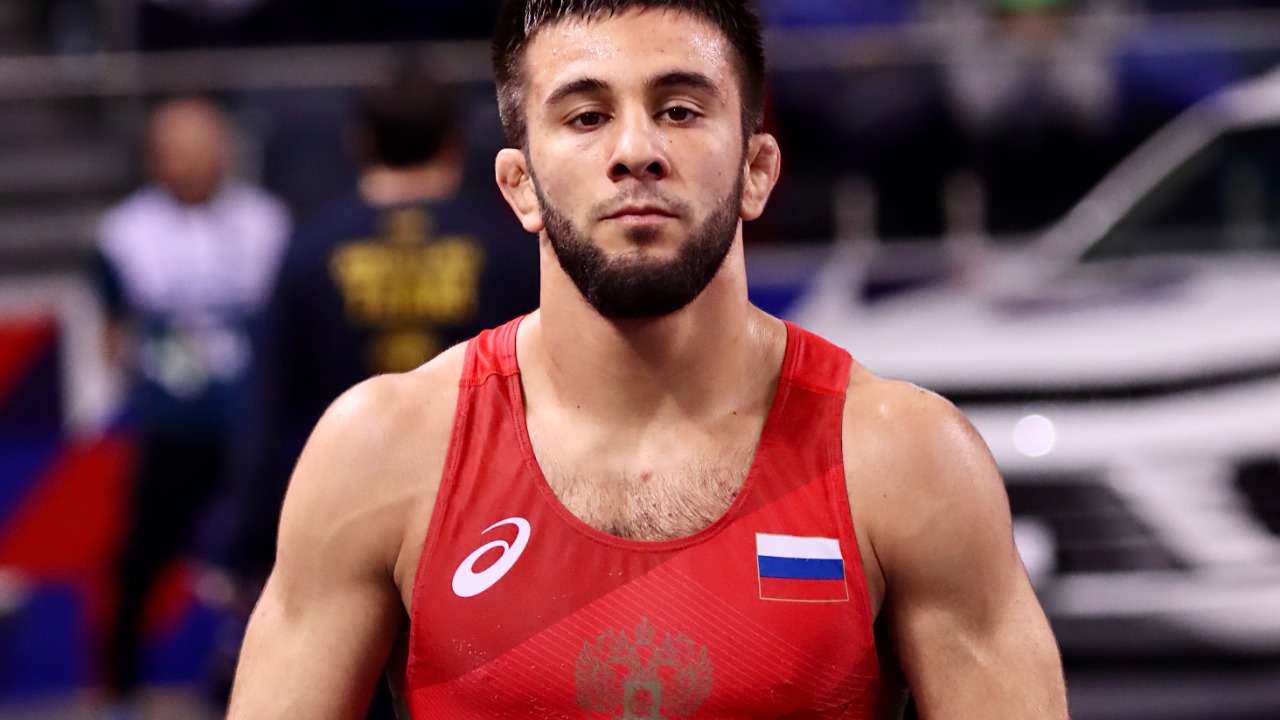
Undefeated prospect Ibragim Ibragimov, a protege of Khabib, has pointed to this kind of work as a key method behind the rise of champions like Islam Makhachev, describing how the constant rotation of fresh partners forces an athlete to solve problems while exhausted. In a detailed breakdown of Khabib’s camps, he outlined how this wall and center gauntlet is designed to mimic the suffocating style that has become the team’s trademark. The drill is not about looking pretty, it is about teaching fighters to keep getting up, keep scrambling and keep making decisions when their lungs are burning and their legs are gone.
Dagestan’s mountains and the science of suffering
Location is another weapon in Khabib’s arsenal. When the team is in Dagestan, camps often shift to the mountains, where thin air and steep terrain turn basic conditioning into a test of will. Video from one widely shared session shows Khabib sprinting intervals and grinding through circuit work in the highlands, with the caption noting that in the mountains of Dagestan he performed sprint intervals, circuit training and other drills that build both endurance and resilience. The soundtrack might be an Eminem and Joyner Lucas type beat titled “Eternity” by Hrithik Mehra, but the real rhythm is the repeated shock to the lungs and legs.
Those conditions are not just about scenery, they are part of a deliberate strategy to harden fighters mentally and physically. Reports on Khabib’s approach describe how his camps are infamous for leaving athletes with “no ego left” after weeks of being pushed to their limits, turning every day into what he calls another Tuesday on the mat rather than a special occasion. One detailed look at his philosophy highlighted a new mantra, framed as “discipline beats class,” and noted that his training camps are infamous precisely because they are designed to make surviving the octagon feel easier than surviving the gym. High altitude runs, punishing circuits and endless rounds of grappling are all tools to make fight night feel like a step down in intensity.
Grappling obsession and the “lack of creativity” critique
At the technical level, Khabib’s camps are unapologetically built around grappling and control. Belal Muhammad’s coach has described the structure as a grappling-centric, pressure-heavy system that constantly drills getting up from bad positions and maintaining top control once a takedown is secured. Under that guidance, Muhammad has put together a nine-fight win streak and positioned himself for a welterweight title shot, a run that has been credited in part to the relentless focus on wrestling and cage pressure that defines Team Khabib’s training camp.
That same focus has drawn criticism from some corners, with detractors accusing the team of a “lack of creativity” because of its heavy emphasis on grinding grappling rather than flashy striking or unorthodox tactics. Yet the results are difficult to argue with, from Khabib’s own 29‑0 record to the rise of Islam Makhachev and other protégés. Undefeated Khabib Nurmagomedov protege Ibragim Ibragimov has defended the system, explaining that the so-called lack of creativity is actually a deliberate choice to master a suffocating style that breaks opponents over time, a method he credits with helping turn Makhachev and others into world champions.
“It humbles you”: how champions experience the grind
For fighters who arrive with belts already on their resumes, the culture shock can be severe. Belal Muhammad, now a UFC welterweight champion, has spoken candidly about how training with Khabib “humbles you,” even when an athlete believes they are already in peak condition. Despite Muhammad having proven himself at the highest level, he admitted that he struggled to cope with the pace and volume demanded in those sessions, describing how the rounds seemed to pile up without mercy as Khabib and his team kept pushing. His account of being humbled in camp has been widely cited as an example of how even champions are pushed to their limits inside that environment.
Daniel Cormier, who shared countless rounds with Khabib at American Kickboxing Academy, has framed those same qualities as the reason the gym became a unique breeding ground for champions. He has praised the environment at AKA, where Khabib’s Dagestani crew blended with established stars, as something that might never be replicated, a perfect storm of talent, coaching and culture. Within that mix, head coach Javier Mendez often plays the “good cop” to Khabib’s “bad cop,” with multiple fighters describing how those who are overwhelmed by the grind sometimes go to Mendez for relief. According to teammates, Mendez will occasionally advise Khabib to ease up on certain individuals, but the core expectation does not change: if a fighter wants to stay in camp, they must accept the suffering as the price of admission.