
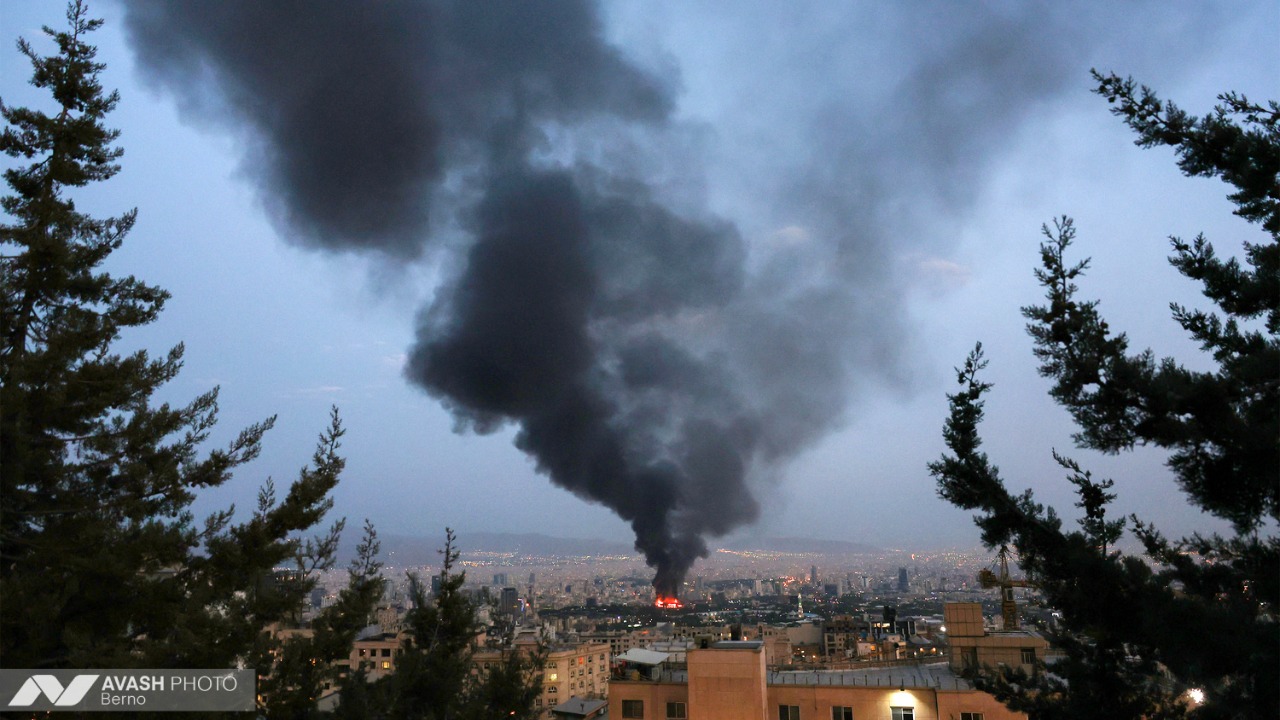
American warships, combat aircraft, and air defenses are converging on the Gulf at a pace that has revived fears of a direct clash with Iran. President Donald Trump insists he would prefer to avoid war, yet his own description of a “massive” force heading toward the region has sharpened questions about whether Washington is preparing limited strikes or a broader campaign. Regional governments, already on edge after months of threats and near misses, are now bracing for the possibility that a miscalculation could ignite a conflict stretching from the Strait of Hormuz to the eastern Mediterranean.
Carrier groups, “big flotilla” and a shifting air picture
The clearest signal of escalation is at sea, where the United States is assembling what President Trump has publicly called a “big flotilla” near Iran. Reporting on the evolving order of battle describes a growing naval presence in the Middle East, including the aircraft carrier USS Abraham Lincoln and its escorts. President Trump has framed this as a precautionary move aimed at deterring Iran, but the very scale of the deployment, which he has also likened to a “massive” armada, inevitably raises the question of whether the ships are being positioned for potential strikes on Iranian targets.
So far, the naval surge has not been matched by an equally dramatic influx of land-based airpower, which complicates efforts to read Washington’s intentions. Analysts tracking open-source imagery note that, at least for now, there does not appear to have been a major increase in U.S. combat aircraft at regional bases, a point underscored by low-resolution satellite pictures cited in low-resolution analysis. That gap between a very visible maritime buildup and a more modest air footprint suggests the White House may be trying to maximize deterrence while preserving flexibility, keeping Iran guessing about whether the carrier group is a bargaining chip or the spearhead of a coming operation.
Trump’s rhetoric, F-15 deployments, and Iran’s warnings
President Trump has chosen to speak about the standoff in unusually vivid terms, even by his own standards, telling audiences that a “big force” is moving toward Iran while insisting he would “rather not see anything happen.” In remarks delivered on the sidelines of the World Economic Forum in Davos, he said the United States is still “watching Iran,” language that both underscores the surveillance and targeting capabilities now focused on Iran and hints at a readiness to act if red lines are crossed. A social media clip amplified those comments, highlighting his reference to a “massive armada” heading to the Gulf and reinforcing the impression that the president wants Tehran to understand the scale of U.S. options.
Behind that rhetoric, the Pentagon has been quietly reinforcing its air posture. Officials have confirmed that additional F-15E Strike Eagle jets are heading back into the theater, with one report detailing how the U.S. Air Force is sending more F-15s to the Middle East as President Trump weighs action against Iran. Another account notes that the 494th Expeditionary Fighter Squadron, which previously destroyed Iranian drones, has returned to the region, with an F-15E Strike Eagle entering the CENTCOM theater on Jan. 18, according to Expeditionary Fighter Squadron reporting. These moves are unfolding as Iranian officials warn that U.S. bases could be targeted if Washington joins Israel’s conflict, with one intelligence assessment stating that Iran is preparing missile strikes on American facilities across the Middle East and threatening to hit the Strait of Hormuz.
Regional bases, allied anxiety and evacuation drills
The geography of this confrontation is defined by a dense network of American installations stretching from Iraq to the Arabian Peninsula, many of them within range of Iranian missiles and drones. U.S. forces operate from key hubs in Kuwait, Qatar, Saudi Arabia, the UAE, and Bahrain, while Turkey hosts NATO infrastructure that could be drawn into any wider confrontation. Iranian officials have seized on this footprint to issue explicit threats, with one warning that U.S. military bases throughout the Middle East could become the next targets if tensions continue to rise. Another report cites Fars Agency as saying that Iran is gearing up to “wipe out” U.S. bases across the Middle East, a stark reminder that any U.S. strike on Iran could trigger a rapid and geographically broad response.
Those threats have already prompted contingency moves. One social media report describes how the United States has begun evacuating some troops from vulnerable locations as President Trump weighs possible strikes, citing Iranian warnings that American facilities could be hit across the Middle East. At the same time, U.S. planners are weighing additional air and missile defenses, with one official saying that more systems are being considered for the one region and stressing that these deployments are meant to be entirely defensive in nature. The result is a tense paradox: Washington is both pulling some personnel back from the front line and reinforcing the shield around those who remain, a pattern that reflects deep concern about Iranian retaliation even as the White House keeps military options on the table.
Deterrence, miscalculation, and the risk of a wider war
U.S. officials insist that the current buildup is designed to prevent war, not start one, yet the logic of deterrence is colliding with the reality of a crowded and volatile theater. One detailed account notes that a U.S. aircraft carrier strike group, accompanied by several destroyers and fighter aircraft, is set to arrive in the Middle East region, with planning carried out with secrecy and precision. Another report describes how the USS Abraham Lincoln has moved from the Asia Pacific toward the Gulf as USS tensions rise, while a separate summary notes that the United States is continuing to build up its presence ahead of a possible attack on USS Abraham Li.