
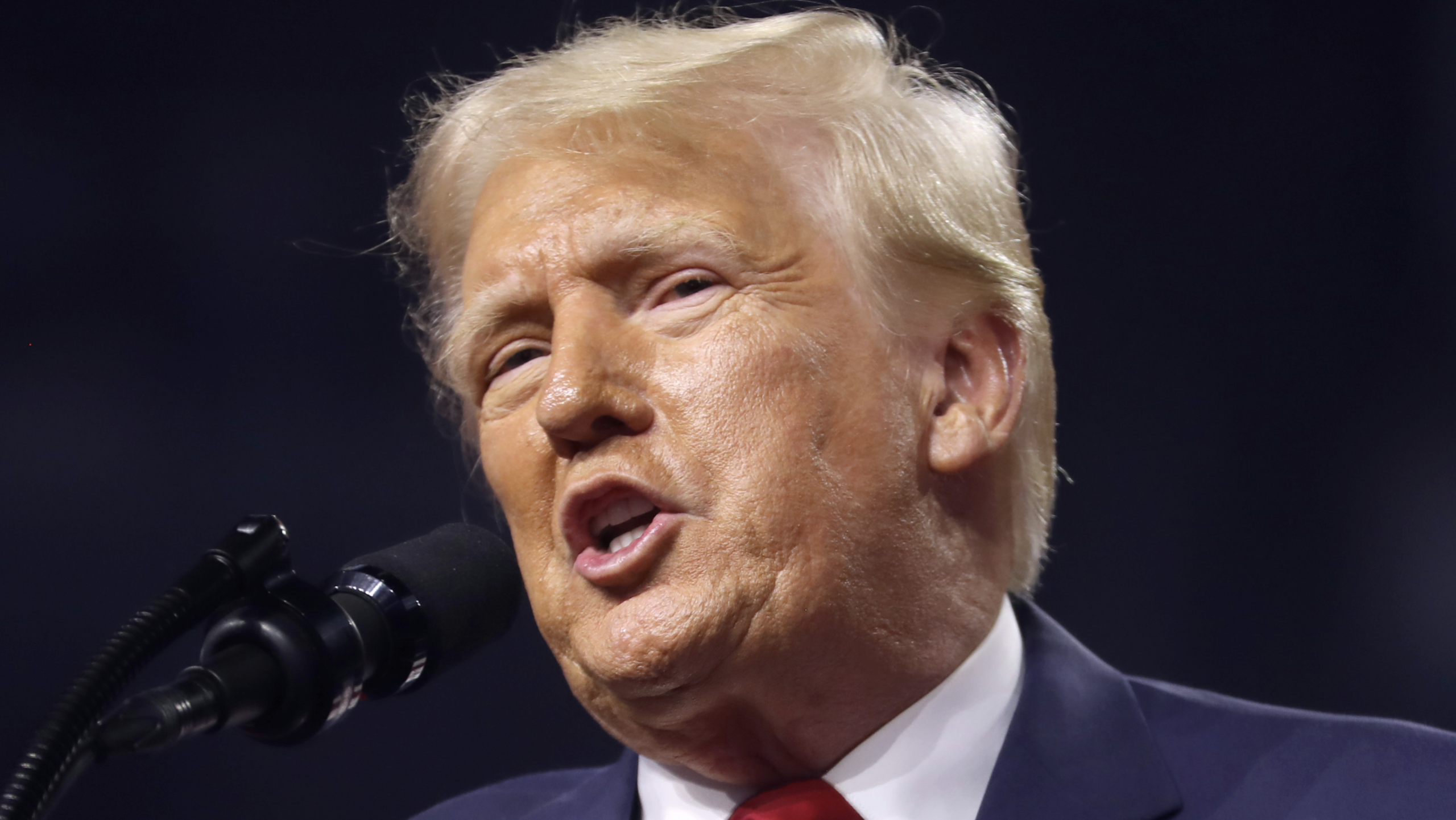
President Donald Trump provided an update on the new White House ballroom project during a press gaggle aboard Air Force One on March 29, 2026, en route to Joint Base Andrews. While displaying architectural renderings, the president highlighted the structure’s design, security features, and construction progress, noting that he was addressing the topic amid an unusually demanding schedule tied to ongoing military operations overseas.
Trump explained his limited availability for such briefings by pointing to pressing national security priorities. “I’m so busy that I don’t have time to do this, because of fighting wars and other things,” he said. “But this is very important because this is going to be with us for a long time and it’s going to be I think it’ll be the greatest ballroom anywhere in the world. It’s highest level. Same height, exact height of not higher, same height as the White House, exactly the same height. And if you look, you have the White House over here. You have this and that’s a duplicate of the wall. So it pays total homage to the White House, which is I think very important.”
Trump on Ballroom: I thought I'd do this now because it's easier. I'm so busy that I don't have time to do this—fighting wars and other things. This is very important. pic.twitter.com/XL2QZPHkfv
— Acyn (@Acyn) March 30, 2026
The ballroom project was first announced by the White House on July 31, 2025, to address a long-standing need for a larger event space on the White House complex. For 150 years, presidents had sought a venue capable of hosting major functions for world leaders without relying on temporary tents. The new facility, approximately 90,000 square feet, will seat 650 guests—more than triple the East Room’s capacity of 200—and will replace the heavily modified East Wing built in 1902.
Trump described the ballroom as architecturally integrated with the White House, featuring the same height, hand-carved Corinthian columns, and bulletproof glass windows thick enough to meet high-level security standards. He noted that the entire structure, including the roof and ceilings, is also drone-proof. Beneath the ballroom, the military is constructing a large underground complex designed to support operations involving drones and other assets, with the ballroom itself serving essentially as a protective cover for that facility.
Construction began in September 2025 under lead architect McCrery Architects, with Clark Construction heading the build and AECOM providing engineering. The project remains ahead of schedule and under budget, funded entirely by Trump and private patriot donors at an estimated $200 million, with no government money involved. Trump emphasized that the ballroom’s design pays tribute to the White House while incorporating modern defensive requirements suited to the current security environment.
The president added that the ballroom will also be capable of accommodating inaugurations and other high-profile national events, ensuring it serves future administrations for generations. He reiterated that the structure’s location and appearance maintain the historic character of the People’s House while meeting practical needs that previous presidents had identified but never resolved.