

The Zumwalt-class destroyer arrived as a promise to rewrite the rules of surface warfare, marrying stealth, electric power and automation in a hull that looked more like a sci-fi sketch than a traditional warship. In practice, it became a case study in how radical innovation can both propel naval design forward and expose the risks of betting on unproven technology at full scale. Its legacy now sits at the center of a debate over whether the future fleet should chase revolution or refine what already works.
As the three-ship class shifts from troubled prototype to hypersonic missile carrier, the story of Zumwalt is less about a single vessel and more about how navies design, buy and operate complex platforms. The same features that made it a “stealth warship of the future” also drove costs, forced painful cancellations and left the Navy rethinking how far it should push the envelope on the next generation of destroyers.
From bold concept to three-ship experiment
From the outset, the Zumwalt-class was conceived as a leap ahead rather than an incremental upgrade, with the United States Navy framing it as a next-generation surface combatant built around land attack, stealth and advanced power. The program was originally scoped for a fleet of 32 hulls, a number that signaled confidence that this radical design would become the backbone of future surface forces. Instead, spiraling costs and technical risk cut that ambition down to just three ships, turning what was meant to be a workhorse class into a limited technology demonstrator.
Those three vessels, led by the ship Named the Zumwalt, were positioned as a showcase of how the Zumwalt-class destroyer could change the economics and survivability of surface warfare. The Zumwalt and its sister ships were classed as guided-missile destroyers, but their size, power and mission profile pushed them closer to small cruisers, with the Navy emphasizing that they would be cheaper to operate than comparable warships thanks to automation and integrated systems. That shift from mass-production workhorse to boutique platform is central to understanding how the class reshaped expectations about what a “destroyer” can be, and what it costs to build one.
Stealth, power and automation: the “better” side of the ledger
The most visible way Zumwalt changed ship design is its stealth-first profile, which abandoned the flared hulls and cluttered superstructures of earlier destroyers in favor of a smooth, angular form. The tumblehome bow and faceted deckhouse were engineered to slash radar returns, helping The Zumwalt present a signature closer to a small vessel than a 600-foot warship, a concept that has influenced how designers think about shaping future combatants. That same stealth ethos extended to the ship’s low acoustic profile and integrated sensors, reinforcing its reputation as a Zumwalt that could operate closer to contested shores than legacy designs.
Under the skin, the class pushed naval engineering toward all-electric architectures that are now becoming standard talking points for future fleets. Its Integrated Power System was sized to generate far more electricity than the ship’s initial combat systems required, creating headroom for high-energy weapons and advanced sensors that had not yet matured. Analysts have repeatedly pointed to this oversized power plant as a template for how navies can “future proof” hulls, and the Zumwalt’s role as a Breaking Down the Zumwalt platform for the Conventional Prompt Strike system underscores how that early bet on power is now paying off as hypersonic weapons move from concept to deployment.
A pioneering prototype that reset expectations
Long before the first hull went to sea, planners described the Zumwalt class as a Pioneering effort that would function as a working prototype for a new generation of surface combatants. That framing proved accurate in ways both positive and painful. On the positive side, the ship’s role as a prototype allowed engineers to validate integrated electric drive, advanced automation and novel hull forms at full scale, generating data that is now feeding directly into follow-on destroyer and frigate designs. The Zumwalt’s Total Ship Computing Environment, known as The TSCE, tied combat systems, navigation and machinery control into a single digital backbone, a sailor-centric interface that The TSCE developer says allows the ship to run more effectively and efficiently.
At the same time, the class forced the Navy to confront the limits of how much novelty can be packed into a single hull without overwhelming budgets and schedules. The U.S. Navy’s own early descriptions, which labeled the ships as Zumwalt-Class Destroyers and highlighted their role in honoring Chief of Naval Operations Admiral Elmo R. Zumwal, set expectations that this would be a flagship program rather than a niche experiment. As the realities of cost and complexity set in, the service had to reframe the class as a technology pathfinder, a shift that has shaped how planners now talk about “spiral development” and risk reduction for future Named the Zumwalt-style projects.
Hull form, handling and the “battleship problem”
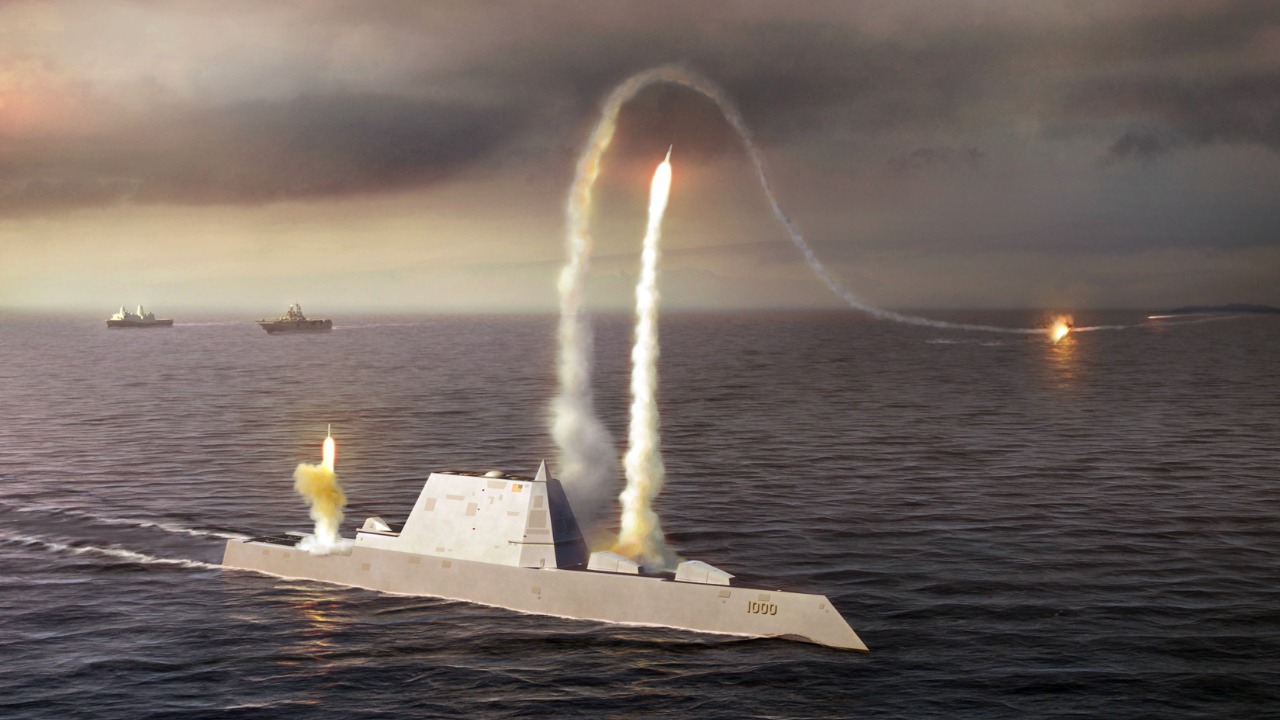
If stealth and power represent the upside of Zumwalt’s influence, its hull form and handling quirks illustrate the tradeoffs. The tumblehome wave-piercing hull that helps cut through seas and shrink radar signature also behaves differently from the flared bows of Arleigh Burke-class destroyers, particularly in heavy weather and close-quarters maneuvering. Shiphandlers have documented how the bow’s tendency to dig into waves and the ship’s unique underwater shape demand careful attention to speed, rudder and thruster use, with Shiphandlers emphasizing that the design produces an extended roll period that feels unfamiliar to crews trained on more conventional hulls.
Critics have gone further, arguing that the tumblehome Wave-piercing Hull created a Class Destroyer Problem Is Embarrassing for the Navy by raising questions about stability and survivability in extreme conditions. One detailed assessment of the Zumwalt-class destroyer, which highlighted the Image Credit and Raytheon association, warned that the hull’s inward-sloping sides could increase the risk of capsizing if the ship took on water and rolled over, a concern that has fed into broader debates about whether the class tried to do too much at once. That same critique, which also examined stop locations and propeller size, has become a touchstone for designers weighing how far to push unconventional forms on future Navy combatants.
Advanced Gun System failure and the cost of overreach
No single feature better captures the downside of Zumwalt’s ambition than the Advanced Gun System, the twin 155 mm mounts that once defined the ship’s land-attack mission. The guns were designed to fire precision-guided shells at extreme range, turning the destroyer into a kind of modern artillery platform for supporting troops ashore. In practice, the bespoke ammunition proved so expensive that the Navy canceled procurement, leaving the AGS without affordable rounds and effectively stripping the class of its original main battery. The Defense Post has described how these canceled weapons left the AGS as a stranded investment and turned the ship into a cautionary tale about Dec-era leap-ahead defense projects.
The failure of the gun system fed directly into what some analysts call The Zumwalt Class The Navy Failed Century Battleship problem, a reference to the way the ships were initially framed as 21st century successors to big-gun capital ships. Instead of becoming the centerpiece of naval gunfire support, the class found itself without a clear mission, prompting critics to argue that the Navy had built a stealth battleship without a viable main armament. That critique has shaped how planners now approach requirements for next-generation destroyers, with more emphasis on flexible vertical launch cells and less on single-purpose systems that can be rendered obsolete by cost or technology shifts, a dynamic captured in assessments of The Zumwalt and its battleship problem.
Rebooted around hypersonics and the future of naval design
Rather than retire the class as an expensive misstep, the Navy has chosen to reboot the Zumwalt hulls around hypersonic strike, effectively turning a troubled gun platform into a testbed for the next era of long-range missiles. The US Navy’s troubled Zumwalt-class destroyers are now being refitted to carry the Conventional Prompt Strik system, a hypersonic weapon intended to hit distant targets at extreme speed and range. That shift, described as a hypersonic plan to save the stealth Zumwalt-class destroyers, reflects a broader strategic pivot toward deterring peer competitors like China in the 21st century by leveraging the ships’ power and volume for cutting-edge payloads, as outlined in analyses of The US Navy and its hypersonic ambitions.
The practical expression of that reboot is already visible in the yard. The trio of ships were designed around twin 155 mm guns that would launch guided rounds to strike land targets, but the first hull has now been cut open and reconfigured to accept large hypersonic missile tubes, making it the first U.S. warship fitted for such weapons. That transformation, documented as the moment when the first U.S. warship fitted for hypersonic missiles returned to the water, underscores how the class is being repurposed from failed gun platform to long-range strike asset, a shift that could influence how future destroyers balance gun systems, missiles and modular payloads, as seen in reporting on The trio of ships and their evolving role.
What Zumwalt means for the next generation of warships
As navies digest the lessons of Zumwalt, one theme stands out: radical integration of power, computing and stealth is no longer optional, but the path to get there must be more disciplined. The Zumwalt’s digital backbone, embodied in The TSCE and its Electron-centric automation, showed how a smaller crew can manage a larger, more complex ship, a concept that is now being woven into new frigate and destroyer programs. At the same time, the Class Destroyer Problem Is Embarrassing narrative has become a warning label about overloading a single platform with too many first-of-kind systems, a point underscored in follow-on critiques that revisit the Image Credit and Raytheon lineage of the design while dissecting its Class Destroyer Problem Is Embarrassing label.
Looking ahead, analysts expect that elements pioneered on Zumwalt, from integrated electric drive to AI-enabled combat systems, will quietly define how warships of the future will be built, even as navies avoid repeating its most painful missteps. As technologies like artificial intelligence, alternative propulsion and directed-energy weaponry advance, the Zumwalt’s combination of stealth shaping, oversized power and digital integration is likely to be seen less as an outlier and more as an early, imperfect prototype of the standard surface combatant of the 2030s and 2040s. In that sense, the class has already changed ship design for better and worse, forcing a recalibration of how far to push innovation on a single hull while ensuring that the next wave of destroyers will quietly carry its DNA, as suggested by forward-looking assessments of Zumwalt and the warships that will follow it.