
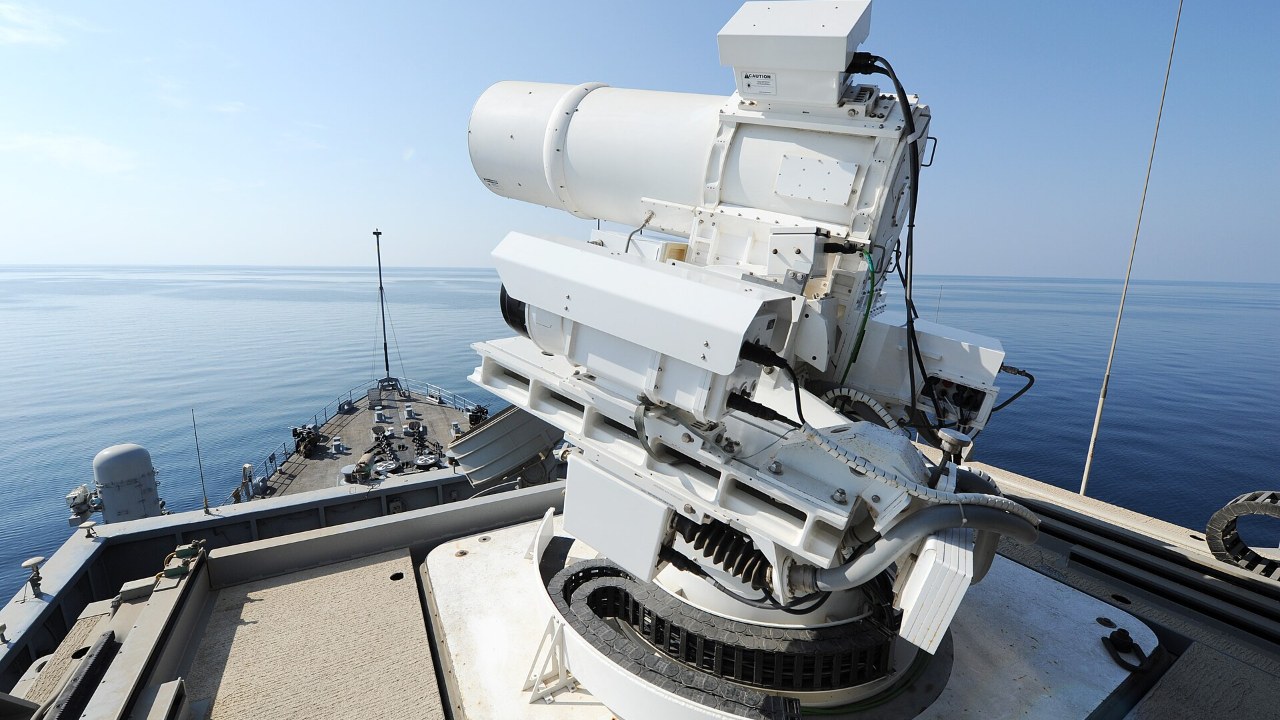
By the Navy’s own figure, each shot cost less than a dollar. In the fall of 2014, the Laser Weapon System, known as LaWS, operated aboard USS Ponce (AFSB[I] 15) in the Persian Gulf. During that time it hit targets mounted on a speeding small boat and brought down a ScanEagle unmanned aircraft.
The Ponce demonstrations ran from September to November 2014. The Office of Naval Research reported them publicly on Dec. 10, 2014. The deployment put a directed-energy weapon to work on a ship at sea, alongside the defenses the ship already carried.
The figures come from the Office of Naval Research release dated Dec. 10, 2014, written by David Smalley. It says the system “was for the first time successfully deployed and operated aboard a naval vessel in the Persian Gulf.” Per the release, LaWS “hit targets mounted aboard a speeding oncoming small boat,” shot down a ScanEagle UAV and destroyed other moving targets at sea.
Why a laser costs less than a dollar a shot
The cost figure comes from Rear Adm. Matthew L. Klunder, then chief of naval research, in the ONR release:
“At less than a dollar per shot, there’s no question about the value LaWS provides.”
The release explains the economics. “Lasers run on electricity and can be fired as long as there is power,” it says, so the weapon does not depend on propellant or gunpowder-based ordnance.
A Naval Sea Systems Command article from Dec. 11, 2014 made the same comparison. It set the under-a-dollar shot against missiles that cost millions of dollars. Klunder was quoted there as well: “Laser weapons are powerful, affordable and will play a vital role in the future of naval combat operations.”
What the crew reported from the Gulf
Per ONR, sailors on Ponce worked with LaWS daily. They “reported the weapon performed flawlessly, including in adverse weather conditions of high winds,” along with heat and humidity. The release says the system “exceeded expectations for both reliability and maintainability” and worked in concert with the ship’s existing defense systems.
ONR described the weapon as scalable. It can produce “non-lethal measures such as optical ‘dazzling’ and disabling, to lethal destruction if necessary.” The release also noted that the weapon “is operated by a video-game like controller.”
USNI News, reporting on Dec. 10, 2014, said the Navy had declared the laser an operational asset. U.S. Central Command had given Ponce’s commanding officer permission to use it to defend the ship. “The captain of that ship has all of the authorities necessary,” Klunder told USNI News. The same report put the research and development cost at $40 million from ONR and Naval Sea Systems Command.
A demonstrator, built by a Navy team
LaWS was a demonstrator, not a production weapon. The NAVSEA article lists the team behind it: ONR, Naval Sea Systems Command, the Naval Research Laboratory, Naval Surface Warfare Center Dahlgren Division and industry partners.
NAVSEA’s account traces the path to Ponce in three steps. In 2011, a laser fired from a destroyer defeated multiple small-boat threats. In 2012, LaWS downed several unmanned aircraft during naval exercises. In 2014, the system went to sea on Ponce.
ONR said the Gulf demonstrations were meant to guide what came after. Data from Ponce would feed its Solid-State Laser-Technology Maturation program. The release says that program aims to develop “cost-effective, combat-ready laser prototypes” for ships such as guided-missile destroyers and the Littoral Combat Ship, with installation targeted for the early 2020s.
The Ponce record stands as ONR filed it on Dec. 10, 2014: September to November in the Persian Gulf, a small boat hit, a ScanEagle brought down, and each shot costing less than a dollar.
Top image: The Laser Weapon System aboard USS Ponce, Nov. 17, 2014. Image Credit: U.S. Navy photo by John F. Williams — Public domain / Wikimedia Commons
This article was produced with the assistance of AI and reviewed by Combat Rated editors prior to publication.