
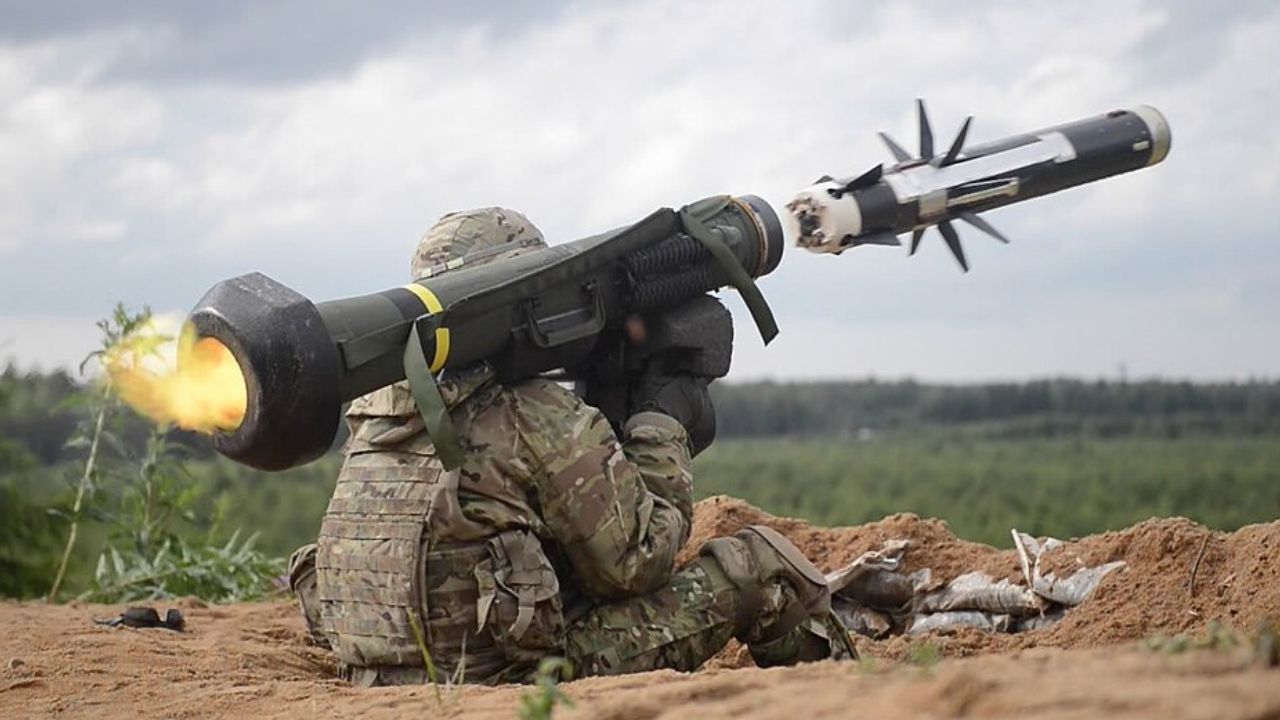
The FGM-148 Javelin was built to solve a specific problem: give U.S. infantry a man-portable, fire-and-forget anti-tank guided missile (ATGM) that could counter armored threats without a large crew, a bulky launcher, or continuous operator guidance. That requirement was shaped by Cold War thinking about massed armor and fast-moving ground combat. The Javelin now operates in a different environment—one defined by persistent surveillance, drones, electronic warfare (EW), dispersed small units, and a wider mix of targets than “main battle tank at range.”
Its evolution has been less about a single, sweeping redesign and more about sustained refinement—updates to seekers and software, improvements to usability and training burden, and adaptation in how units employ the system within modern combined arms. The weapon remains associated with the Javelin Joint Venture between Raytheon and Lockheed Martin. It also remains central to the U.S. Army and U.S. Marine Corps, while being widely fielded by NATO and other allied operators. In parallel, recent high-profile wartime use and resupply—often discussed in Ukraine-related coverage—has drawn attention not only to performance, but to production capacity, stockpiles, and how quickly munitions can be consumed in sustained fighting.
From Cold War anti-armor mission to modern small-unit lethality
Javelin’s core value proposition still holds: it enables a small team to engage armored vehicles and then relocate, rather than remaining exposed to guide the missile throughout the flight. On a battlefield where detection can be rapid and counterfire can follow quickly, reducing time in position is a practical advantage.
The system’s top-attack concept remains central to how infantry think about engaging armored vehicles, especially given how many platforms concentrate protection in certain areas. But it is not a guaranteed answer in every engagement. Results depend on target aspect, battlefield conditions, countermeasures, and the tactical situation—particularly whether the firing team can reach a viable position and whether the target is supported by infantry, EW, or active defenses.
What “evolution” looks like: seeker/software updates, broader target demands, and usability
For most guided munitions, relevance is maintained through incremental improvements rather than constant wholesale replacement. For Javelin, that generally means updates that improve how the missile acquires and tracks targets in real-world conditions. Without relying on specific performance figures, the trajectory is clear: better consistency, improved discrimination in clutter, and software-driven refinements that help the system remain useful as the battlefield changes.
Another pressure point is the target mix infantry face. While Javelin is fundamentally an anti-armor system, modern conflicts routinely present fortified positions, fieldworks, and other point targets where a precision, man-portable munition can be valuable. This does not turn Javelin into a universal solution; it reflects the reality that small units rarely get a “pure tank fight” on demand.
Usability and training are part of the evolution as well. Fire-and-forget reduces the operator workload compared to systems that require continuous guidance, but competent employment still hinges on crew drills, identification, and discipline about when not to shoot. For NATO-style forces—and in situations where weapons may be provided to partners on short timelines—standard procedures and manageable training requirements become operational advantages, not secondary details.
Combat lessons: drones, EW, and the shrinking window to shoot and move
Drones have become a near-constant factor in many operational environments, used for reconnaissance, targeting support, and battle damage assessment. That changes how Javelin teams survive. Concealment, movement discipline, and rapid displacement after a shot matter even more when unmanned systems can search likely firing areas and help cue indirect fire or other responses.
EW adds friction across the engagement cycle. Javelin’s model reduces the need for an operator to interact with the missile after launch, but EW can still affect communications, coordination, and the ability to integrate with supporting arms. In practice, that means the system’s battlefield value is increasingly tied to how well units operate under degraded conditions, not just to missile performance in isolation.
Defensive countermeasures also shape employment. Smoke, decoys, and increasingly sophisticated protective suites can complicate target acquisition or engagement timing. The growing visibility of active protection systems (APS) in modern force design reinforces a basic point: the offense-defense competition is ongoing. It is more responsible to frame the issue as an accelerating cycle of adaptation—through both technology and tactics—than to imply definitive outcomes against any specific defensive system without authoritative test data.
Why it matters strategically: deterrence and the infantry-armor balance
Portable ATGMs like Javelin change the risk calculus for armored forces by increasing the number of small units that can credibly threaten armored vehicles. That complicates maneuver planning and increases the demand for reconnaissance, suppression, and close coordination between armor and supporting infantry. In deterrence planning, the implication is straightforward: the more lethal and survivable defending infantry becomes, the higher the expected cost of an armored thrust.
This helps explain why Javelin’s relevance extends beyond U.S. service use to NATO and other allied operators. Common systems support interoperability in training, sustainment, and logistics. The attention Javelin has received in Ukraine-related discussion also highlights a separate strategic reality: in a major war, stockpiles and replenishment can matter as much as specifications.
Industrial base reality: production capacity, stockpiles, and readiness tradeoffs
Javelin’s evolution is also industrial. The Javelin Joint Venture (Raytheon and Lockheed Martin) anchors a supply chain that must meet routine training demand, fielding needs, and replenishment after transfers to partners. Public debate about depletion and backfilling points to a constraint that applies to any widely used munition: demand can outpace production for extended periods, and “combat-proven” can also mean “consumed quickly.”
That scarcity drives readiness tradeoffs. Militaries must balance training use against conservation, and they must decide what to allocate forward versus what to hold for contingency plans. Cost pressures factor into those choices, but discussing unit prices without a credible reference can mislead; the more durable point is that manufacturing capacity and component availability can be decisive in how much capability is actually on hand.
There is also a policy tension in the background: continue upgrading a proven workhorse versus shifting resources toward next-generation anti-armor concepts. The pattern of continued refinement suggests decision-makers still view Javelin as a relevant baseline capability, even as the broader trend—more sensors, more countermeasures, more drone-enabled targeting—keeps raising the bar for survivability and effectiveness.
How Javelin fits among peers: different tools for different problems
Javelin is frequently discussed alongside other guided anti-armor weapons such as NLAW, TOW, Spike, and Kornet because each reflects different tradeoffs in guidance method, portability, engagement profile, and how much exposure an operator accepts. For commanders and acquisition planners, “best” is usually situational: terrain, expected targets, training time, and how the weapon fits into doctrine and supporting fires.
Javelin’s niche remains strong where man-portable fire-and-forget capability is prioritized and where teams expect intense counterfire pressure. Even so, modern anti-armor defense works best as a layered approach—mines, artillery, drones, direct fire, and ATGMs combined—rather than betting on any single system to carry the fight.
What comes next: staying relevant in a faster adaptation cycle
The drivers behind continued Javelin evolution are clear even without forecasting specific future configurations: improved robustness against countermeasures, smoother interoperability across allied forces, and an industrial posture that can sustain higher rates of consumption if required. The weapon’s basic advantage—portable precision with reduced post-launch exposure—still aligns with how infantry must fight in a surveillance-heavy environment.
The larger lesson is that Javelin’s story is now as much about adaptation as it is about an iconic capability. As armored forces integrate APS, drones, and tighter coordination with supporting fires, infantry anti-armor teams must respond with disciplined signature management, sound tactics, and systems that continue to receive meaningful upgrades. In that sense, Javelin offers a case study in how a Cold War requirement can remain relevant—provided technology, training, and production capacity evolve alongside the battlefield.