
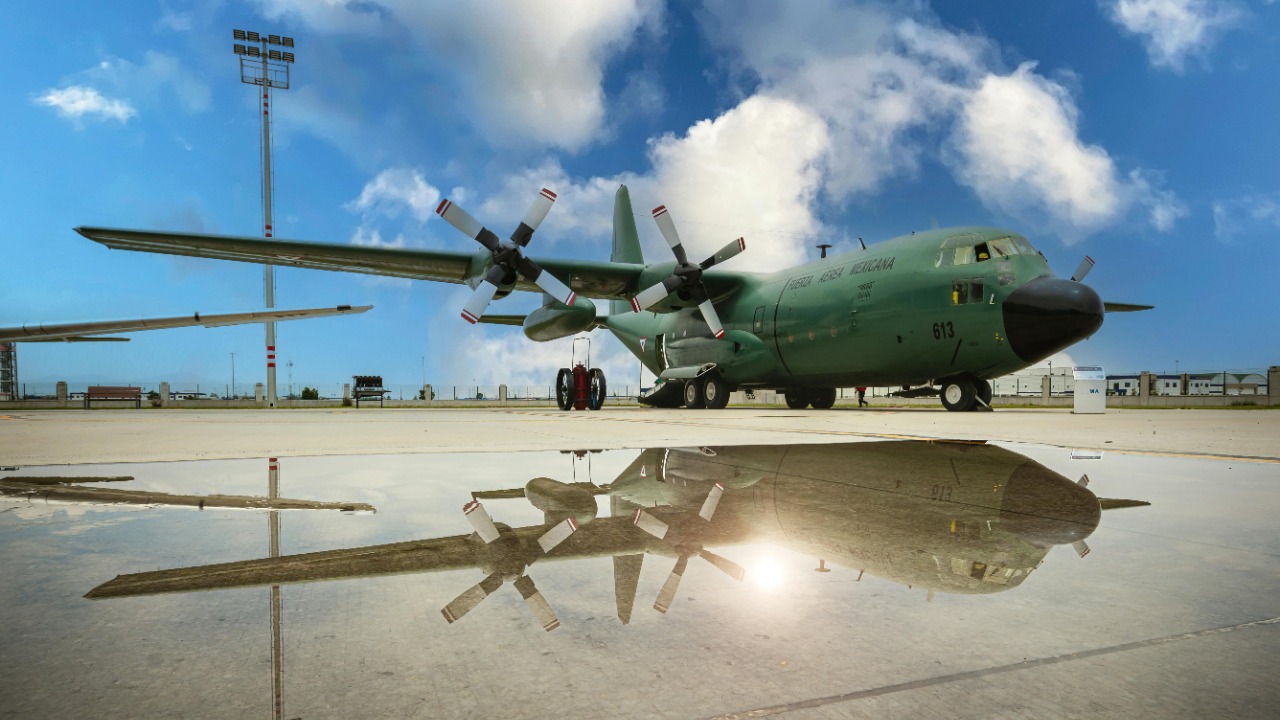
The C-130 Hercules did not become aviation’s benchmark airlifter by accident. It earned that status through a mix of rugged engineering, relentless upgrades and a mission record that stretches from polar ice to frontline dirt strips. Seven decades after its first flight, it remains the aircraft commanders turn to when reliability is non‑negotiable.
Designed to haul troops and cargo into places other transports could not reach, the Hercules evolved into a family of aircraft that can refuel fighters, hunt storms, support special operations and fight wildfires, often on the same airframe over a long service life. That breadth of roles, combined with a reputation for surviving harsh conditions and coming back for more, explains how it became the most trusted airlifter of its era.
Born from a demanding brief and a rugged design philosophy
The Hercules story begins with a demanding requirement for a transport that could operate from short, rough strips, carry heavy loads and still protect its crew. Early design work focused on a high wing that kept engines and propellers clear of debris and a boxy fuselage with a rear loading ramp that allowed vehicles and pallets to roll straight on and off. That combination of high‑wing layout and rear ramp created a template for tactical airlift that competitors have struggled to match, and it remains central to the aircraft’s ability to deliver cargo quickly in austere environments, as reflected in the detailed history of the Hercules.
From the outset, the aircraft was expected to perform precision tasks in hostile conditions, including slowing to 125 k for paratroop drops and continuing to fly even if one engine failed. That requirement for low‑speed control and survivability drove choices like a broad wing, powerful turboprops and robust landing gear sized for unprepared fields. The same design that could creep along at 125 k over a drop zone also had to land in tight spaces and absorb repeated hard touchdowns, a balance that the original engineers captured and that later generations preserved, as chronicled in the development story of What the aircraft could do.
From first flight to global workhorse
Once the prototype proved the concept, the Hercules quickly transitioned from experiment to indispensable tool. Since its first flight in 1954, the platform has been everywhere and done just about anything, with Aircrews flying it to both poles and into combat zones that lacked paved runways. That global reach, documented in the long operational record that begins with the simple phrase Since, turned the aircraft into a familiar silhouette at remote airstrips and major hubs alike.
That early success was not just about brute strength. The cockpit featured a sweeping array of 23 windows that gave crews exceptional visibility for low‑level flying, short‑field approaches and formation work. The design team at Lockheed built the Hercules with plenty of “trunk” space and a focus on crew awareness, a combination that allowed pilots to maneuver confidently in tight valleys and crowded airfields. The narrative that begins with Which captures how those choices made the aircraft more than just a flying truck and set the stage for its later versatility.
Continuous evolution that kept reliability ahead of the curve
Reliability on the flight line is rarely static, and the Hercules maintained its edge by evolving through successive variants rather than standing still. Following rigorous testing and evaluation, the C‑130A entered service with the USAF in the 1950s, and that initial model soon gave way to C‑130B and C‑130E versions that added fuel capacity, range and enhanced operational capabilities. Those incremental steps, described in detail under the heading that begins with Jun, show how the airframe absorbed new technology without sacrificing the rugged traits that made it valuable.
Later generations pushed that modernization further with more efficient engines, composite six‑bladed propellers and glass cockpits that replaced analog dials with digital displays. These upgrades improved fuel economy, reduced noise and cut crew workload, while integrated avionics simplified maintenance and diagnostics. The result was an aircraft that could stay on station longer, launch more reliably and return to service faster after each mission, reinforcing its reputation as a dependable workhorse rather than a museum piece. That pattern of Enhancements and smart evaluation kept the Hercules aligned with modern concepts like Agile Combat Employment while preserving its core strengths.
Unmatched versatility across 70 variants and countless missions
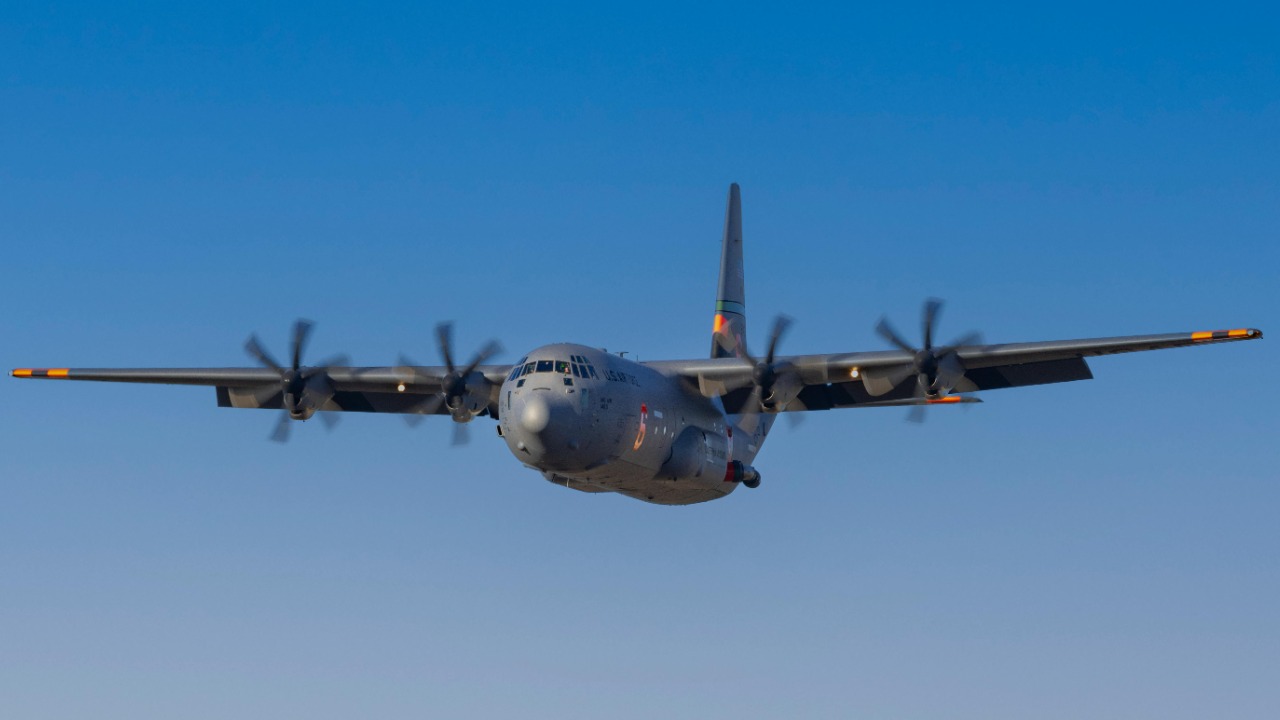
Reliability is not only about systems that rarely fail, it is also about an aircraft that can be trusted to perform almost any mission asked of it. Over 2,500 Hercules have been built and delivered to 63 nations in 70 distinct variants, a scale of production and adaptation that few military aircraft can match. Those figures, highlighted in an analysis that opens with the phrase Over, underscore how the basic airframe has been stretched into gunships, electronic warfare platforms, search and rescue aircraft and more, all while retaining the same fundamental structure.
That adaptability shows up in daily operations. The C‑130 Hercules has proven its versatility across a wide range of missions, from tactical airlift and medical evacuation to scientific support in extreme environments like Antarctica. The same cargo bay that hauls pallets one week can carry sensors, fuel tanks or special operations equipment the next, often with modular kits that can be removed to return the aircraft to standard transport duty. This flexibility, described in the section that begins with Following, means operators can rely on a single fleet type to cover missions that would otherwise demand several different aircraft, simplifying logistics and training.
A workhorse trusted from Little Rock to the front line
The Hercules’ reputation is not abstract, it is grounded in the way units rely on it every day. Today, Little Rock AFB is home to the largest C‑130 fleet in the world and provides the Department of Defense with mission‑ready crews and aircraft that support operations across multiple theaters. The base’s role as a hub for training and deployment, described in coverage that starts with Aug, illustrates how deeply embedded the Hercules is in everyday planning for air mobility and tactical support.
That trust is echoed in the way operators talk about the aircraft. Certainly the only replacement for a C‑130 is another C‑130, a line that captures how, in 58 years of service, no rival airframer has fully replicated its blend of short‑field performance, payload and survivability. Accounts of the aircraft taxiing into tight forward strips without marshallers waving wands for guidance, and then departing with wounded personnel or critical supplies, reinforce why crews view it as a dependable partner rather than just hardware. The sentiment that begins with Jan reflects a hard‑earned confidence built on thousands of such sorties.
Combat, special operations and humanitarian roles that prove staying power
Beyond routine airlift, the Hercules has carved out a unique place in combat and special operations. The AC‑130 gunship variants, for example, turn the basic transport into a heavily armed platform that can provide close air support with pinpoint accuracy day or night, while other versions handle psychological operations, communications relay and electronic warfare. Anyone who has served in the Armed Forces is likely to recognize the distinctive profile of these aircraft, which often operate at low altitude in demanding conditions. That familiarity is captured in reporting that begins with Jun, highlighting how deeply the Hercules is woven into the culture of deployed units.
The same aircraft that supports special operations also shows up after earthquakes, hurricanes and wildfires, delivering food, water and medical teams when infrastructure is shattered. Its ability to land on damaged runways, dirt strips or improvised fields allows it to reach communities that larger strategic transports cannot access, and its rear ramp makes it possible to offload vehicles and supplies quickly under pressure. That dual identity, as both a combat asset and a humanitarian lifeline, reinforces its status as a reliable tool of national power and disaster response. The enduring presence of the Hercules in these roles, from early models to the latest Super Hercules, reflects a design that has remained relevant from the first Hercules to the modern fleet.