
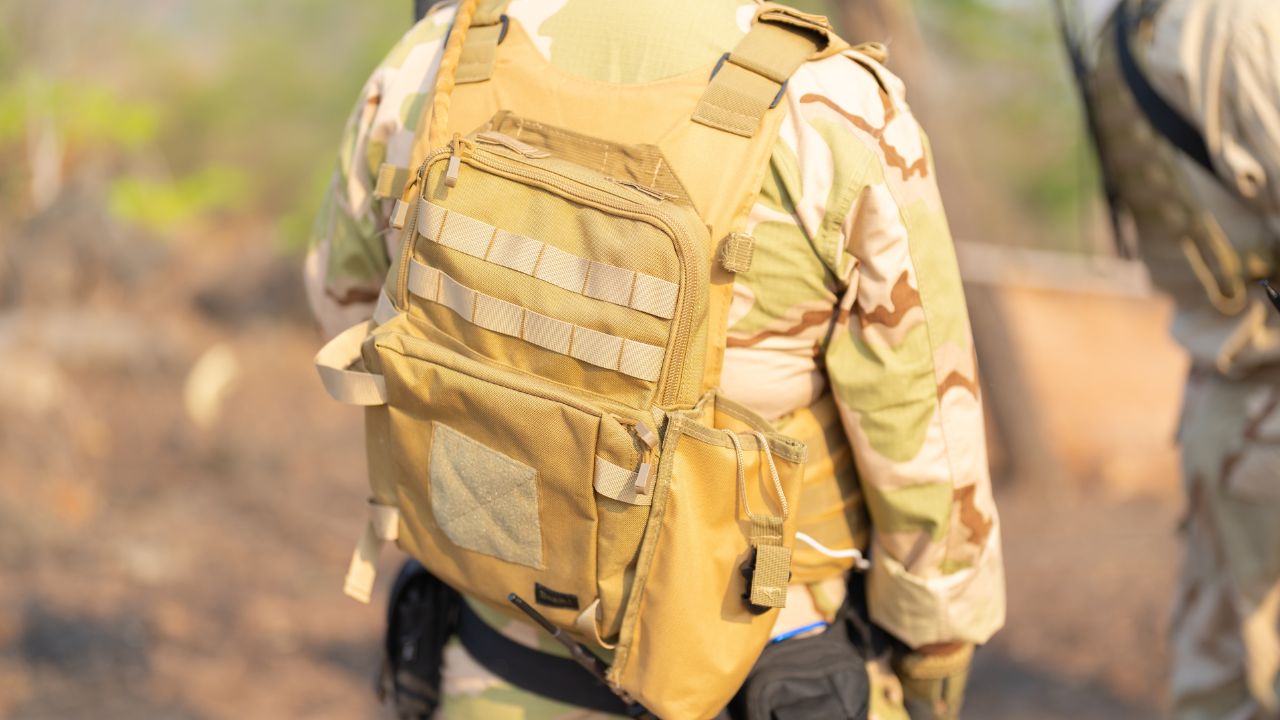
Military body armor has never been static. It has evolved alongside the hazards facing infantry—blades and arrows, then firearms, then industrial-era fragmentation, and today a mix that often includes improvised explosives and widespread fragments from drones and indirect fires. Across centuries, the core design problem has stayed the same: protect the wearer without making them so heavy, hot, or exhausted that they can’t fight effectively.
That tension—protection versus mobility versus endurance—drives most major shifts from chainmail to modern ballistic vests, helmets, and plate carriers. It also explains why “more armor” is rarely a permanent answer. As threats and tactics change, militaries repeatedly rebalance coverage, weight, and how protection is distributed across the body. The long arc of development is shaped not only by materials science, but also by injury patterns, logistics, and what troops will actually wear for long stretches in the field.
From metal to mobility: early armor solved one problem and created another
Early protection—shields, chainmail, and later plate—was built for cutting and piercing weapons, and it could be effective when the dominant threats were edged weapons and arrows. But it imposed a steep cost in weight and fatigue, limiting how long a fighter could move and fight. When close combat dominated, that trade-off could be acceptable; as maneuver and endurance became more important, heavy protection could become a liability.
The spread of firearms tightened the trade space further. Metal armor sometimes helped, but it was harder to justify broad, heavy coverage when the mobility penalty was certain and the protective outcome could vary with the weapon, range, and impact conditions. Over time, many forces moved away from all-encompassing metal protection and toward smaller protective pieces combined with tactics, terrain use, and other ways to reduce exposure.
Fragments change the math: modern wars made shrapnel a primary driver
Industrial-era warfare elevated fragmentation as a leading cause of battlefield injury. Artillery, mortars, and grenades created a threat that was less about stopping a single aimed projectile and more about surviving multiple high-velocity fragments arriving from unpredictable angles. That environment pushed militaries toward protective systems that could be worn for long periods and cover larger areas of the body against fragments, even if that same coverage could not reliably defeat high-powered rifle fire.
This is where modern requirements start to look familiar: fragment protection can preserve combat power, but only if it’s practical to wear continuously. If armor is too heavy or heat-trapping, troops may shed components, especially during dismounted operations and in urban terrain where climbing, sprinting, and sustained exertion are common. In practice, “effective protection” is shaped as much by comfort and wearability as by performance in controlled testing.
Soft armor and hard plates: different tools for different threats
Modern body armor is best understood as a system rather than a single vest. Soft armor—often built from aramid fibers such as Kevlar or other advanced textiles—can provide broad-area protection against fragmentation and certain lower-energy threats. Hard plates add higher-level protection over vital areas when the mission and expected threats justify the added weight and bulk. Modularity exists for a reason: what is tolerable for mounted operations may be punishing on long dismounted movements.
Materials advances enable this approach. Aramids, UHMWPE, and ceramics/composites can deliver meaningful protection at weights that are more manageable than older generations of gear. But “lighter” is relative. When plates are added to the rest of a combat load—ammunition, water, radios, batteries, and other equipment—small weight increases add up quickly, especially in heat, where fatigue can degrade performance and raise the risk of non-combat injury.
Modernization cycles show the pattern: protection rises, then modularity follows
Publicly known U.S. programs illustrate how procurement often tracks battlefield lessons. The Army and Marine Corps moved through widely recognized modernization cycles including Interceptor Body Armor (IBA), then Improved Outer Tactical Vest (IOTV), and more recently the Modular Scalable Vest (MSV). The naming reflects a broader direction: toward scalable configurations that can be tailored to mission needs rather than a fixed, one-size-fits-all setup.
These cycles also underscore that armor evolution is not only about stopping projectiles. It is also about how weight is carried, how well the gear fits, and how it manages heat while maintaining acceptable protection. Improvements that look incremental on paper can matter in the field if they reduce fatigue, improve mobility, and make it more likely troops will wear the system as intended.
Helmets evolved in parallel, and the injury problem shifted with them
Helmet development has followed a similar trajectory, with older designs such as PASGT giving way to more modern lineages like ACH/ECH as materials and threat understanding improved. Like vests, helmets sit at the intersection of protection and human performance: too heavy and they can strain the neck, reduce comfort, and increase fatigue; optimized for the wrong hazard and they may not provide the protection needed in fragment-heavy environments.
Modern discussions increasingly focus on more than penetration alone. Blunt impact and backface effects matter, and so does how protective equipment interacts with real-world medical outcomes. Preventing penetration is a critical goal, but survivability also depends on the severity of the resulting trauma and whether the casualty can be stabilized and evacuated in time.
Myths vs. reality: armor isn’t a force field
A persistent misconception is that armor makes a soldier “bulletproof.” In reality, performance depends on the threat type, the angle and location of impact, the number of hits, the condition of the equipment, and the testing standard used to rate it. Even when penetration is prevented, blunt-force injury can still be severe, and areas outside the protected zones remain vulnerable.
This reality helps explain why troops often adjust their loadouts. Side, shoulder, groin, neck, and other add-on components may be used when fragmentation risk is high and removed when mobility and endurance are at a premium. Those decisions are usually practical rather than performative: they reflect mission demands, heat load, and the need to move, fight, and stay effective over hours rather than minutes.
What’s driving the next iteration: fragmentation, drones, and the return of mass fires
Recent conflicts have renewed attention on fragmentation hazards, including fragments from drone-delivered munitions and sustained indirect fire. While the specifics vary by theater and force, public discussion has increasingly emphasized coverage and fragment protection—balanced against the unavoidable cost in weight and heat. In practical terms, the likely direction is continued modularity, so units can scale protection up in fragment-heavy environments and scale it down for long-range dismounted movement.
Planners also have to think about sustainment. Armor is “consumable” in the sense that plates and soft armor have service lives, can be damaged, and require inspection and replacement. Procurement surges often track major conflicts, and those cycles can strain the wider ecosystem of materials suppliers, plate manufacturing, and testing capacity—especially when availability tightens due to competing demand and policy constraints.
Why it matters strategically: survivability is readiness, and readiness is leverage
Body armor affects survivability, but its strategic impact is broader. By reducing fatalities and increasing the chance that injuries are survivable, it helps preserve trained personnel and unit cohesion—advantages that are hard to regenerate quickly. Over long campaigns, improved survivability can help sustain operational tempo and readiness, even if it doesn’t reduce the underlying danger of combat.
Armor also influences tactics and trade-offs in the field. Better fragment protection can change how commanders manage exposure during urban operations or under indirect fire—without eliminating risk. At the same time, excessive carried load can reduce endurance and speed, potentially limiting a unit’s ability to seize terrain, exploit opportunities, or arrive at the fight ready to win it.
What changes next: systems thinking, not single-item upgrades
The overall trend points toward integrated, modular protection systems—soft armor, plates, helmets, and add-ons configured for the threat and the mission. Requirements are likely to keep reflecting battlefield injury patterns and the realities of how equipment is worn over long periods, with continued attention to fragmentation and blast effects. Procurement will likely continue moving in cycles, with major conflicts accelerating fielding and replacement while peacetime budgets emphasize durability, comfort, and cost.
From chainmail to composite plates, body armor has always been an argument with physics: every ounce of protection must be carried, cooled, and fought in. The modern objective isn’t invulnerability. It’s a managed balance between survivability and performance, informed by battlefield experience and enabled by materials advances—and that balance will keep shifting as threats evolve.