

Anti-submarine aircraft operate in a world where the enemy is not just out of sight but buried beneath miles of water, masked by darkness, pressure, and noise. To find and track those hidden targets, modern patrol planes combine old-fashioned pattern flying with a dense web of sensors that listen, scan, and even feel for the faintest trace of a submarine. Their mission is to turn a featureless ocean into a mapped battlespace where a steel hull cannot hide for long.
From the first crude depth charges dropped in World War I to today’s networked patrol fleets, the basic challenge has stayed the same: a submarine has every advantage in stealth, while the aircraft has speed, reach, and a panoramic view. The balance between those strengths now rests on sophisticated radar, acoustic buoys, magnetic detectors, and data fusion systems that let crews hunt underwater targets from high above the waves.
From periscopes to patrol giants
Early anti-submarine aviation relied on visual spotting and simple explosives, with aircraft scanning for periscopes or wakes and then dropping unguided weapons. One of the more specialized tools of that era, The Lance Bomb, used a 35–40 lb cone-shaped steel drum on a 5 ft (1.5 m) shaft to punch into the water near a suspected contact, a reminder of how much guesswork defined the first generation of airborne anti-submarine warfare. Those tactics were crude but they established the core idea that aircraft could rapidly search wide ocean areas and respond faster than surface escorts.
As submarines grew quieter and began operating deeper and farther from shore, navies shifted to larger, long-range platforms that could stay on station for many hours. Modern maritime patrol aircraft often start life as civilian airliners, then are adapted with reinforced structures, weapons bays, and mission systems so they can fly long distances and loiter over patrol boxes for extended periods, a pattern described in technical reviews of how aircraft detect submarines. This evolution produced workhorses like the P-3 Orion and its successor, the P-8A Poseidon, which combine commercial airframe efficiency with specialized anti-submarine equipment.
Listening to the deep with sonar buoys
The most important tool for tracking a submarine from the air is still sound. Patrol crews seed the ocean with expendable sonar buoys, each one a small sensor package that splashes down, deploys a hydrophone, and transmits acoustic data back to the aircraft. Modern platforms such as the P-8A Poseidon can deploy over 120 buoys in a single mission, creating a temporary underwater listening grid that can detect the noise of propellers, pumps, and hull flow even when a submarine is operating at depth. By flying racetrack patterns over this field, the aircraft can refine bearings and estimate a target’s course and speed.
These buoys are not used in isolation. Successful anti-submarine operations typically integrate air, surface, and underwater platforms so that aircraft can cue ships or submarines toward a contact while also receiving their own updates from other sensors. Analysts describe this as a layered approach in which aircraft provide rapid coverage and flexible response, while surface and subsurface assets maintain longer term tracking. The result is a collaborative hunt in which a single sonar contact from a buoy can trigger a coordinated response across an entire task group.
Radar, optics, and the art of spotting what should not be there
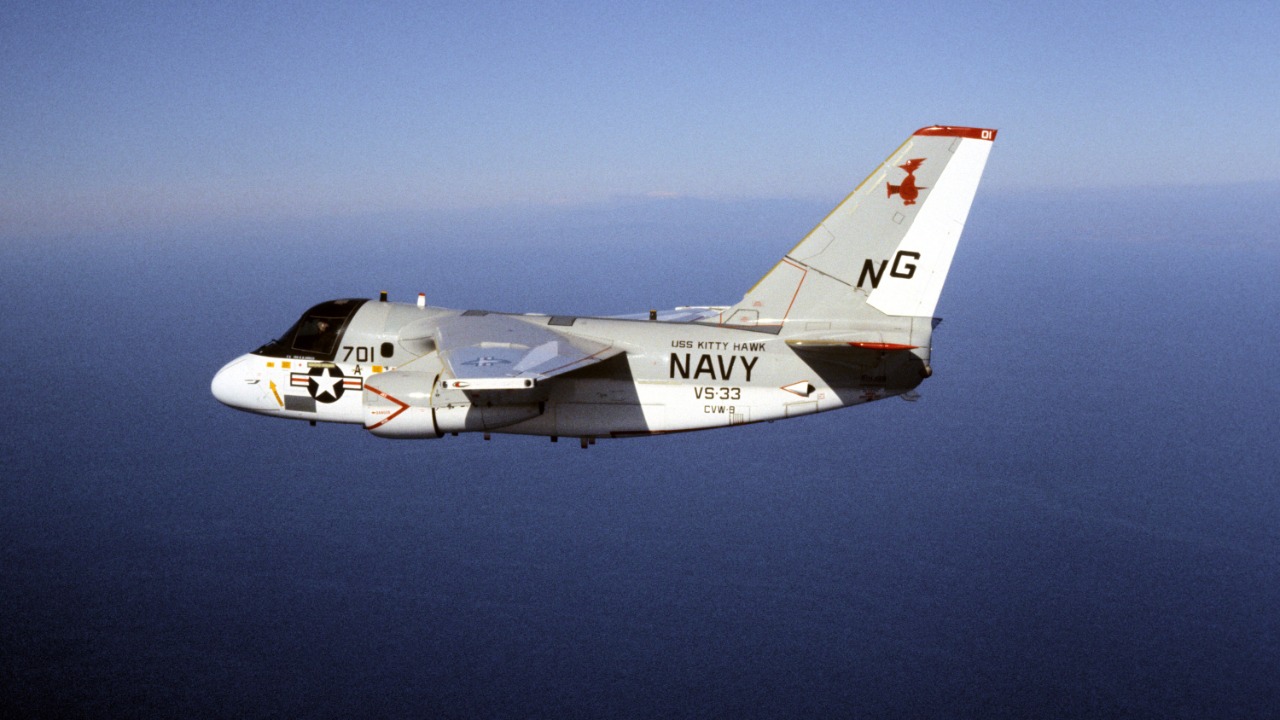
Even in an age of advanced acoustics, the surface of the sea still holds vital clues. Modern patrol aircraft carry powerful maritime radar that can scan vast swaths of ocean for periscopes, snorkels, or the subtle disturbances left by a submerged hull. Technical assessments of how aircraft detect submarines note that radar technologies are developing faster than the platforms themselves, with sensors now able to pick up objects that are effectively invisible to the human eye. When a submarine raises a mast or comes shallow enough to disturb the surface, a high resolution radar sweep can flag that anomaly for closer inspection.
Electro-optical and infrared cameras then help confirm what the radar sees. Long-range imaging systems can zoom in on a suspicious contact, whether it is a periscope feather, a small boat, or debris, and provide visual context to the crew. During high profile searches for lost submersibles, experts have highlighted how these aerial hunters combine radar, optical sensors, and pattern flying to comb remote ocean areas that would be impossible to cover from the surface alone. The same techniques apply in combat patrols, where a fleeting mast on the horizon can be the first and last visible sign of an adversary submarine.
Feeling the invisible with magnetic anomaly detectors
When a submarine dives deep and minimizes its noise, aircraft turn to a different kind of sensing that does not rely on sound or light. Magnetic anomaly detectors, or MAD systems, measure tiny distortions in the Earth’s magnetic field caused by large metallic objects such as submarine hulls. Technical descriptions of underwater detection explain that, consequently, a submarine beneath the ocean’s surface causes a distortion or anomaly in the Earth’s magnetic field, and detecting that anomaly is the essential function of MAD equipment. This gives aircraft a way to confirm a contact’s presence even when it is running quietly.
On aircraft like the P-3 Orion, the most distinctive addition is a tail boom often called a “stinger,” which houses the MAD sensor away from the aircraft’s own metal structure. That placement helps the system pick up the subtle changes created by large metallic objects such as 350-foot-long submarines without being overwhelmed by the aircraft’s signature. Similar principles are used in seabed surveys and even treasure hunting, where survey teams have reported that, of the six targets scanned in a search area, all registered significant metal anomalies possibly linked to sunken U-boats. In anti-submarine warfare, those same kinds of anomalies can guide an aircraft to the right patch of ocean for a closer acoustic or visual search.
Inside the P-8A Poseidon’s sensor fusion
The P-8A Poseidon illustrates how modern patrol aircraft knit all these tools together into a single hunting system. Heavily optimised for the maritime environment as befits its primary role as a Maritime Patrol Aircr platform, the Poseidon is designed for the detection, tracking, and destruction of hostile submarines and surface vessels. One of its core missions is detecting and attacking enemy submarines through sonar and torpedoes, while also using an advanced radar to detect surface targets, a combination that lets crews shift quickly from search to strike once a contact is confirmed.
Under the skin, the aircraft’s Sensor Architecture Besides traditional radar and acoustic gear integrates electronic support measures, communications links, and onboard processing so that crews can see a fused picture of the battlespace rather than juggling separate sensor feeds. Engineering analyses of the design note that the airframe’s modifications result in improved range and less turbulence during flight, making it well adapted for maritime patrol and submarine hunting over long distances. When a Poseidon deploys a field of buoys, sweeps the area with radar, and then dips low to run its MAD system over a suspected track, it is executing a layered search plan that reflects decades of refinement in anti-submarine warfare.
From detection to engagement in a layered fight
Finding a submarine is only the first step. Once an aircraft has enough data from sonar buoys, radar, and MAD to fix a target’s position and motion, it can either hand off the track to other forces or move directly to attack. Historical accounts of anti-submarine warfare describe how aircraft evolved from dropping simple depth charges to delivering more precise weapons, including torpedoes guided toward the estimated position of a submerged contact. The logic remains the same: compress the time between detection and engagement so that a submarine has little chance to slip away or change depth and course.
Modern doctrine emphasizes that successful operations typically involve coordinated action by air, surface, and underwater platforms, with aircraft providing rapid localization and initial attack options. In some cases, a patrol plane may mark a contact and then vector in surface ships or friendly submarines to maintain contact over longer periods, especially in contested waters. Training materials and operational reports stress that this layered approach is essential because no single sensor or platform can guarantee a perfect picture of what is happening beneath the waves, particularly when adversary submarines are designed from the keel up to be as quiet and elusive as possible.