
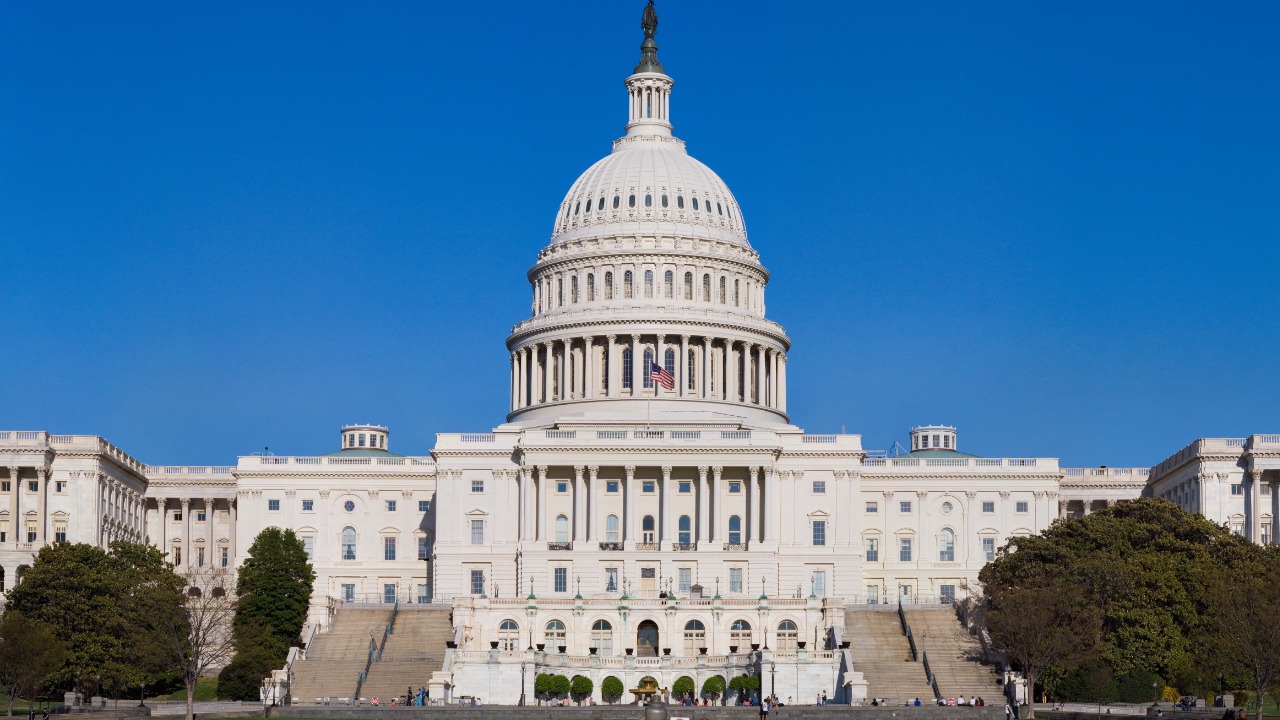
The House has cleared a sweeping Pentagon funding measure that steers $838.7 billion toward national defense and folds it into a broader government spending package now headed to the Senate. The vote caps months of bargaining over how to balance military modernization, troop support, and border security while keeping the government open. The outcome now hinges on whether senators move quickly enough to avert a shutdown and send the bill to President Donald Trump.
How House negotiators landed on an $839 billion compromise
House negotiators arrived at the new defense topline only after reconciling competing visions for how aggressively to expand the Pentagon budget. Earlier work on the Fiscal Year 2026 spending cycle produced a House plan that set the Defense Appropriations Act at a total discretionary allocation of $831.5 billion, a figure that reflected a more traditional approach to incremental growth in core accounts such as procurement and operations. That number became a reference point rather than a ceiling once appropriators began to fold defense into a larger government funding framework and respond to pressure from hawks who argued that inflation and rising threats had eroded buying power. The final compromise, described as a conference defense spending bill totaling $839, represents a negotiated step up from the $831.5 baseline while still claiming to respect broader fiscal constraints.
The new agreement, which pegs Pentagon appropriations at $838.7 billion inside the larger package, also reflects the influence of the already enacted policy blueprint in the latest NDAA. Lawmakers had earlier advanced that annual defense policy bill with strong bipartisan margins, with both Democrats and Republicans voting overwhelmingly for a framework that endorsed a pay raise for service members and a series of modernization priorities. With the NDAA Being Signed Into Law and Representative Adam Smith using his Smith Statement to highlight its priorities, appropriators were under pressure to ensure that the money now matched the policy. The $839 compromise, released in detail by Stephen Losey and others, is designed to translate that earlier policy consensus into concrete funding lines that can survive scrutiny in both chambers.
What the Pentagon bill funds inside the broader spending package
The defense portion of the package is structured to touch nearly every corner of the armed forces, from day-to-day operations to long-term modernization. A central pillar is support for Military Personnel and Operations, paired with Maintenance accounts that keep units ready to deploy and train. The bill covers the full Fiscal Year 2026 period, running from October 1, 2025, through September 30, 2026, and it channels money into Procurement so the services can continue buying aircraft, ships, and advanced munitions. Conferees also used the compromise to backfill earlier shortfalls, including unfunded priorities lists that commanders had flagged in prior cycles, while still trying to avoid the kind of abrupt program cancellations that can ripple through industrial supply chains.
Beyond the core accounts, the legislation encompasses $839 billion in defense appropriations that are explicitly framed as targeted investments in military modernization, border security, and emergency preparedness across all service branches. That means more resources for emerging technologies, from advanced sensors to next-generation aircraft meant to replace aging fleets such as the F-22 Raptor, as described in the conference defense bill. It also folds in money for homeland missions that have become politically salient, including support for border operations and disaster response units that rely on Guard and Reserve forces. By embedding these priorities in the same vehicle that funds the rest of the government, House leaders hope to make it harder for opponents to strip out controversial items without risking a wider shutdown.
House passage, political fault lines, and pressure on the Senate
The path to House passage of the Pentagon measure was shaped by both procedural maneuvering and political calculation. Leaders opted to move the defense bill as part of the Consolidated Appropriations Act, 2026, identified as H.R. 7148, rather than as a standalone measure. Today, the House used that larger vehicle to advance the FY 2026 Def accounts alongside other domestic funding, a strategy that allowed defense advocates to hitch their priorities to must-pass legislation. That approach mirrors how earlier defense policy work moved through the chamber, including a major NDAA vote in which the tally stood at 312 in favor and 112 against, a margin that underscored how national security bills can still draw cross-party support even in a polarized environment.
Yet the latest vote also exposed familiar rifts. Fiscal conservatives questioned whether lifting the defense topline from the earlier $831.5 level to $838.7 billion was compatible with promises to restrain overall spending, while some progressives objected to the scale of Pentagon funding relative to domestic programs. Others focused on policy riders, including provisions related to border enforcement and industrial base support, that they argued either went too far or not far enough. Despite those objections, enough members ultimately accepted the argument that failing to act would risk a partial government shutdown and inject new uncertainty into military planning. With the House now finished, attention shifts to senators who must decide whether to accept the package intact or seek changes that could delay final passage past key funding deadlines.
Strategic stakes for the military, industry, and the White House
The stakes of the Senate’s next move extend well beyond a single fiscal year. For the Pentagon, timely enactment would lock in resources that planners have already aligned with the NDAA’s priorities, from pay and benefits to modernization of key platforms. For the industry, the $839 billion in appropriations would provide a measure of predictability after months of uncertainty, allowing contractors to move ahead with multiyear contracts and hiring decisions that depend on stable funding. Defense advocates argue that anything less than swift Senate action could force the department to operate under a stopgap, freezing new starts and slowing efforts to field capabilities that allies in NATO and other partnerships are watching closely, a concern echoed by voices such as Wes O’Donnell, a Veteran of the Army and Air Force who has highlighted how alliance readiness depends on sustained investment.