
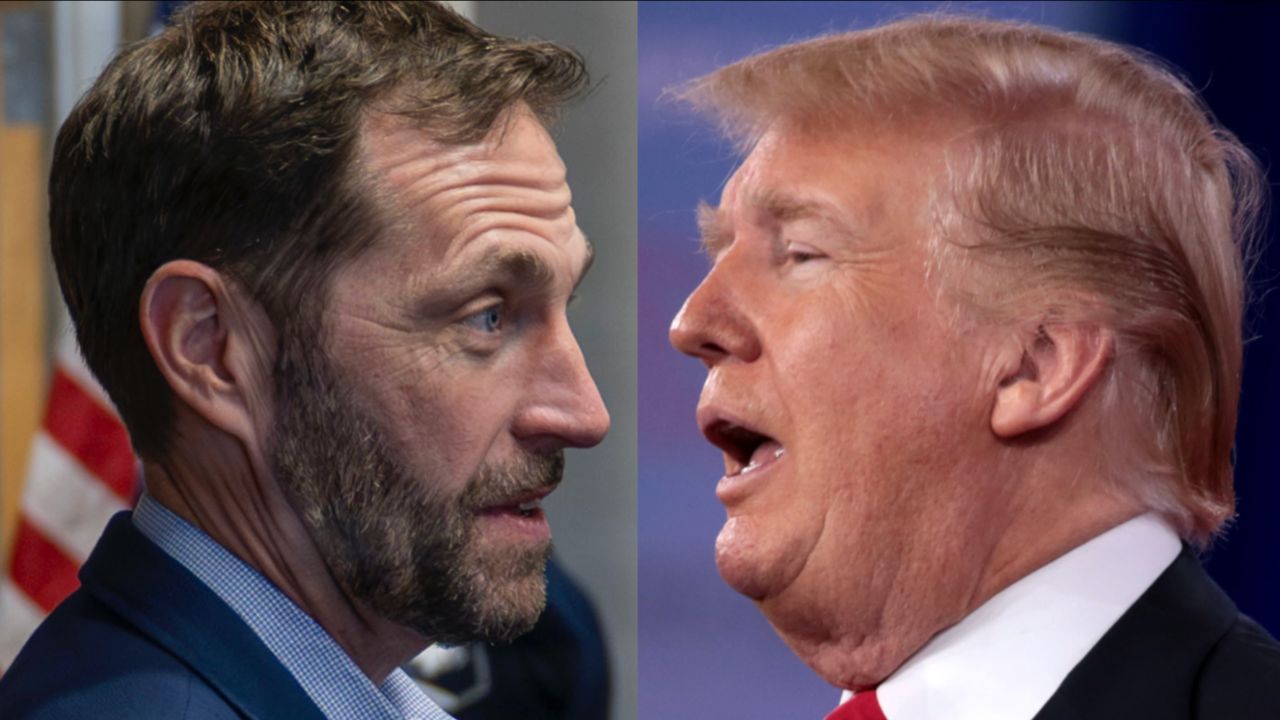
Rep. Jason Crow, D-Colo., celebrated House passage of a resolution directing President Donald Trump to end U.S. military involvement in Iran, marking the third time the House has approved such a measure since the war began. Crow’s post, which included a video statement, was published on X.
Crow: “We Have to Keep on Voting”
“We passed this resolution, actually, the third one we’ve now passed, 220 to 204. Seven Republicans joined us. Every time we vote on it, more and more Republicans join,” Crow said in the video, recorded as he left the House floor shortly after the vote. “I have long said, I don’t care how many votes it takes, we have to keep on voting, and we will hold people accountable vote after vote so that people go home to their districts and Americans know where they stand.”
Resolution Passed 220-204, With Seven Republicans Breaking Ranks
The House approved H. Con. Res. 93 in a 220-204 vote shortly before 10:32 p.m. on Sept. 15, according to the official House Clerk’s roll call. All 213 Democrats who voted supported the measure, joined by seven Republicans: Thomas Massie of Kentucky, Tom Barrett of Michigan, Warren Davidson of Ohio, Brian Fitzpatrick of Pennsylvania, and three new “yes” votes — Nancy Mace of South Carolina, Mariannette Miller-Meeks of Iowa and Zach Nunn of Iowa. Rep. Kevin Kiley, an independent from California who caucuses with Republicans, also voted no alongside 203 other Republicans.
Resolution Was Formally Led by Rep. Seth Moulton
The measure was introduced by Rep. Seth Moulton, D-Mass., and cosponsored by 14 other House Democrats, including 13 combat veterans, according to a press release from Moulton’s office. Crow, an Army Ranger and former paratrooper, was among the cosponsors and has been a prominent public advocate for the effort. “By the Trump Administration’s own metrics, Iran is winning and America is losing,” Moulton said in a statement. “Tonight, Congress did its job under the Constitution and said enough is enough.”
Third House Vote Saw Growing, but Still Insufficient, Republican Support
The Sept. 15 vote marked the third time the House has passed a version of the resolution since the war began, with Republican support growing from four defectors in earlier votes to seven this time. The Senate separately passed a similar resolution in June, also with several Republican defections, according to Fox News Digital’s reporting.
As a Concurrent Resolution, the Measure Does Not Go to Trump’s Desk
Because the measure was introduced as a concurrent resolution rather than a joint resolution, it does not require the president’s signature and is not subject to a presidential veto — but it also does not carry the force of law even if the Senate were to pass an identical version. A separate joint resolution version, which would go to Trump’s desk if passed by both chambers, would likely face a veto; Trump has indicated opposition to such legislation, and Congress has not signaled it has the two-thirds majority in both chambers needed to override one.
White House Has Argued No Active Hostilities Remain to End
The administration has opposed similar resolutions on both constitutional and factual grounds. In a formal Statement of Administrative Policy opposing an earlier version of the legislation, the White House wrote that “there are no present hostilities from which to remove U.S. Armed Forces,” arguing that “the hostilities that began on February 28, 2026, have terminated with the ceasefire ordered by the President on April 7, 2026.” The administration has separately characterized similar resolutions as an “unconstitutional legislative veto” over executive war-making authority.
Crow Cited Rising Casualties and Costs in Earlier Advocacy for the Measure
Ahead of the vote, Crow said in an official statement that “Americans are done with endless conflict in the Middle East” and cited 18 American service members killed and hundreds more injured since the war began, along with billions of taxpayer dollars spent. “The costs are rising every day, yet the President is choosing to double down on his failures,” Crow said.
CBO Assessment Put War’s Cost at More Than $38 Billion
A nonpartisan Congressional Budget Office assessment released the same week put the war’s cost at more than $38 billion through the end of July, and warned that depleted weapons stockpiles could take five years or longer to rebuild, potentially limiting the Pentagon’s ability to respond to a separate major conflict. A Pentagon inspector general report made public the same week separately found that U.S. diplomatic facilities in four Gulf countries had suffered an estimated $184 million in damages from Iranian military strikes.
Crow Has Focused Extensively on Civilian Harm Mitigation Cuts
Crow, who co-chairs the Protection of Civilians in Conflict Caucus, has separately pressed the administration on cuts to Pentagon offices responsible for mitigating civilian harm in combat, and led 120 House Democrats in March demanding answers about civilian deaths from the war, including a disputed U.S. strike that Iranian officials said killed dozens of civilians at a school.
Resolution Reflects a Recurring Pattern of Congressional War Powers Votes
The Sept. 15 vote continues a pattern of periodic War Powers Resolution votes in the House and Senate throughout the conflict, none of which have succeeded in ending U.S. military operations against Iran, which have continued since the war began Feb. 28.
Republican Defections Have Grown With Each Successive Vote
The pattern of Republican support has grown steadily across the House’s three votes on similar resolutions this year: from no Republican support when a version failed in March, to four GOP defections in June and July votes, to seven on Sept. 15. Republican leadership had previously sent House members home early ahead of a scheduled May recess at a point when it appeared the measure had enough Republican support to pass, a maneuver that ultimately did not prevent the June vote.
Amnesty International Report on Iran Crackdown Was Released the Same Day
The vote came the same day Amnesty International released a report alleging Iranian security forces committed “crimes against humanity” during a crackdown on protesters, including a mass shooting of demonstrators on Jan. 8-9, 2026, in which agents from Iran’s police and the Islamic Revolutionary Guard Corps fired military-grade weapons into crowds.