
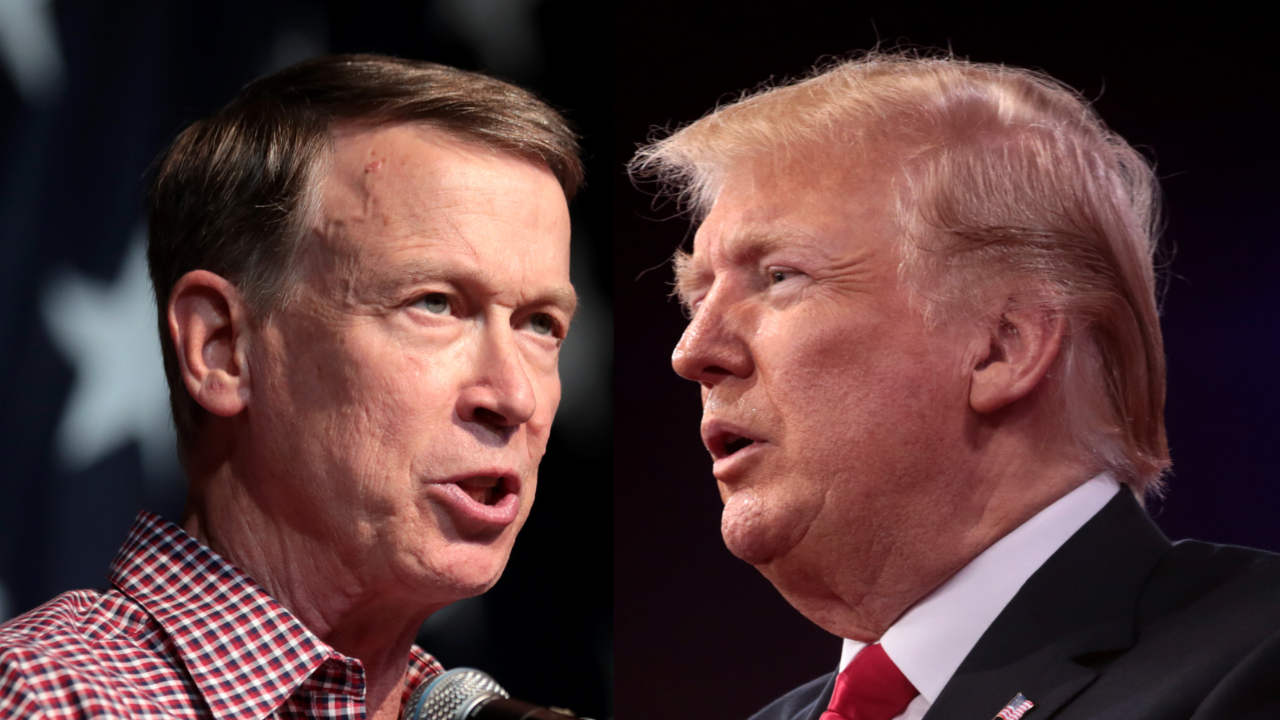
Sen. John Hickenlooper said Tuesday that he and former Rep. Gabby Giffords will not allow the Trump administration to roll back gun safety laws they helped establish. “While Governor of Colorado, we implemented commonsense gun laws. We brought that momentum to Congress where we passed the first major federal gun safety law in nearly 30 years,” Hickenlooper wrote on X. “Gabby Giffords and I refuse to let Trump bully our communities into reversing the laws that reduce gun violence and protect our kids.”
What the Joint Column Actually Argues
Hickenlooper’s post linked a guest column he co-authored with Giffords in Colorado Politics, published to mark the 14th anniversary of the 2012 Aurora theater shooting. The column opens by referencing a recent mass shooting in Twin Falls, Idaho, before recalling the July 20, 2012, attack in which 12 people were killed and 70 wounded when a gunman opened fire in a crowded movie theater with a rifle and a 100-round magazine. “In the wake of the Aurora shootings, we were a community ravaged by grief,” the authors wrote. “We’ll never forget the pain we felt, or the lives taken from us too soon, but we took action to honor the victims and prevent other Colorado families from knowing the devastating effect of gun violence.”
The Colorado Laws at the Center of the Dispute
The column traces Colorado’s response directly to Hickenlooper’s tenure as governor. “In 2013, when federal progress stalled, Colorado rejected the gun lobby’s pressure and passed laws that have saved lives. We enforced universal background checks and banned high-capacity magazines holding more than 15 rounds,” the authors wrote, also citing a later state measure, “Jessi’s Law,” which allows manufacturers and sellers to be held civilly liable when negligence puts firearms in the hands of people who should not have them.
What the DOJ Lawsuit Against Colorado Actually Says
The lawsuit Hickenlooper and Giffords criticize is real and specific. According to the Justice Department’s own press release, the department filed suit against Colorado on May 6, alleging the state “unconstitutionally bans certain constitutionally protected standard capacity firearm magazines” in violation of the Second Amendment. Assistant Attorney General Harmeet Dhillon said in the release: “Colorado’s ban on certain magazines is political virtue signaling at the expense of Americans’ constitutional right to keep and bear arms,” adding that the Civil Rights Division’s Second Amendment Section “will continue to defend law-abiding Americans’ rights against unconstitutional restrictions on their right to possess arms which are owned by tens of millions of their fellow citizens.”
A Parallel Lawsuit Against Denver
The Colorado suit followed a related action against Denver one day earlier. According to reporting on the filing, the DOJ sued Denver on May 5 over its 1989 ordinance banning certain semiautomatic “assault-style” weapons, with then-Acting Attorney General Todd Blanche saying: “The Constitution is not a suggestion and the Second Amendment is not a second-class right. Denver’s ban on commonly owned semi-automatic rifles directly violates the right to bear arms.”
How Colorado and Denver Officials Responded
State and local officials defended both laws as public-safety measures rather than symbolic gestures. Colorado Attorney General Phil Weiser called the lawsuit a “dangerous overreach” and defended the 2013 statute as “common-sense,” according to the Associated Press. Denver Mayor Mike Johnston was similarly direct in a statement responding to the administration’s ultimatum that the city drop enforcement or face suit: “Our first job is to keep Denverites safe, and we will not be intimidated out of doing it. Denver’s law has stood for 37 years because it works, it saves lives, and it reflects the values of our community.”
What the Federal Bipartisan Safer Communities Act Did
Beyond the state-level laws, the column credits Hickenlooper’s Senate work on the 2022 Bipartisan Safer Communities Act, passed after the Uvalde, Texas and Buffalo, New York shootings and described in the column as “the first major federal gun safety law in nearly 30 years.” According to the authors, the law closed the so-called “boyfriend loophole” preventing domestic abusers from buying guns, strengthened red flag laws, expanded background checks for buyers age 18 to 21, and funded mental health and violence-prevention programs. They cited early implementation data showing the law stopped 10,000 gun purchases by convicted domestic abusers and prevented 800 purchases through enhanced background checks for younger buyers in its first two years.
The Shooting That Opened the Column
The column’s reference to a recent shooting concerns an August 1 attack at an In-N-Out Burger restaurant in Twin Falls, Idaho. According to CBS News’ reporting, a gunman identified as 24-year-old Chad Williams killed three people and wounded seven others before dying of a self-inflicted gunshot wound after being confronted by an off-duty Idaho state trooper and an armed bystander, Jordan Salinas, whose return fire police credited with helping drive the shooter from the scene. Twin Falls Police Chief Matthew Hicks said investigators believed Williams acted alone, and a motive remained under investigation.
The Legal Question at the Core of Both Lawsuits
Both the Colorado and Denver cases turn on the same central legal question: whether magazines and semiautomatic rifles that are, in the government’s framing, in “common use” among law-abiding citizens are constitutionally protected under the Second Amendment regardless of state or local restrictions. The Justice Department’s complaint against Colorado cited industry data reporting more than 448 million magazines holding over 15 rounds already in circulation nationwide as evidence supporting that “common use” argument.
Additional Legislation the Authors Are Pushing
Beyond defending existing laws, Hickenlooper and Giffords used the column to call for further federal action, naming a renewed federal Assault Weapons Ban, a Background Check Expansion Act, the Victims Access to Justice Act, and Ethan’s Law as measures they argue would build on the Bipartisan Safer Communities Act’s foundation.
Giffords’ Own Connection to This Issue
Hickenlooper’s co-author brings her own direct history with gun violence to the column. Giffords, a former Democratic congresswoman from Arizona, survived an assassination attempt in a 2011 mass shooting in Tucson and has since founded Giffords, a national organization focused on gun violence prevention — a background that has made her a prominent voice in the gun-safety debate independent of her collaboration with Hickenlooper specifically.
Where This Leaves Things
As of Hickenlooper’s Tuesday post, both the Colorado and Denver lawsuits remained in active litigation, with Denver having filed a motion to dismiss the case against it and neither law having been struck down or upheld by a final court ruling. The underlying dispute — whether Colorado’s and Denver’s decades-old gun restrictions represent constitutionally protected public-safety measures or unconstitutional infringements on Second Amendment rights — remains a live legal question the courts have not yet resolved.