
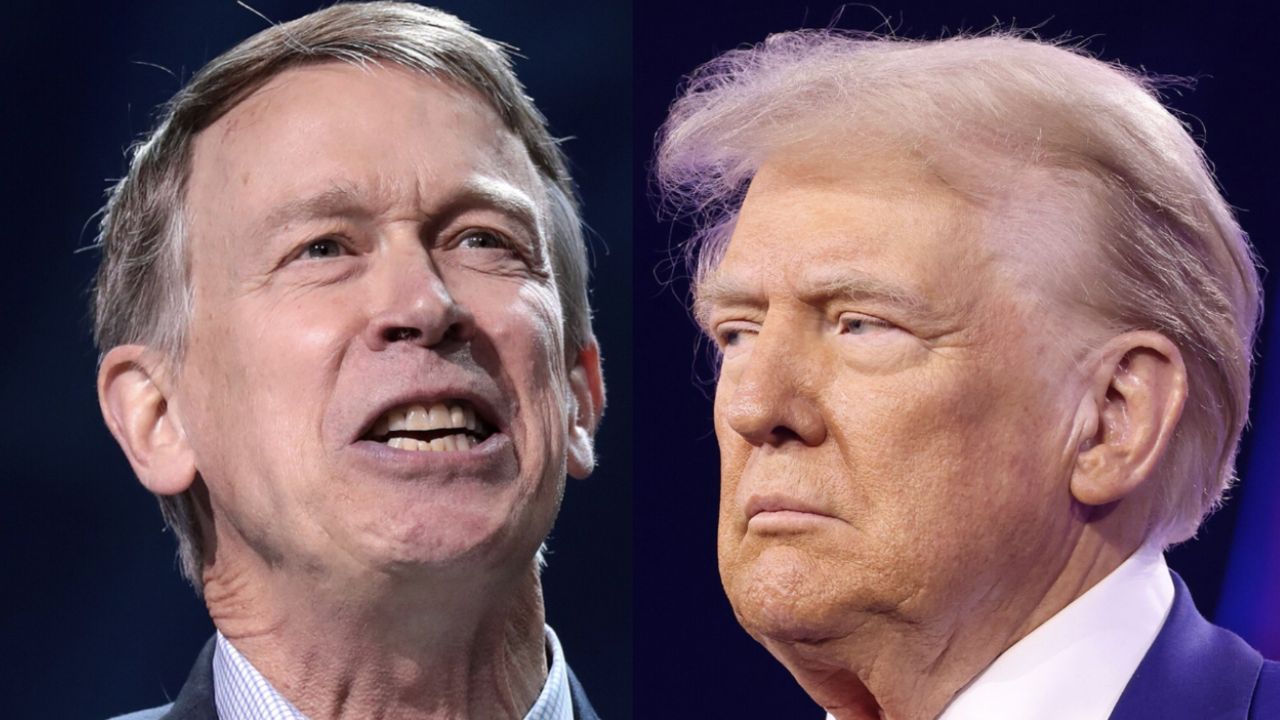
Seven months and three days after the first U.S. strikes on Iran, Democratic Sen. John Hickenlooper of Colorado used a short, blunt post on X to put a price tag on the conflict. He cited fuel costs, grocery bills and the length of a war he has called illegal since its first day. The post, published at 11:31 a.m. on Thursday, October 1, 2026, ended with a direct demand for the commander in chief.
Hickenlooper’s post read in full:
“More than 7 months into Trump’s illegal war with Iran…
Diesel up more than 70%.
Gas up more than 50%.
Grocery prices climbing steadily with no end in sight.
It’s time to bring our troops home and bring down costs.”
The post is the latest in a string of statements the senator has issued since the war began. It also lands at a politically charged moment, with the midterm elections five weeks away and prediction markets heavily favoring Democrats.
A Senator on Record Since Day One
Hickenlooper first responded on February 28, 2026, after President Trump launched strikes on Iran without congressional approval. He said Trump had bypassed his constitutional duty and was acting “without an articulated goal, strategy, or endgame.” The statement also described the strikes as a calculated distraction from the administration’s domestic troubles. It added that while the fall of Iran’s repressive regime would be welcome, the president’s approach left profound questions unanswered.
On March 3, ahead of a Senate vote on the Iran War Powers Resolution, Hickenlooper announced he would vote yes. He wrote that “Congress decides if we go to war — not the President.” On April 15 he voted for the resolution again. It failed, with most Senate Republicans opposed. His statement that day called the war “a Shakespearean tragedy on a global scale.” In the same release he argued that Coloradans were already facing a cost-of-living emergency.
On June 11, Hickenlooper responded to what he called Trump’s “whiplash” on Iran. The president had threatened to escalate strikes and then, hours later, canceled them and claimed a deal was close. Hickenlooper said Trump had claimed a deal was near “at least 37 times before.” On June 17 he took to the Senate floor to reject the administration’s “memorandum of understanding” with Iran, saying “We’re still nowhere close to a long-term nuclear deal.”
The War Escalates Again
The June agreement did not hold. On July 21, Hickenlooper issued a statement after a tenth consecutive night of U.S. strikes in Iran following the breakdown of the memorandum and ceasefire. He said seventeen U.S. service members had been killed and that more than a hundred billion taxpayer dollars had been spent. The release also noted that the national average gas price had reached $4 a gallon.
On August 6, he introduced a War Powers Resolution directing Trump to terminate U.S. military hostilities against Iran. His office said he had voted 13 times to end the war. He called it “a complete and total disaster” that had cost American lives, raised prices and drained military stockpiles. The release also noted that a concurrent resolution on Iran war powers had already passed both chambers.
The Numbers Behind the Post
Brown University’s Iran War Energy Cost Tracker puts the extra spending on gasoline and diesel since the war began at an estimated $96.2 billion, or roughly $734 per household. The tracker found the national average for gas rising from $2.982 to $4.095 a gallon, and diesel from $3.670 to $5.633. AAA later reported diesel at a record $5.94 and gas at $4.22.
Those national figures are lower than the percentages in the senator’s post. By the tracker data, diesel is up roughly 60%, and gas by about 40%. Hickenlooper’s post did not specify a benchmark, region or date range for its figures. AAA reported that the national average in August was above $4 per gallon on every day of the month, a first. A Moody’s Analytics chief economist told NBC News the war had cost the average household at least $1,200.
Spending and the National Debt
The Pentagon’s own figures are lower than the senator’s. Defense Secretary Pete Hegseth told the Senate Appropriations Committee on July 21 that the war had cost $37.5 billion, up from nearly $29 billion in mid-May. He was defending a supplemental funding request of about $67 billion. The White House had formally requested an $87.6 billion supplemental on June 24. That day, the watchdog group Taxpayers for Common Sense said the nation was nearly $40 trillion in debt. The Pentagon figures do not include the cost of rebuilding U.S. bases in the Middle East.
The Political Stakes
With five weeks until the midterms, prediction markets put Democrats at 93% to win the House on Polymarket and 91% on Kalshi. Both platforms also give Democrats 62% to win the Senate. The figures are market-implied odds, not polls or results, and they can move as trading changes. Trump has told supporters that “oil prices are going to be tumbling downward” right after the election.