
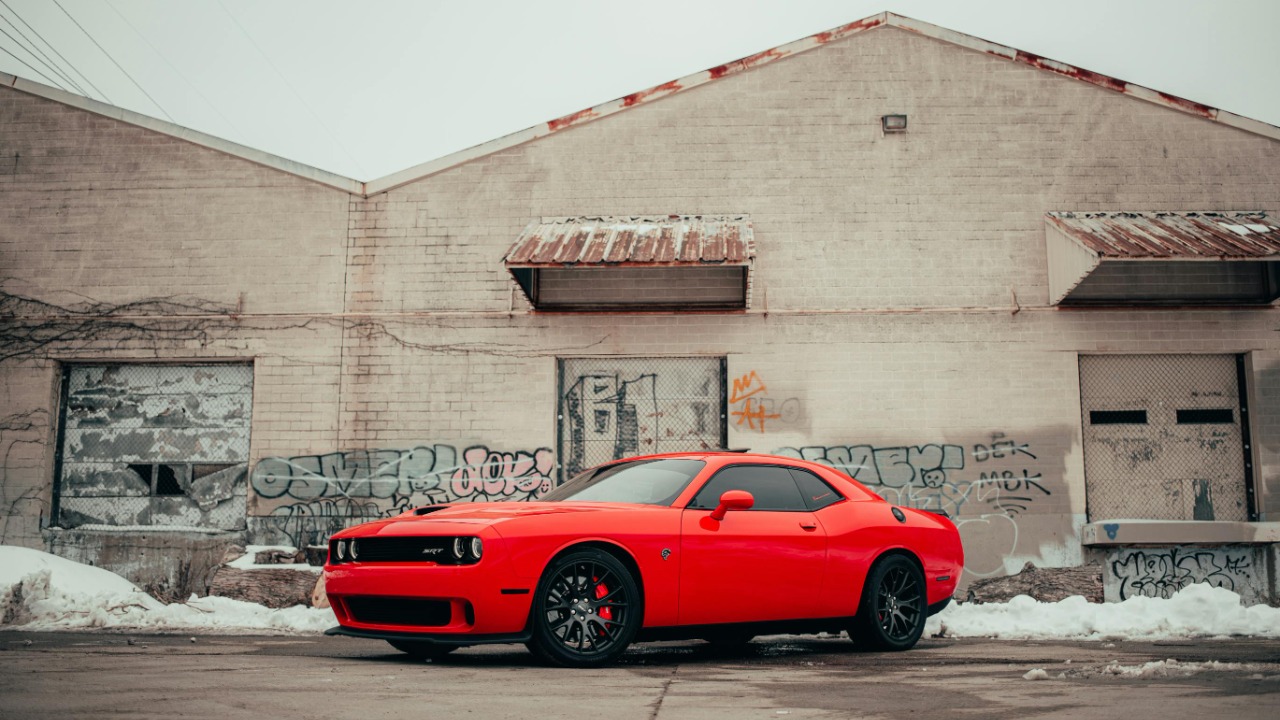
Dodge’s 6.2L supercharged HEMI crate engines have become the shortcut to Hellcat-level power for builders who want factory-backed reliability in a classic shell. The choice now is no longer just whether to go blown HEMI, but whether to stop at the standard Hellcrate or step up to the Hellcrate Redeye and its harder-hitting hardware. Understanding how these two packages differ in power, components, and use case is essential before dropping five figures on an engine swap.
Both engines trace their roots to the production Hellcat family that powered the Challenger, Charger, Jeep Grand Cherokee Trackhawk and related models, but they are tuned and packaged specifically as standalone crate units. On paper the gap looks simple, 717 horsepower versus 807, yet the real story is how the Redeye’s larger supercharger, reinforced internals, and higher operating limits change what a finished build can do on the street and at the strip.
Hellcrate vs Hellcrate Redeye: the core hardware differences
The standard Hellcrate is essentially the original 6.2L supercharged Hellcat V-8 adapted for plug-in use, delivering 717 hp and 656 lb-ft in crate form. It uses a 2.4-liter supercharger, conservative boost, and a redline of 6,200 rpm, which keeps stress within the limits of its forged steel crankshaft and production-spec rotating assembly. Reporting on the Hellcrate notes that this blower size and calibration are shared with the 717 hp Hellcat applications, and that the 2.4L unit also appears in other Hellcrate based crate HEMI projects.
The Hellcrate Redeye keeps the same 6.2-liter displacement and basic architecture but swaps in a larger 2.7 liters supercharger, higher boost, and a 6,500 rpm peak, which together raise output to 807 hp and 717 lb-ft. Technical breakdowns emphasize that, while both are 6.2-liter supercharged Hemi V-8s, the Redeye’s 2.7 liters blower and other upgrades are the main reason it outguns the standard package, with the bigger compressor derived from the production Redeye and Demon programs and the smaller 2.4 unit tied to the 717 hp Hellcrate configuration. Coverage of the crate lineup also notes that the Redeye sits above the original Hellcat-based Hellcrate in Dodge’s performance hierarchy, reflecting its more aggressive calibration and hardware.
Inside the engines: strengthened Redeye internals vs Hellcrate baseline
Beyond the supercharger, the Hellcrate and Hellcrate Redeye diverge in how much abuse their internals are designed to take. The standard Hellcrate uses a forged steel crankshaft and heavy-duty components that have already proven themselves in production Hellcat cars, but it largely mirrors the original street engine’s specification. That makes it a robust foundation for moderate bolt-ons and tuning, yet its oiling, piston cooling, and valvetrain are optimized for the 717 hp window rather than sustained high-boost drag use. Analyses of the Hellcat versus Redeye families underline that the base Hellcat bottom end is stout, but it is not as overbuilt as the later Redeye specification.
The Hellcrate Redeye, by contrast, receives a series of targeted reinforcements to survive the extra blower and rpm. Technical summaries describe a stronger bottom end with an upgraded forged alloy crankshaft and revised balancing, more durable connecting rods, and induction-hardened bearing surfaces. Cooling is also stepped up, with piston-cooling jets that deliver a 100% increase in jet flow and valvetrain oiling that sees a 33% increase to the valve springs, changes that help the engine live at higher cylinder pressures and speeds. Coverage of how it is different from the standard Hellcrate engine stresses that these internal upgrades, combined with the larger blower, are what justify the Redeye’s higher price and position it as the more serious foundation for big-power builds.
Power delivery, drivability, and intended use
On a dyno chart, the Hellcrate’s 717 hp and 656 lb-ft arrive with relatively modest boost and a lower redline, which tends to favor drivability and traction in lighter classic cars. Builders who prioritize street manners often point to the Hellcrate’s slightly softer hit and lower peak rpm as advantages when pairing the engine with older chassis, narrower tires, or manual transmissions. Comparisons of Hellcat and Redeye street behavior note that the base tune is easier to manage on imperfect pavement and that the smaller blower’s response still feels immediate without overwhelming the rear tires at every throttle tip-in.
The Hellcrate Redeye’s 807 hp and 717 lb-ft, combined with higher boost pressure and a 6,500 rpm ceiling, tilt the balance toward outright performance. Reports on the crate version explain that the larger 2.7 liters supercharger, higher airflow, and revised camshaft profile help the engine pull harder at the top end, which is ideal for drag racing or high-speed track work. Parts specialists who focus on Hellcat Redeye builds emphasize that the stronger bottom end and bigger blower make the Redeye a more capable foundation for serious modifications, whether the goal is to push into four-figure horsepower territory or simply sharpen what is already there with pulley and fuel upgrades.
Crate ecosystem, compatibility, and warranty support
Both the Hellcrate and Hellcrate Redeye are sold as complete crate assemblies that simplify installation into older vehicles. Each engine ships with the core long-block plus key accessories such as the water pump, front sump oil pan, intake manifold with throttle body, fuel injectors, and coil packs, while the engine controller kit and front-end accessory drive are offered separately. Mopar positions these 6.2L units within a broader Crate HEMI ecosystem that also includes naturally aspirated 5.7L and 6.4L options, such as the 345 Crate HEMI Engine rated at 383 horsepower and 417 lb-ft of torque and the 392 Crate HEMI Engine that steps up displacement and output for builders who do not need a supercharger.
Official guidance specifies that the 6.2L supercharged packages are intended for pre-1976 street and off-road vehicles, a nod to emissions and integration complexity in newer platforms. To reduce risk for buyers, Mopar backs the Hellcrate Redeye crate engine kits with a transferable nationwide Mopar 3 Year / 100k Mile Powertrain Limited Warranty, which covers parts exchange on qualifying failures. That level of factory support is a key selling point compared with pieced-together builds using salvage-yard engines, especially for customers who are investing heavily in paint, chassis work, and modern electronics around the powertrain.
Which 6.2L HEMI crate engine makes sense for which build?
Choosing between Hellcrate and Hellcrate Redeye ultimately comes down to how the car will be used and how much headroom the builder wants. Analyses that compare the two crate engines side by side note that both are based on the original Hellcat architecture from the Challenger, Charger, Jeep Grand Cherokee Trackhawk and related models, but the Redeye’s larger blower, stronger internals, and higher rpm ceiling make it the better fit for drag-focused projects or customers who plan to chase four-digit horsepower with additional modifications. For a tube-chassis ’69 Charger on slicks or a dedicated strip-only A-body, the extra 90 hp and durability margin can justify the higher buy-in.
For many classic street builds, however, the standard Hellcrate remains the more rational choice. Its 717 hp already eclipses what most vintage chassis, tires, and braking systems can comfortably handle, and its lower cost leaves more budget for suspension, safety equipment, and modern conveniences. Commentators who have weighed Hellcrate versus Hellcrate Redeye for real-world projects often conclude that traction, gearing, and overall setup become the limiting factor long before the engine does, especially on street tires. In that context, the Hellcrate offers a more balanced package, while the Hellcrate Redeye is best reserved for builders who are certain they will use every bit of its additional capability.