
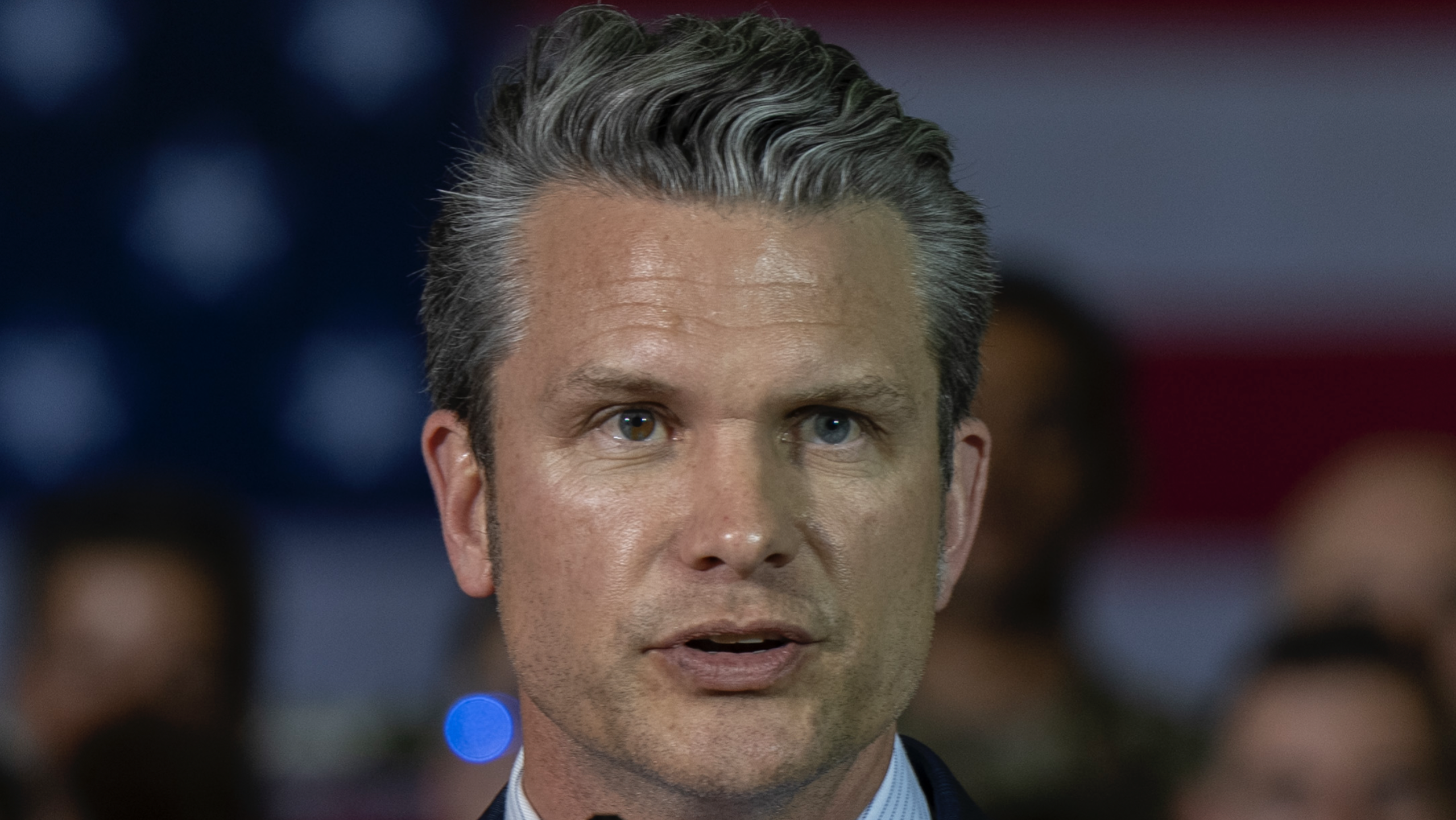
Defense Secretary Pete Hegseth appeared before the House Appropriations Defense Subcommittee on Tuesday, May 12, 2026, to defend the Trump administration’s historic $1.5 trillion military budget request for fiscal year 2027 — a roughly 44 percent increase from the current defense budget — and to answer questions on the ongoing Iran war. But tucked inside that sprawling hearing was a pointed, methodical exchange that laid out, item by item, why the island of Cuba 90 miles off American shores has become a renewed focal point of U.S. national security concern. Rep. Mario Díaz-Balart (R-FL) used his allotted time not to relitigate Iran, but to build a formal, on-the-record case that Cuba represents a clear and present danger — and to get the nation’s top defense official to confirm each piece of it on the record.
The Setting: A Budget Hearing That Turned Into a Cuba Briefing
The hearing commenced at 8 a.m. Eastern Time and included General Dan Caine, Chairman of the Joint Chiefs of Staff, alongside Hegseth. While the session primarily focused on the 2027 military budget and the ongoing conflict with Iran, Díaz-Balart directed attention to Cuba, methodically outlining why the Havana regime represents a direct danger to the United States. Hegseth, who had been pressed by Democrats over the costs and exit strategy of the Iran war throughout the session, shifted into a notably cooperative posture as Díaz-Balart walked him through a series of direct, factual questions about Cuban activities — each one answered with an acknowledgment.
Terrorists, Fugitives, and a Downed American Plane
Díaz-Balart opened by asking Hegseth whether he was aware that the Cuban regime harbors terrorists and U.S. fugitives from American law. “Yes. All right. Yes, yes, I am,” Hegseth replied. The congressman then raised one of the most historically charged items on his list: the shooting down of two American aircraft in international airspace. “Is it true that the Cuban regime actually shot down two American airplanes in international airspace, murdering Americans?” Hegseth answered: “I don’t… I can’t recall the precise year, but I believe that is the case. Yes.” The exchange referenced the February 24, 1996 incident in which Cuban MiG fighters shot down two Brothers to the Rescue Cessna 337s over international waters, resulting in four deaths.
Russian Nuclear Submarines and the Lourdes Intelligence Complex
Díaz-Balart then turned to the Russian military footprint on the island. “Is it true that Russian spy ships and warships, including the nuclear sub Kazan, have repeatedly used Cuban ports?” Hegseth did not hedge. “That is true, Congressman,” he said. The questioning moved next to the Lourdes signals intelligence complex — a sprawling Russian-operated facility on Cuban soil long associated with surveillance of U.S. military and commercial communications. “Is it true that the site of the Russian SIGINT complex in Lourdes has once again become a hub for Russian intelligence within Cuba?” Hegseth acknowledged the concern directly: “We’ve long been concerned that a foreign adversary using that kind of location that close to our shores is highly problematic, yes.”
China’s Presence on the Island
From Russia, Díaz-Balart shifted to China. “And is it also true that now the Chinese also are there?” Hegseth declined to confirm specifics that might touch classified programs, but his answer carried its own weight: “I wouldn’t wanna reveal anything that should be classified, but we don’t want foreign adversaries attempting to use that island.” The response amounted to a tacit acknowledgment that Chinese intelligence activity on Cuba is a live concern at the Pentagon — one the defense secretary did not dispute, only declined to detail publicly.
Cubans Fighting for Russia in Ukraine
Díaz-Balart then raised an item that appeared to catch Hegseth partially off guard: the claim that thousands of Cuban military personnel are fighting for Russia in Ukraine. “Are you also aware that according to Ukrainian intelligence there are thousands of Cubans fighting for Russia in Ukraine?” Hegseth responded: “I was not aware of that particular fact, but I am well aware that Cubans have been around the globe to include attempting to defend Maduro in Venezuela. So that is something they’ve done for a long time, yes.” The exchange underscored Cuba’s documented pattern of deploying military and intelligence personnel internationally in alignment with adversary states — a pattern Hegseth confirmed even where he could not verify the specific Ukraine figure.
The Espionage Designation — Spanning Three Administrations
Díaz-Balart then pressed Hegseth on the U.S. intelligence community’s long-standing designation of Cuba as one of the most sophisticated espionage operations targeting the United States — a conclusion reached not by this administration alone, but by the Obama, Biden, and Trump administrations alike. “You’re also aware, Mr. Secretary, that, stated by US intelligence even during the Biden administration, the Trump administration, the previous administration, the Obama administration, that Cuba has been designated as one of the foremost advanced espionage operations against the United States, and that they share intel with other adversaries of the United States.” Hegseth confirmed the substance without qualification: “That all very much sounds right, sir. And again, we’re not in a classified setting. So I’m just considering all those issues and others that we could talk about in a classified setting.”
The Final Question: Does Cuba Pose a National Security Threat?
After building that record point by point, Díaz-Balart closed with the question the entire exchange was designed to answer. “Do you believe that the Cuban regime poses a national security threat to the United States?” Hegseth’s answer was unambiguous: “I do.”
Broader Context: The Trump Administration’s Escalating Posture Toward Havana
The hearing exchange did not occur in a policy vacuum. Trump reinstated Cuba on the list of State Sponsors of Terrorism on January 20, 2025, hours after beginning his second term, and in May 2025, the State Department under Marco Rubio re-added Cuba to the list of countries not cooperating with anti-terrorism efforts. More recently, on May 1, 2026, Trump signed an executive order significantly expanding U.S. sanctions on the Cuban government, targeting individuals and entities linked to Cuba’s security apparatus, energy sector, financial services, and mining industries. The order also authorized secondary sanctions allowing penalties against foreign companies that conduct significant business with sanctioned Cuban entities. In the executive order itself, the administration described the Cuban government as an “unusual and extraordinary threat” to the United States, accusing it of repression, corruption, and alignment with hostile foreign actors.
Trump also made remarks at the Forum Club of the Palm Beaches on May 1 suggesting the United States would be “taking over” Cuba “almost immediately” — comments he tied to the ongoing U.S.-Israeli conflict with Iran, suggesting a carrier returning from the Middle East could be deployed near the island. The White House did not elaborate on whether those remarks reflected operational planning beyond the sanctions already announced.
A Record That Spans 90 Miles and Decades
What Díaz-Balart constructed in that hearing room on Tuesday was not a new argument — South Florida’s Cuban-American community and national security hawks have been raising these concerns for decades. What was new was the forum: a sitting Secretary of Defense, under questioning before Congress, confirming each element of Cuba’s threat profile one by one, on the record, in an open session. The harbor of terrorists. The downed American planes. The Russian nuclear submarines. The Lourdes intelligence complex. The Chinese presence. Cuban fighters in Venezuela and potentially Ukraine. The cross-administration espionage designation. And finally, the direct answer: Cuba poses a national security threat to the United States. Díaz-Balart subsequently shared the exchange on social media, emphasizing that past administrations had overlooked the threat, but that the Trump administration is now taking it seriously.