
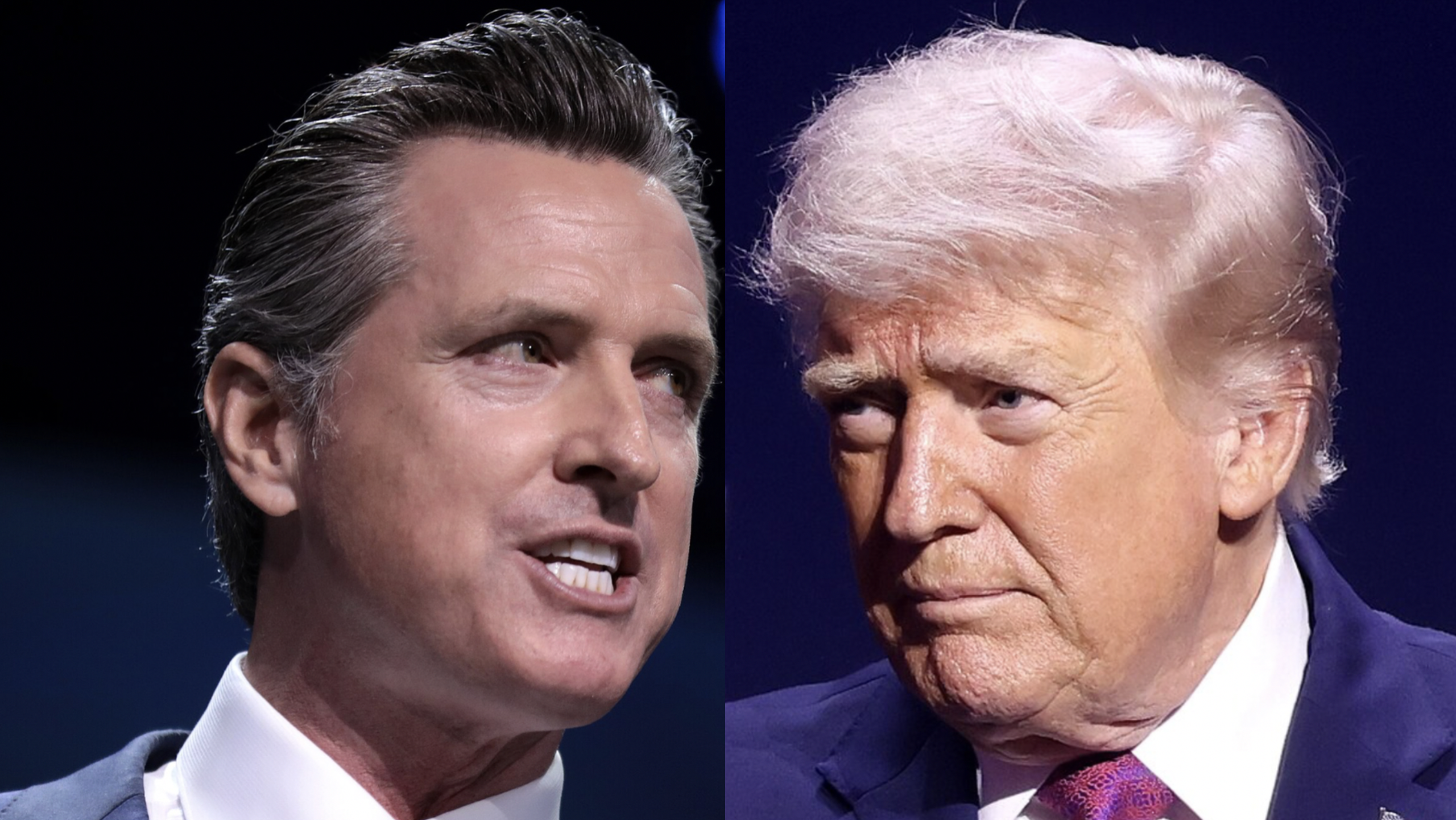
California Gov. Gavin Newsom on Wednesday accused President Donald Trump of weaponizing struggling homebuyers for political leverage, after Trump canceled a planned bill signing for bipartisan housing legislation and tied his signature to passage of a separate, far more contentious voter identification measure. The exchange marked the latest flashpoint in a monthslong feud between Newsom and the president that has stretched across foreign policy, energy costs, and now housing affordability.
Newsom’s statement was posted to X at 10:48 a.m. on June 24, 2026. “Wow. Donald Trump is holding affordable housing hostage until Congress passes his voter suppression bill. He is literally delaying help for families struggling to afford a home in order to make it harder for married women and Black Americans to vote. He is a sick man!” Newsom wrote.
The governor’s post came roughly an hour and a half after Trump announced on Truth Social that he would not proceed with the housing bill signing as scheduled. “Today’s Housing News Conference and Signing is hereby cancelled until such time as we pass the desperately needed SAVE AMERICA ACT, which I consider to be a National Emergency. Thank you for your attention to this matter! President DJT,” Trump wrote at 9:26 a.m.
Background on the Housing Bill
At issue is the 21st Century ROAD to Housing Act, a bipartisan package that passed both chambers of Congress after extended negotiations and is intended to expand housing supply, lower homeownership costs, and cap the number of single-family homes that can be purchased by institutional investors. The bill had been viewed by lawmakers in both parties as a rare bipartisan win to tout ahead of the November midterms, with cost-of-living concerns dominating the political landscape. A signing ceremony had been planned for Statuary Hall at noon Wednesday before Trump’s announcement scrapped it.
In its place, Trump has demanded that Congress first advance the SAVE America Act, which would require voters to present photo identification at the polls and provide proof of citizenship in order to register for federal elections. The measure has been a top legislative priority for Trump for months, but it has repeatedly failed to clear the Senate, where Republicans hold 53 seats yet remain short of the 60 votes needed to overcome a filibuster. The bill has passed the House multiple times, including its most recent version, but has stalled in the Senate despite Trump’s pressure campaign, which has included calls to eliminate the filibuster entirely. Senate Majority Leader John Thune has been blunt about the math, telling reporters that “those are just hard realities,” and that “people at some point have to come to grips with that.”
Newsom’s accusation that the bill would make voting harder for “married women and Black Americans” reflects concerns raised by critics, including Senate Democrats and voting rights organizations, who argue the legislation addresses a virtually nonexistent problem of noncitizen voting while creating new barriers for citizens who lack ready access to documents such as passports or birth certificates — an issue cited as disproportionately affecting married women who have changed their names and members of minority communities with less consistent access to government-issued identification.
A Rare Presidential Visit to the Senate
Trump’s cancellation of the signing set up a high-stakes Wednesday afternoon, when the president was scheduled to attend a closed-door lunch with Senate Republicans at the invitation of Sen. Rick Scott (R-Fla.). Such visits by a sitting president to a Senate party lunch are rare, and Wednesday’s meeting takes place amid a deepening rift between Trump and Senate Republicans, who have pushed back on several of his recent demands, including elimination of the filibuster and his proposal to attach the SAVE America Act to unrelated, must-pass legislation. Sen. Thom Tillis (R-N.C.) has voiced skepticism about the strategy altogether, telling reporters, “every minute we spend on it, we’re not spending on something that can get my colleagues reelected.”
Newsom’s Ongoing Clash With Trump Over the Iran War
Wednesday’s clash is the latest in an extended series of public confrontations between Newsom and Trump that have intensified since the start of U.S. military operations against Iran earlier this year. When Trump first launched strikes on Iran, Newsom said on social media that “the corrupt and repressive Iranian regime must never have nuclear weapons” and that “the leadership of Iran must go,” but argued that did not justify what he called “an illegal, dangerous war that will risk the lives of our American service members and our friends without justification to the American people.” Newsom added at the time that “President Trump is putting Americans at risk abroad because he is unpopular at home.”
Much of Newsom’s subsequent criticism has centered on the economic fallout of the war, particularly rising gas and energy prices. In April, Newsom’s office accused the administration of paying companies almost “a billion dollars” to abandon clean energy projects, with Newsom writing that “Donald Trump is forcing Americans to pay more for energy and sabotaging our future.” As the conflict passed the 100-day mark in June, Newsom pointed to rising prices at the pump as evidence that Trump had lost control of the situation, after the president had claimed otherwise. Newsom has also sparred with the administration over its attempt to invoke the Defense Production Act to restart an offshore oil pipeline in Santa Barbara County, calling the move “desperate, reckless, and illegal” and accusing Trump of using California as a political target “to divide and distract the American people from his wartime failures.”
Newsom’s office has formalized much of this criticism through official statements tracking the war’s costs, including a release marking the conflict’s 107th day that argued the war “continues to drain American wallets” while California works to “protect consumers” from the fallout. Newsom has separately accused the administration of a “weaponized” Justice Department investigation targeting the state, part of a broader pattern of legal and political confrontations between Sacramento and the White House that has persisted throughout 2026.
As of Wednesday afternoon, neither the White House nor congressional Republican leadership had indicated when, or under what conditions, Trump might ultimately sign the housing bill. Under federal law, the president has 10 days to sign or veto legislation once it reaches his desk, and several Republican lawmakers have suggested the standoff could prove largely symbolic, since Congress may have sufficient votes to override a veto if Trump declines to act.