

Some handguns look like they should be riding in the kiddie seat of the gun safe, then hit the range with the attitude of a full-size duty pistol. These are the compact and pocket-size blasters that carry light, hide easily, and still deliver serious performance where it counts. They are the handguns that punch far above their size class, and they are quietly rewriting what “small gun” really means.
Instead of treating tiny pistols as last-ditch compromises, modern designs are squeezing in real power, usable sights, and grown-up capacities. From featherweight pocket pieces to micro-compacts that think they are service pistols, the current crop of small handguns proves that physics is negotiable, at least a little, if the engineering is clever enough.
When “pocket pistol” no longer means “barely a gun”
The old stereotype of the pocket pistol was a snub-nosed, low-capacity contraption that was better than harsh language but not by much. Modern designs have quietly staged a mutiny against that reputation, turning truly tiny guns into credible defensive tools. The KelTec P32, for example, is described as the lightest, thinnest pocket pistol on the market, a .32 that still has “both bark and bite,” which is a polite way of saying it is absurdly easy to carry yet still capable of doing real work in a fight.
That kind of performance in such a small package changes how people think about everyday carry. A pistol like the P32 can disappear into a front pocket or ankle rig without dragging down gym shorts, yet it is still a centerfire handgun with practical defensive potential. Reviews that highlight its minimal weight and slim profile, while still calling out the effectiveness of its 32 caliber chambering, show how far pocket guns have come from the days when they were essentially mechanical good-luck charms.
Micro-compacts that act like duty guns
If pocket pistols are the stealthy minimalists, micro-compacts are the overachievers who skipped straight from freshman year to grad school. The SIG P365 is a prime example, routinely cited as one of the best-selling handguns in the country and credited with making a huge impact when it first arrived. It did not just shrink a service pistol, it crammed service-level capacity into a subcompact footprint, proving that a gun small enough for restrictive carry environments could still carry a serious payload.
That shift matters because it breaks the old tradeoff where shooters had to choose between a concealable pistol and one that held enough ammunition to feel reassuring. Guidance aimed at new and smaller-framed shooters notes that, Luckily, with many modern handguns, size and capacity are no longer opposite ends of a sliding scale. Many current subcompacts offer double-digit ammo capacity in packages that still qualify as easy to hide, and the P365 sits right at the center of that trend, showing how a micro-compact can behave like a shrunken duty gun instead of a compromise.
Big power in small frames
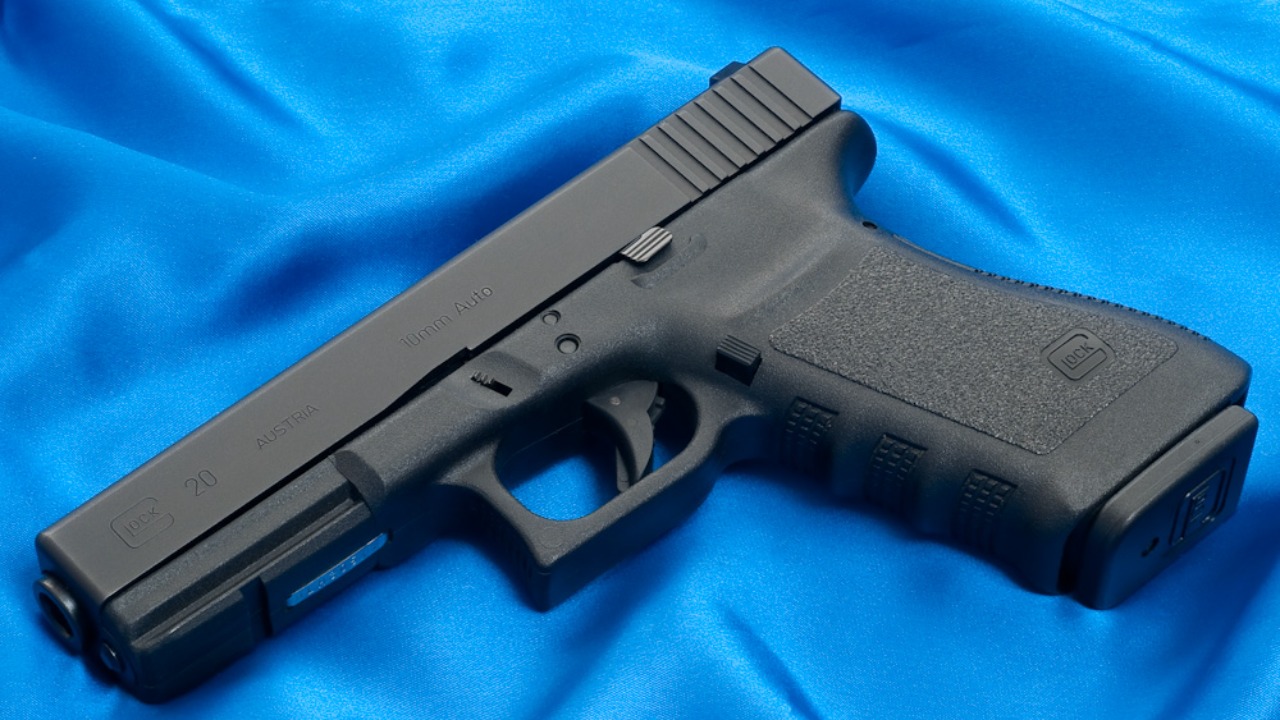
Some handguns do not just stretch capacity, they stretch the definition of “reasonable power” in a carry-sized package. In the Glock universe, the Glock 20 is singled out as the most powerful model when power is defined by force per round, with its 10 mm chambering putting it at the top of the list. When the Glock 20 is discussed in that context, it is clear that this is a pistol designed to deliver serious energy, yet it still lives in a form factor that many shooters can carry with the right holster and wardrobe.
That kind of ballistic muscle in a handgun that is not a massive hunting revolver shows how far semi-auto design has come. The frame of a pistol, which in smaller weapons is simply called the frame and in larger platforms might be referred to as a receiver, has to manage the stresses of stout cartridges while still housing parts such as the hammer, bolt, and firing pin. The use of materials like aluminum in firearm construction helps keep weight manageable even when the gun is built to handle powerful rounds, allowing pistols like the Glock 20 to deliver impressive force without turning into boat anchors on the belt.
Engineering tricks that make small guns shoot big
Raw power and capacity are only half the story; a small handgun that is miserable to shoot will never live up to its potential. Training material on handgun handling points out that, Although handguns are much more popular as self-defense weapons and more accurate at close range, their short barrels make precise shot placement more difficult. That challenge is magnified when the gun itself is tiny, with minimal sight radius and a grip that barely accommodates a full firing hand.
Modern compact and pocket pistols fight back against those limitations with smarter ergonomics and better materials. Aluminum frames and other lightweight alloys allow designers to shape grips and frames that fit the hand more naturally without adding bulk, while still supporting critical components such as the hammer, bolt, and firing pin. At the same time, the trend toward better sights and more controllable triggers on small guns means that a shooter who puts in the practice can wring surprisingly accurate performance out of a pistol that would once have been dismissed as a “belly gun.” The result is a class of compact handguns that not only carry like small guns but also shoot far more like their full-size cousins.
Pocket-friendly, purse-ready, and still serious
For many carriers, the real test of a handgun is not how it looks on a spec sheet but how it behaves in real pockets, purses, and waistbands. The S&W Bodyguard 2.0, for instance, is described as very pocket friendly, even if it is not quite as small and thin as the P32. It may make some pockets feel tight, but it still fits, which is exactly the sort of real-world compromise that matters when someone is deciding what they will actually carry every day instead of what they admire at the range once a month.
That practicality is especially important for shooters who prioritize discretion or who have to work around restrictive clothing and environments. Guides aimed at women emphasize that modern handguns can offer double-digit capacity in subcompact sizes, making them suitable for purse carry, appendix carry, or other low-profile setups without giving up meaningful firepower. When a pistol like the Bodyguard can ride in a pocket and a micro-compact like the SIG P365 can hide under a fitted jacket while still offering serious capacity, the line between “backup gun” and “primary defensive tool” starts to blur in a way that clearly favors the person doing the carrying.