
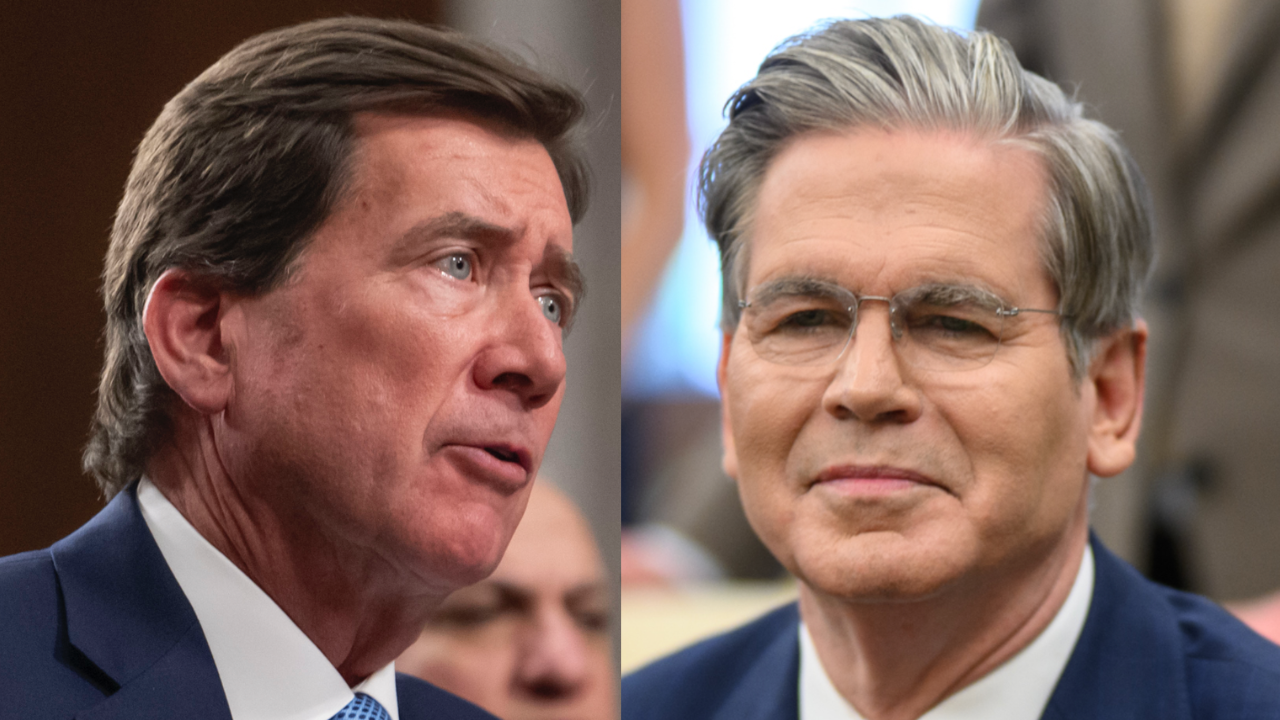
Sen. Bill Hagerty, a former U.S. ambassador to Japan, praised Treasury Secretary Scott Bessent on Sunday evening for coordinating with Japan’s Ministry of Finance on a rare joint currency intervention to support the yen. “The U.S.-Japan Alliance is one of America’s greatest strategic assets,” Hagerty wrote on X. “I applaud [Scott Bessent] and the U.S. Treasury for coordinating closely with Japan’s Ministry of Finance to promote stable, well-functioning markets. This close coordination reflects the strength of our alliance and helps advance peace, security, and stability across the region.”
What Bessent Said
Hagerty was responding directly to a post from Bessent published the same evening and later reposted to the Treasury Department’s own website. “The Trump Administration delivers for America’s trusted partners. Economic security is national security. And the U.S.-Japan alliance is built on both,” Bessent wrote. “Friday’s coordinated foreign exchange actions countered disorderly yen movements. Treasury remains attentive and in close communication with our counterparts at MOF and BOJ. We will not hesitate to participate in further joint intervention.”
Bessent also flagged a specific tool the U.S. wants Japan to lean on going forward. “The FIMA Repo Facility is an important backstop. We would encourage it to be upsized in the coming months,” he wrote, adding that the administration “strongly support[s] Japan’s decisive market and monetary steps to correct the substantial undervaluation of the yen.”
What Actually Happened
The exchange followed a joint U.S.-Japan operation on Friday, July 31, to buy yen after the currency had fallen to roughly 163.73 to the dollar — its weakest level in roughly four decades — before rebounding to 157.57 by the close of Friday trading. It marked the first coordinated U.S.-Japan currency intervention since the two countries acted together in 2011 to weaken an overly strong yen following the Tohoku earthquake and tsunami; some market analysts have described it as the first joint operation to strengthen the yen specifically since 1998.
The FIMA Repo Facility, Explained
The mechanism Bessent wants expanded is a standing Federal Reserve tool built for exactly this kind of moment. According to the Federal Reserve Bank of New York’s own description of the facility, the FIMA Repo Facility allows foreign central banks and monetary authorities with custody accounts at the New York Fed to temporarily exchange their U.S. Treasury holdings for dollars, subject to a per-counterparty limit of $60 billion. The facility was created during the 2020 pandemic to reduce the need for foreign central banks to sell Treasuries outright into the open market — a sale that can push Treasury yields higher and raise U.S. borrowing costs — and was made permanent in 2021.
That mechanism matters for the current episode because of how the U.S. carried out its side of the intervention. Rather than selling dollars outright, the Treasury sold euros from its reserves to buy yen, an approach market analysts have described as a way to support Japan’s currency without adding pressure to Treasury markets. Bessent’s push to raise the facility’s $60 billion ceiling would give Japan more room to draw dollars against its Treasury holdings rather than selling those Treasuries on the open market — a dynamic that ties the currency intervention directly to the health of the U.S. bond market itself.
Japan’s Side of the Statement
Japan’s Ministry of Finance confirmed the joint operation the same day, with Finance Minister Satsuki Katayama saying Japan “remains attentive and in close communication with counterparts at U.S. Treasury” and that Tokyo “will not hesitate to conduct further coordinated interventions in the future.” The ministry said the action was carried out in accordance with a September 2025 joint statement from the two countries’ finance ministers, and was aimed at addressing what it called “excessive volatility and disorderly movements” in the yen — language that closely mirrors Bessent’s own description of the operation.
The Political Backdrop in Tokyo
Bessent’s statement also endorsed the broader economic direction of Japanese Prime Minister Sanae Takaichi’s government, describing it as entering “an exciting new phase of Abenomics” built on nearly 15 years of stimulus policies dating back to former Prime Minister Shinzo Abe. The yen’s extended weakness has created real political pressure in Tokyo, driving up the cost of imported energy and food and squeezing Japanese households and businesses even as it has, at times, benefited Japanese exporters.
Hagerty’s Standing on the Issue
Hagerty’s praise for the coordination is consistent with his long-standing focus on the U.S.-Japan relationship. As U.S. ambassador to Japan during Trump’s first term, he negotiated two separate trade agreements with Tokyo, and he has continued to comment publicly on U.S.-Japan economic ties as a senator, including remarks earlier this year describing Japan as poised to become “a major financier of projects that support all of our national security, our economic security, and our national security.”
An Open Question on Fed Independence
Bessent’s request that the Fed upsize the FIMA facility raises a separate institutional question that has drawn attention independent of the Japan episode itself: any change to the facility’s lending parameters would require approval from the Federal Open Market Committee, the Fed’s independent rate-setting body, putting the request in the hands of new Fed Chairman Kevin Warsh at a moment when the relationship between the Treasury and the traditionally apolitical Fed has already been a subject of scrutiny.
Where Things Stand
As of Monday, the yen was trading around 157.70 to the dollar, holding most of Friday’s gains. Both governments have signaled they are prepared to intervene again if volatility returns, and Bessent’s statement leaves the door explicitly open to further joint action — meaning Hagerty’s praise for the coordination may be an early marker in what both governments have described as an ongoing, rather than one-time, arrangement.