
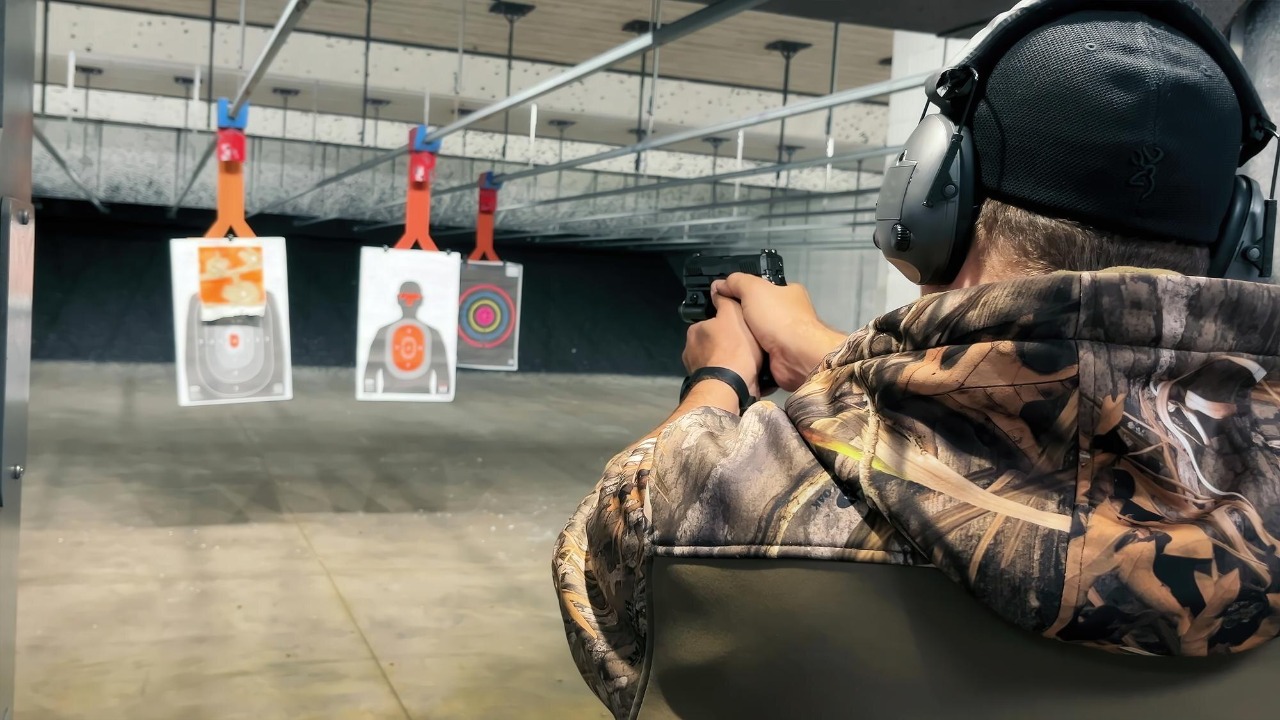
Some firearms are so punishing that the person behind the trigger ends up taking more abuse than whatever they are aiming at. Instead of feeling like precision tools, these guns behave like vindictive gym equipment that charges a bruise for every shot. I want to walk through the worst offenders, the designs and calibers that turn range time into a full-contact sport, and why some shooters still line up to get walloped.
When the rifle hates you back
Rifles have a reputation for reach and authority, but a few models deliver that authority straight into the shooter’s collarbone. Some heavy hitters are notorious for recoil that feels less like a push and more like a disciplinary meeting with a sledgehammer. Reports on particularly hard-kicking rifles describe guns that hit the target hard but hit the shooter even harder, the kind you dread firing more than a few times because of the bruises they leave behind, a reminder that physics has no sense of mercy and only a passing interest in your rotator cuff. Those accounts of rifles that punish the shooter more than the target capture a simple truth: once you cross a certain threshold of power and weight, every trigger pull becomes a negotiation with your pain tolerance.
The irony is that modern rifle design has already shown that power does not have to come packaged with suffering. Glen Seekins, for example, built the Havak Pro Hunter as a lightweight rifle that still manages serious long range performance, a combination that proves you can have reach without needing an ice pack afterward. Other reporting on Lightweight mountain rifles notes that these trimmed down guns can be just as accurate and easy to shoot as traditional heavier rifles, even when they come in under 7 pounds and still qualify as true mountain rifles. When I compare those thoughtful designs with the shoulder-destroying brutes, it is clear that the worst offenders are not powerful by necessity, they are simply indifferent to the human body attached to the stock.
Handguns that feel like handheld car crashes

If rifles bruise your shoulder, some handguns specialize in rearranging your wrists. The Pfeifer Zeliska .600 Nitro Express Revolver is the poster child for this category, a handgun so large that its .600 Nitro Express rounds are actually British made rifle bullets. The gun weighs over 13 pounds, each .600 Nitro Express bullet costs nearly $40, and it was developed by a Swiss gun enthusiast named Zeliska who apparently looked at big game hunting rounds and thought, yes, that belongs in a revolver. Firing something like that is less about marksmanship and more about surviving the experience, a kind of ballistic strongman event where the prize is keeping all your joints aligned.
Even when the calibers are slightly more reasonable, the pattern holds. The .475 Linebaugh, for instance, is known for a relatively high power to weight ratio that, in the absence of a muzzle brake, often entails greater felt recoil than similar big bore options such as the .480 Ruger. That combination of heavy bullet and compact package means the shooter absorbs a disproportionate share of the drama. Coverage of defensive handguns reinforces the same theme, describing small carry guns that are easy to conceal but brutal to shoot, with recoil levels that make regular practice feel like a hazing ritual rather than responsible training. When a handgun’s main security feature is that nobody wants to pull the trigger twice, something has gone off the rails.
Snub noses, featherweights, and the myth of “easy to carry, easy to shoot”
Compact revolvers and ultra light pistols are marketed like the yoga pants of the gun world, promising comfort, convenience, and a flattering profile. The reality is closer to wearing a corset made of rebar. Reporting on snub nose revolvers points out that One major factor in how they behave is weight, because a heavier gun will absorb some of the recoil and spare the shooter. Strip that weight away in the name of comfort and the recoil has nowhere to go except straight into your hand, which is why so many tiny revolvers feel like they are trying to escape your grip every time you touch off a round. The physics are simple, but the sales brochures rarely mention that your new pocket gun doubles as a percussion massage device for your palm.
Lightweight rifles tell a similar story, although the best designs manage the trade off more gracefully. Coverage of Lightweight mountain rifles notes that these guns can still be accurate and easy to shoot, even when they are trimmed down for long hikes in steep country. The key is balancing barrel profile, stock design, and recoil management so the shooter does not pay for every ounce saved with a fresh bruise. When that balance is missing, you end up with firearms that are delightful to carry and miserable to fire, the hiking equivalent of buying ultralight boots that feel great until you realize they are made of sandpaper.
Magnum bravado and the cult of overkill
Some of the most punishing guns exist not because anyone truly needs them, but because shooters, like drivers and weightlifters, occasionally fall in love with excess. The .460 S&W Magnum is a perfect example, a cartridge promoted as the best choice for concealed or open carry if you can manage to shoot it well. That last clause does a lot of work. Managing a .460 in a carry sized revolver means accepting recoil that borders on theatrical, the sort of blast that clears nearby shooting benches and leaves you wondering if your fillings are still under warranty. It is technically a defensive option, but it behaves like a dare.
Big bore revolvers in general attract a certain bravado, and the .475 Linebaugh sits squarely in that culture. With its high power to weight ratio and punishing recoil without a muzzle brake, it is less a practical tool and more a statement piece, the ballistic equivalent of lifting a barbell loaded with too many plates just to see if you can. Defensive handgun commentary notes that some compact magnums deliver a lot of recoil in a small package, making them easy to carry but brutal to shoot, which is a polite way of saying they are bad at their job. A defensive gun you dread practicing with is like a fire extinguisher that sprays pepper spray, technically protective but not exactly user friendly.
Why we keep shooting the guns that hurt us
Given all this self inflicted suffering, it is fair to ask why anyone voluntarily signs up for it, and I say that as someone who has absolutely signed up for it. Part of the appeal is simple curiosity, the same impulse that convinces people to ride wooden roller coasters or eat ghost pepper wings. The Pfeifer Zeliska .600 Nitro Express Revolver, with its 13 pound frame and .600 Nitro Express rifle bullets that cost nearly $40 each, is not a rational purchase so much as a story generator. You do not buy that gun to punch paper, you buy it so you can tell people you survived it. The pain becomes part of the bragging rights, a souvenir you carry home in the form of a sore wrist and a slightly unhinged grin.
There is also a more practical undercurrent, even if it sometimes gets buried under the machismo. Discussions of long range rifles highlight how designers like Glen Seekins, with the Havak Pro Hunter, have pushed to combine power, accuracy, and manageable recoil in a lightweight package. Coverage of Lightweight mountain rifles shows that it is possible to build guns that are both portable and shootable, rather than forcing hunters to choose between a heavy, forgiving rifle and a light, abusive one. The existence of those thoughtful designs throws the worst offenders into sharper relief. When a gun still punishes the shooter more than the target in 2025, it is not because we lack the technology to do better. It is because, on some level, we enjoy flirting with the edge of what we can handle, even if our shoulders and wrists file formal complaints the next morning.