
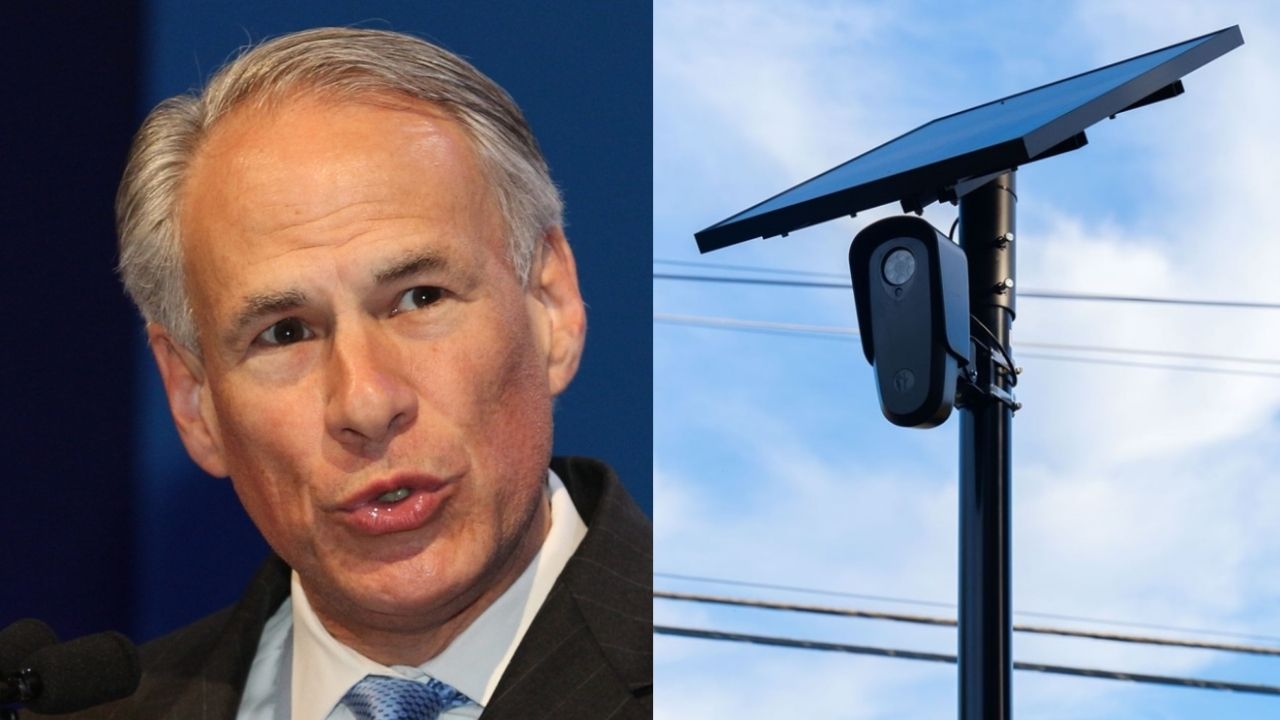
Texas Gov. Greg Abbott ordered state agencies late Thursday to halt funding for Flock Safety’s AI-powered license plate readers, a decision that arrives as cities and counties across the state sever ties with the surveillance company amid mounting complaints over privacy, data-sharing and outright abuse of the technology by law enforcement officers themselves.
Abbott’s Office Confirms the Order
Abbott’s office told Fox News Digital that the state is moving to cut off state-agency funding for the cameras, while noting that the bulk of the money behind them has never come from Austin in the first place. “Almost all Flock cameras in Texas are used by cities, and those cities are increasingly canceling their contracts with Flock,” Abbott spokesperson Andrew Mahaleris said in a statement.
Mahaleris said the state is now formally closing off the funding pathway that remains under its control. “To the extent that cities get any funding for those cameras, most of it comes from the federal government,” Mahaleris continued. “To the extent any funding comes from Texas agencies, those agencies are clarifying that those funds cannot be used for Flock cameras.”
What the Cameras Do
Flock Safety is one of the most widely deployed providers of automated license plate readers, or ALPRs, in Texas. The cameras photograph passing vehicles and use artificial intelligence to identify a vehicle’s make, model and color, as well as distinguishing features such as bumper stickers or dents. Using the data collected, law enforcement agencies can search records across participating camera networks nationwide, a capability supporters credit with helping solve crimes and locate stolen vehicles or missing people, and that critics say has opened the door to sweeping, largely unsupervised surveillance of ordinary drivers.
A Wave of Local Cancellations
Abbott’s move follows a rapid succession of local decisions to abandon the technology. Earlier in the week, the Pflugerville City Council voted unanimously to end the city’s agreement with Flock, eliminating all 28 camera readers covered by its contract and disabling access to the system. In Hood County, the Commissioners Court likewise voted to end its relationship with the company and later unanimously directed that the county’s three cameras be disconnected and covered until they can be physically removed.
Hood County Judge Rick Shirley, who directed the removal, made clear the decision was not his alone but a response to residents’ demands, and he did not mince words when addressing the company directly, telling Flock to “come get your garbage out of my county.” Shirley added that he supports technology that helps police solve crimes and locate dangerous suspects but argued public safety cannot be the only consideration. “We can have good policing and still insist on boundaries,” he said. “We can use technology without giving government unlimited surveillance capability.”
Abbott Describes a “Crackdown”
In a Friday radio interview with Glenn Beck, Abbott characterized the unraveling of Flock’s footprint in Texas as a deliberate response to abuse, not a retreat from public safety technology generally. “This is something that is easily containable, easily controllable, and we’re ensuring that whether it be through criminal crackdowns, whether it be through cancellation of contracts, whatever the case may be, Flock cameras are being reduced dramatically,” Abbott said.
Abbott specifically cited the case of a Lufkin, Texas, police officer now facing 100 counts of misusing public information after investigators alleged he used the city’s Flock cameras to surveil 11 people over the course of more than a year. State officials said at least six police departments and sheriff’s offices across Texas have, within the past month alone, placed officers on leave, opened investigations or filed criminal charges tied to misuse of the camera network.
The Scale of the Lufkin Case
Court filings reviewed by reporters allege the scope of that officer’s misuse was far broader than a single incident. Investigators say he improperly accessed the Flock system more than 45,000 times over roughly 200 days, with one individual license plate reportedly queried nearly 3,500 times. The Lufkin Police Department has since suspended its use of Flock while the investigation continues.
State Money Behind the Camera Network
The funding stream Abbott is now closing traces back to the Motor Vehicle Crime Prevention Authority, a state agency created to combat vehicle theft, burglary and fraud-related motor vehicle crimes and overseen by a board largely appointed by the governor. The authority has helped state and local agencies install more than 3,000 Flock cameras since 2023, with reporting from the Texas Tribune putting the agency’s total investment in the surveillance network at roughly $30 million.
That funding originated from a 2023 state law that added a $1 surcharge to vehicle insurance policies across Texas specifically to combat a surge in catalytic converter theft. According to the Texas Tribune, there had been no discussion in the state Legislature at the time about using that money for Flock’s license-plate-reading cameras before the authority began doing so.
A Republican Ally Pushes for a Pause
Pressure on Abbott has not come only from Democrats or privacy advocates. Earlier this month, Texas Agriculture Commissioner Sid Miller, a Republican, published an op-ed in the Houston Chronicle urging the governor to freeze new Flock purchases and enact stronger privacy protections. “Texas belongs to free people, not to the watchers,” Miller wrote. “Texas must never become a surveillance state.”
In a separate interview, Miller pointed to specific cases of officers weaponizing the system against people they knew personally. “We’ve got cases where individual law enforcement officers have abused the system to track ex-wives and ex-girlfriends,” Miller said. “That’s not the purpose of the system.” Miller has called for a statewide moratorium, though he has said he does not expect Abbott to go that far.
Flock Safety Defends Its Technology
Flock Safety has pushed back on characterizations that its product is inherently unsafe, framing the recent controversies as isolated misuse rather than a systemic flaw. Company spokesperson Paris Lewbel told Fox News Digital that Flock’s technology remains “an important public safety tool for law enforcement agencies across Texas, helping officers solve serious crimes, find missing people, recover stolen vehicles, and support safer communities.”
Lewbel added that the company backs legislative reform rather than outright bans. “We support thoughtful legislation and strong privacy, transparency, and accountability guardrails that ensure technology is used responsibly while preserving law enforcement’s ability to use effective tools to keep people safe,” she said. Regarding Pflugerville specifically, Lewbel said the company’s audit logs showed statewide data-sharing had been enabled for the city since 2024 and that agencies receive monthly emails detailing their sharing relationships, adding that two out-of-state agencies had mistakenly been categorized as Texas agencies and folded into the statewide network. “We take responsibility for that error, which was corrected months ago,” she said.
Congressional Scrutiny Adds Pressure
The backlash has reached Capitol Hill as well. Sen. Josh Hawley, R-Mo., has opened an inquiry into Flock Safety’s data practices, questioning who has access to information the company has compiled on hundreds of millions of vehicle movements nationwide. “Flock has assembled an unprecedented national surveillance network,” Hawley told Fox News Digital. “They boast more than 120,000 cameras across 49 states and more than 20 billion vehicle scans every month.”
A Broader National Reckoning
Texas is not acting in isolation. According to a tally by the advocacy group DeFlock, at least 56 cities and towns nationwide have deactivated, rejected or canceled Flock contracts in 2026 alone, a pace that has accelerated through the summer as investigative reporting and a string of police misconduct cases raised new questions about who can search the company’s nationwide camera network and for what purpose. In Massachusetts, a Stow police officer resigned amid an investigation into a complaint that he had run unauthorized Flock searches involving someone he knew personally; that department has since severed its contract and removed its cameras. In Arizona, the city of Tempe canceled an $80,000 Flock contract this week, with officials citing the need to preserve public trust.
Installations Without Public Notice
Separately, residents in Harris and Montgomery counties have raised concerns that some cameras were installed without any public vote or advance notice. Dozens of Houston-area residents packed a Harris County Commissioners Court meeting in mid-August demanding answers about roadside cameras they said were quietly installed to log the movements of every passing vehicle, exposing what local reporting described as gaps in Texas law governing surveillance technology.
What Comes Next
With state agencies now barred from directing money toward Flock cameras, the future of the network in Texas will largely hinge on decisions made at the city and county level, where officials continue to weigh the technology’s crime-solving record against the mounting record of misuse. Abbott’s order does not affect federally funded cameras or existing local contracts still under review, leaving the pace and scope of further cancellations to individual Texas communities in the weeks ahead.