
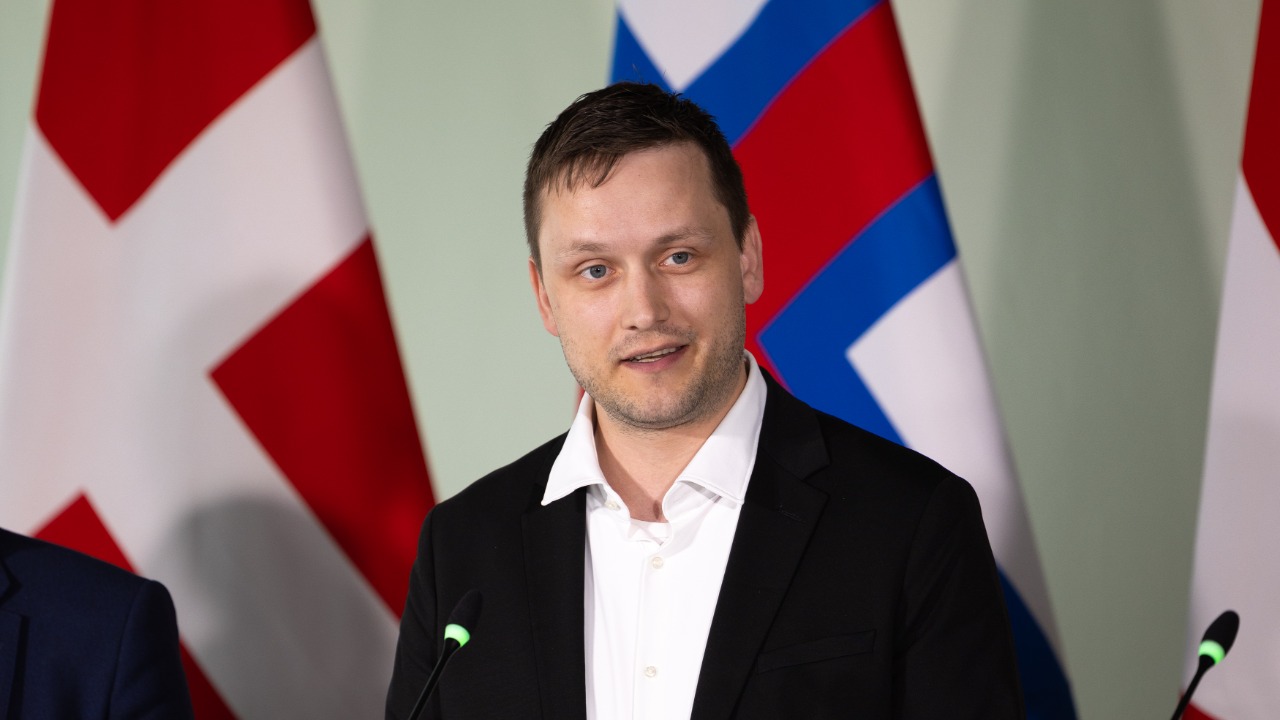
Greenland’s leaders have drawn a stark red line in the Arctic, insisting that they will not accept any alteration of their sovereignty despite renewed pressure from Washington. Their message, delivered in increasingly direct language, is that the island’s future will be decided in Nuuk and Copenhagen, not in the White House or the Pentagon.
As President Donald Trump again talks openly about taking control of the vast territory, Greenland’s government is pairing uncompromising rhetoric with a flurry of diplomatic moves, from appeals to NATO to closer coordination with Denmark and European partners. The confrontation is turning a long running curiosity about buying Greenland into a live test of international law, alliance politics and decolonization.
Greenland’s uncompromising stance on sovereignty
I see Greenland’s latest statements as the culmination of a long process in which a self governing Arctic society has grown more confident about defending its status. The territory’s government has now said it “cannot accept” any United States attempt to control the island and will not agree to a change in status under any circumstances, framing its position as a matter of both national dignity and legal right linked to its existing autonomy within the Kingdom of Denmark and its identity as Greenland. Officials in Nuuk have stressed that they are not a bargaining chip in great power competition, but a people with their own institutions and aspirations.
The language coming from the Greenlandic cabinet is unusually blunt for a small territory addressing its most powerful security partner, and it is clearly a response to President Donald Trump’s renewed claim that he would take the island “one way or the other.” In a formal statement, the Greenlandic government rejected that threat outright and underscored that its security “firmly” belongs in the Western alliance, not under unilateral American control, a point that has been echoed in live briefings that described Greenland as an integral part of the western defence alliance and highlighted its role inside Nato.
Trump’s renewed push and the NATO security frame
From my vantage point, what makes this confrontation different from earlier episodes is that President Donald Trump has folded his interest in Greenland into a broader narrative about American power and Arctic strategy. Earlier this month, he restated his desire to take control of Greenland, presenting the move as a way to secure key sea lanes and mineral resources and to outflank rivals in the far north. His allies have framed the idea as a bold strategic play, even as legal scholars dissect how such a transfer would collide with international norms on self determination and territorial integrity.
Greenland’s reply has been to internationalize the dispute rather than treat it as a bilateral quarrel with Washington. The prime minister’s office has called on NATO to guarantee the island’s defence against any possible attempt at forced takeover, explicitly warning of a hypothetical invasion scenario and insisting that alliance guarantees must apply even when the perceived threat comes from a fellow member. That appeal has landed in a Europe already on edge about Arctic militarization, where leaders have been stressing that security in the Arctic must be achieved collectively, in conjunction with NATO allies including the United States, and that any change to the region’s status must respect international law and the positions of partners such as Italy, Spain and Poland who have all signalled concern about unilateral moves in the Arctic.
Danish, European and domestic Greenlandic responses
I read Copenhagen’s reaction as a careful blend of solidarity with Nuuk and reassurance toward Washington. A bipartisan congressional delegation is heading to Denmark to meet both Greenlandic and Danish leaders, a trip framed as an effort to strengthen the NATO alliance while also underlining the importance of respecting Denmark’s sovereignty over the territory and the existing constitutional arrangements that bind the kingdom together with Greenland. Danish officials have been at pains to stress that while they value the American security presence, the legal status of the island is not up for negotiation.
Inside Greenlandic politics, the backlash to Trump’s rhetoric has cut across party lines but carries a distinctly decolonial tone. Opposition figure Juno Berthelsen, a Greenlandic politician from the Naleraq party, has captured that mood by insisting that “we want to be Greenlanders,” warning that outside powers should not use security arguments to delay decolonization or to question the right of Greenlanders to chart their own course. That sentiment dovetails with the government’s own messaging that any future evolution of status, including potential independence, must come from democratic debate in Nuuk rather than pressure from Washington or even Copenhagen.
Choosing Denmark, testing alliances and the road ahead
For me, one of the most telling developments is how clearly Greenland’s current leadership is aligning itself with Denmark and NATO rather than hedging between Washington and Europe. Greenland’s Head of Government, the Naalakkersuisut leader Jens Frederik Nielsen, has said that “we choose Denmark,” making plain that his administration prefers to deepen ties within the kingdom and the alliance instead of entertaining American control, a stance he reiterated as he prepared for meetings in Copenhagen and a planned visit to the Head of Government in Denmark. In parallel, live briefings from Nuuk have underlined that Greenland’s security “firmly” belongs in Nato, with the prime minister stressing that any American interest in the island must operate within the framework of international law and alliance consultation, not unilateral diktat from Trump.
Those choices are already reshaping Greenland’s external relationships. Reports shared by supporters of President Donald Trump have highlighted that Greenland has demanded NATO’s protection following his comments about acquiring the territory, turning a domestic political message into a viral flashpoint on social media that underscores how deeply the sovereignty issue has penetrated American discourse about NATO. At the same time, live coverage from Europe has chronicled how Greenland’s leaders are using the crisis to argue for stronger European Union and NATO mechanisms that could deter any member, including the United States, from trying to claim the island, while also reminding audiences that the confrontation is part of a wider pattern of tensions stretching from Ukraine to the high north that is testing the cohesion of Western alliances.
Looking ahead, I expect Greenlandic leaders to keep pairing hard lines on sovereignty with pragmatic diplomacy. The Greenland PM has already signalled that he prefers Denmark ties over the United States ahead of a meeting with Vice President JD Vance, as local parties such as COPE weigh how to respond to Vance. For all the drama of Trump’s threats, the more consequential story may be how a small Arctic nation in waiting is using the moment to lock in its place inside NATO, deepen its partnership with Denmark and Europe, and assert that its sovereignty is not a commodity to be traded but a principle it will not surrender under any circumstances.