
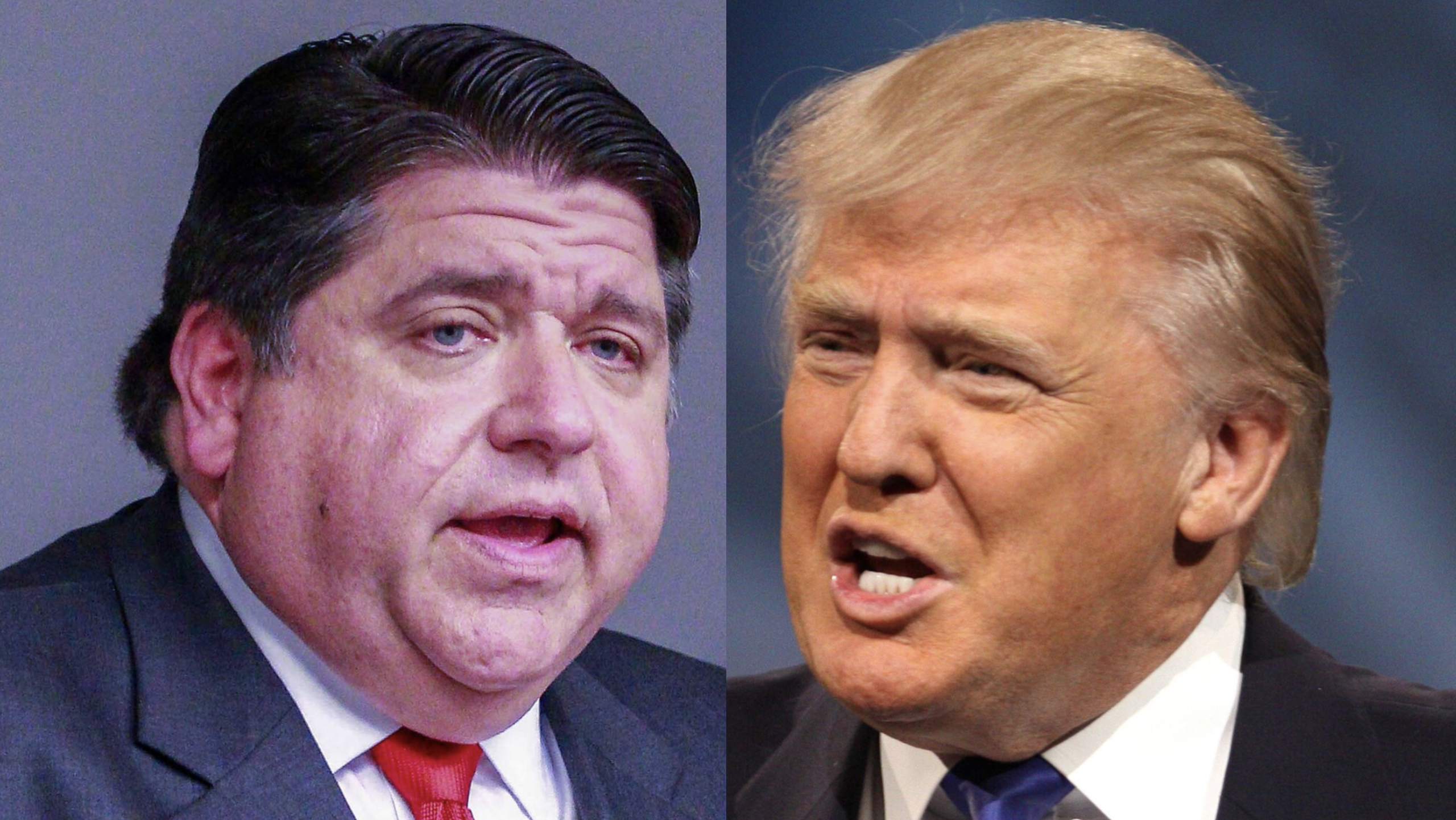
Illinois Governor JB Pritzker took direct aim at President Donald Trump on Saturday morning, seizing on new federal inflation data to argue that the commander-in-chief is consumed with White House vanity projects while the financial pain of the Iran war lands on everyday Americans. The post, published to X at 10:29 AM on June 27, 2026, was direct and blistering — and it landed against the backdrop of one of the sharpest inflation readings the country has seen in years. For a governor widely viewed as a 2028 presidential contender, it was the latest in an unbroken line of attacks tying Trump’s military ambitions to a domestic economic crisis that polls suggest most Americans squarely blame on the White House.
The Post That Started It
Pritzker’s Saturday message was a direct response to a CNN report citing new data from the Commerce Department showing that inflation had reached its highest point in three years. The full text of Pritzker’s post read:
“For the first time in three years, inflation rose to 4%.
What is Donald Trump focused on? His reflecting pool, his ballroom, and his arch.
Remember, he doesn’t care about your financial situation.”
The CNN report that prompted the response noted that the Federal Reserve’s preferred inflation gauge, the Personal Consumption Expenditures price index, rose to 4.1% in May, driven in large part by high gas prices that pushed annual inflation to its highest level in three years. The war with Iran, Trump himself has acknowledged, is the primary force propping up energy prices — and thus inflation broadly.
The Vanity Projects in Question
Pritzker’s specific references to Trump’s “reflecting pool,” “ballroom,” and “arch” were not rhetorical flourishes. President Trump’s ongoing construction projects in Washington include restoring the Lincoln Memorial Reflecting Pool, building a 90,000-square-foot White House ballroom, and erecting a 250-foot triumphal arch — an ambitious and costly reimagining of the nation’s capital that critics have derided as self-aggrandizing at a moment of economic strain. Pritzker had previously hit the same targets during his Illinois budget signing ceremony earlier in June, telling assembled lawmakers that Washington was running “massive deficits and piling debt onto future generations to fund tax breaks for corporations, brutal ICE occupations, vanity projects like a new White House ballroom, painting the reflecting pool blue — which already is an epic fail — and holding UFC matches on the White House lawn.”
A Pattern of Criticism Since the War Began
Pritzker’s Saturday post was not an isolated shot. Since the United States and Israel launched military strikes against Iran in late February 2026, the Illinois governor has been among the most vocal Democratic voices connecting the war to its economic consequences at home. When the strikes began, Pritzker released a statement saying: “No justification, no authorization from Congress, and no clear objective. But none of that matters to Donald Trump — and apparently neither do the safety and lives of American service members. He is once again sidestepping the Constitution and once again failing to explain why he’s taking us into another war. Americans asked for affordable housing and health care, not another potentially endless conflict. God protect our troops.”
As gas prices surged in early April, Pritzker returned to the issue again, posting a pointed message to X that asked: “Gas prices are up. Measles is back. Farms are folding. Tariffs are raising grocery costs. Americans have been sent to fight another Middle East war. WHERE IS DONALD TRUMP?”
“Americans Are Struggling” — And Trump Calls It an Investment
A week later, Pritzker escalated his criticism further, this time responding directly to Trump’s framing of the Iran military campaign. Pritzker wrote on X: “Americans are struggling to afford gas and groceries. Meanwhile Trump calls war an ‘investment.’ That tells you everything you need to know.” He was referencing Trump’s April 1st address in which the president described the war with Iran as “a true investment” for America’s future generations.
Pritzker also went further than economic critique during that same stretch, joining a growing chorus of lawmakers calling for Trump’s removal from office under the 25th Amendment after Trump posted graphic threats on social media warning of mass casualties in Iran. Pritzker called Trump “a deranged man threatening to wipe out an entire country.”
Trump’s Own Words: “Not Even a Little Bit”
Central to Pritzker’s Saturday argument — and to the broader Democratic critique of Trump’s economic stewardship — is a statement the president himself made in May 2026 that quickly became a defining soundbite of the war. Departing the White House for a diplomatic trip to China, Trump was asked by reporters to what extent the financial burden on American families was motivating him to seek a deal with Iran. Trump replied: “Not even a little bit. The only thing that matters when I’m talking about Iran — they can’t have a nuclear weapon. I don’t think about Americans’ financial situation. I don’t think about anybody. I think about one thing — we cannot let Iran have a nuclear weapon. That’s all.”
ABC News correspondent Karen Travers pressed Trump to clarify whether he was considering the financial impact of the war on Americans. He doubled down, saying: “The most important thing, by far, is Iran cannot have a nuclear weapon.” The remarks, swiftly clipped and circulated by Democrats, prompted Senate Minority Leader Chuck Schumer to reshare the video on X with the caption: “We can tell.”
“I Love the Inflation”
If the May admission was damaging, Trump’s response to the very inflation data Pritzker highlighted on Saturday made matters considerably worse for the White House. When asked about the latest Consumer Price Index report showing inflation hitting above 4%, Trump said: “No, I love it. The numbers were great.” The president later attempted to clarify, telling the New York Post that he was referring to his belief that inflation figures “will be so good as soon as the war ends.” But the damage was already done. Democrats seized on the “I love the inflation” remarks to argue that the president is disconnected from the financial pain millions of Americans are feeling. Speaker Mike Johnson sought to contain the fallout, telling reporters Trump’s remark had been taken “totally out of context.”
The Economic Picture Behind the Politics
The inflation data itself offers both alarm and a measure of cautious optimism. The PCE price index rose to 4.1% in May from 3.8% in April, but when stripping out volatile gas and food prices, so-called core inflation rose at a more muted annual rate of 3.4%. The CNN report noted that now that oil tankers are moving through the Strait of Hormuz after months of disruption, gas prices are beginning to come down — which, if sustained, could alleviate inflationary pressure in the months ahead. However, chief economist Heather Long of Navy Federal Credit Union cautioned that “housing, medical care and electricity are also putting pressure on family budgets and overall inflation,” and projected the Fed would need to hike rates twice this year.
A PBS News/NPR/Marist poll found that 63% of Americans blame Trump for high gas prices — a figure that frames the political stakes of Pritzker’s ongoing offensive and suggests the governor is operating in favorable political terrain as the midterm elections approach.
Hegseth, Vance, and the War’s Architects
The administration officials most closely associated with the Iran campaign have framed the operation in starkly different terms than Pritzker. Defense Secretary Pete Hegseth stated in March: “Operation Epic Fury is not an endless war. It’s a decisive campaign with clear objectives to destroy Iran’s offensive military capabilities and ensure they never obtain a nuclear weapon. Our objectives are clear: no nukes, no navy, and a complete dismantling of their missile program and defense industrial base.” Vice President JD Vance, who emerged as the administration’s lead negotiator on a ceasefire memorandum of understanding signed in June, argued that “the most important American national security objective that exists for any administration at any time is you don’t want the worst people in the world to have a nuclear weapon.”
Trump and Iranian President Masoud Pezeshkian signed the memorandum of understanding on June 18, calling for the immediate end to military actions by Israel in Lebanon and the full reopening of the Strait of Hormuz for at least 60 days. Whether the fragile agreement holds — and whether the easing of energy prices it may bring will be enough to satisfy an increasingly frustrated American public — remains an open question. For Pritzker, the answer matters less than the argument: that while gas prices climbed to historic highs and families tightened their budgets, their president was focused on a new ballroom, a painted reflecting pool, and a triumphal arch bearing his legacy.