
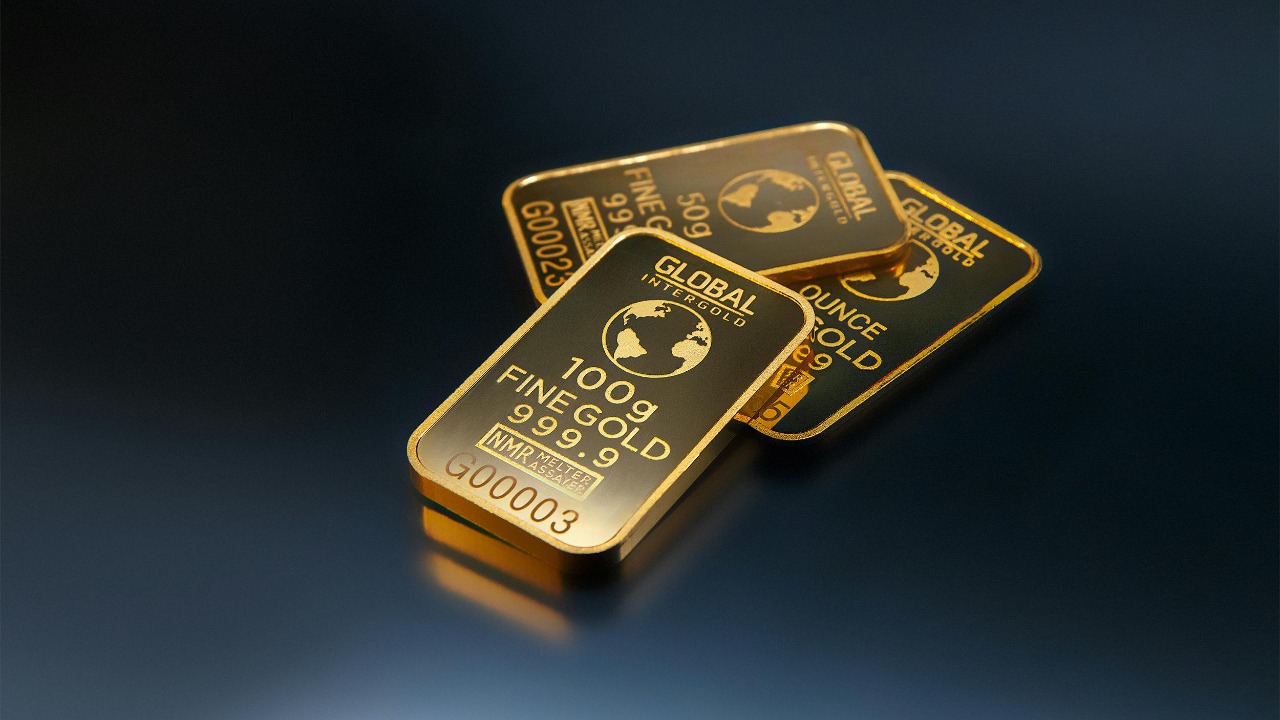
Gold has stormed back to the center of global markets, with prices reclaiming and then surpassing the $5,000 mark as investors scramble for protection from political and economic shocks. After a violent sell-off that briefly shook confidence, buyers have returned in force, betting that the forces driving this cycle are deeper and more durable than a single correction. The stage is now set for a fresh round of record highs as institutional and retail money converge on the same trade.
The rally is not happening in a vacuum. It reflects a world unsettled by policy reversals, geopolitical flashpoints, and a weakening faith in paper currencies, all unfolding under President Donald Trump. Against that backdrop, gold’s appeal as a liquid, globally recognized store of value has rarely looked stronger, and the latest forecasts suggest the metal’s next act could be even more dramatic than the last.
From $5,000 milestone to violent shakeout
The latest leg of the bull market began when the price of Gold vaulted above $5,000 as investors reacted to fresh political turmoil linked to Trump and a new round of geopolitical tension. That move followed an earlier surge when the metal first jumped past $5,000 on a Monday, signaling that safe-haven demand was overpowering any concern about valuations. In both cases, the $5,000 threshold acted less as a ceiling and more as a magnet, drawing in capital that had been waiting on the sidelines for a clear signal that the uptrend was intact, a pattern that was reinforced when $5,000 became the new reference point for the market.
That euphoria was interrupted by a brutal correction in late January, when Gold and silver plunged from record levels and wiped out a chunk of recent gains in a matter of sessions. The sell-off was sharp enough to trigger talk of a bubble, as Gold and its sister metal shed value so quickly that market fears briefly overshadowed the bullish catalysts that had driven the rally. Yet even in the middle of that rout, the underlying narrative did not change, and the subsequent rebound above $5,000 per ounce showed that dip buyers were waiting to pounce once prices reset, a dynamic captured when Gold and silver were described as suffering a dramatic meltdown from their highs.
Policy whiplash, uncertainty, and the safe-haven stampede
The political backdrop has been central to this story. Less than one month into 2026, Trump’s policy whiplash has rattled markets and intensified geopolitical uncertainty, prompting a classic flight into precious metals. Investors have watched as trade threats, shifting alliances, and sudden announcements from the White House inject fresh volatility into currencies and equities, and many have concluded that holding a portion of wealth in bullion is a rational hedge rather than a speculative bet. That logic was underscored when gold first hit a record $5,000, and analysts pointed to Uncertainty as the key driver, noting that less predictable policy from Trump was pushing capital toward perceived safe assets.
Monetary conditions have reinforced that move. As the Federal Reserve has turned more cautious and the US dollar has weakened, the opportunity cost of holding gold has fallen, while the appeal of an asset priced globally in dollars has risen. A broad review of forecasts, described as a Professional Forecasting Consensus Analysis Major investment banks have undertaken, shows that many institutions now see a structural link between a softer dollar and higher bullion prices based on evolving monetary and fiscal dynamics. The Analysis has helped legitimize the view that the current rally is rooted in macro fundamentals rather than short-term speculation.
Central banks, forecasts, and the case for new highs
Behind the headlines, the most powerful buyers in the market have been quietly reinforcing the uptrend. Central banks have been adding to their reserves at a rapid clip, a pattern captured in the phrase Central Banks Are Still Buying Aggressively, which analysts list among the Key Drivers Powering Gold’s Strength in 2026. Those official purchases, combined with strong demand from exchange-traded funds and private wealth managers, have created a steady bid that absorbs supply even when speculative flows reverse. Research from one major house notes that Gold prices soared in 2025, driven by tariff uncertainty and robust buying from ETFs and central banks, and argues that the same forces are likely to persist, a view set out in Key work by J.P. Morgan Global Research.
Price targets from major institutions now cluster well above current spot levels. One prominent forecast from UBS projects that gold will reach $6,200 by next month before easing to $5,900 by the end of the year, suggesting that even a pullback from the peak would leave prices far above the old records. Another influential call from Goldman Sachs sets a $5,400 target for the end of 2026, with strategists citing two main drivers: that central banks maintain strong demand and that investors continue to seek diversification away from volatile risk assets. Those projections, combined with commentary that the rise in gold prices is not short-term speculation but is backed by solid capital fundamentals and rising holdings among the top ten reserve holders, have strengthened the conviction that the metal can sustain higher trading ranges, as reflected in the Key Drivers Powering narrative, the $6,200 and $5,400 targets, and the Global central bank accumulation trend.
Dip buyers, data, and the new playbook for investors
The behavior of investors around the recent correction offers a blueprint for how the next phase may unfold. When prices tumbled from their highs, buyers did not retreat for long; instead, they treated the slump as a rare chance to re-enter a crowded trade at a discount. That pattern was clear when Gold surged back above $5,000 as dip buyers charged in after what some described as a historic bloodbath, with spot prices rebounding above $5,000 per ounce and silver also snapping back as its smaller market amplified price swings. The speed of that recovery suggests that a large pool of capital now views any move below the recent peaks as a tactical opportunity rather than a warning sign, a mindset captured in coverage of $5,000 per ounce and the renewed appetite for risk in the metals space.