
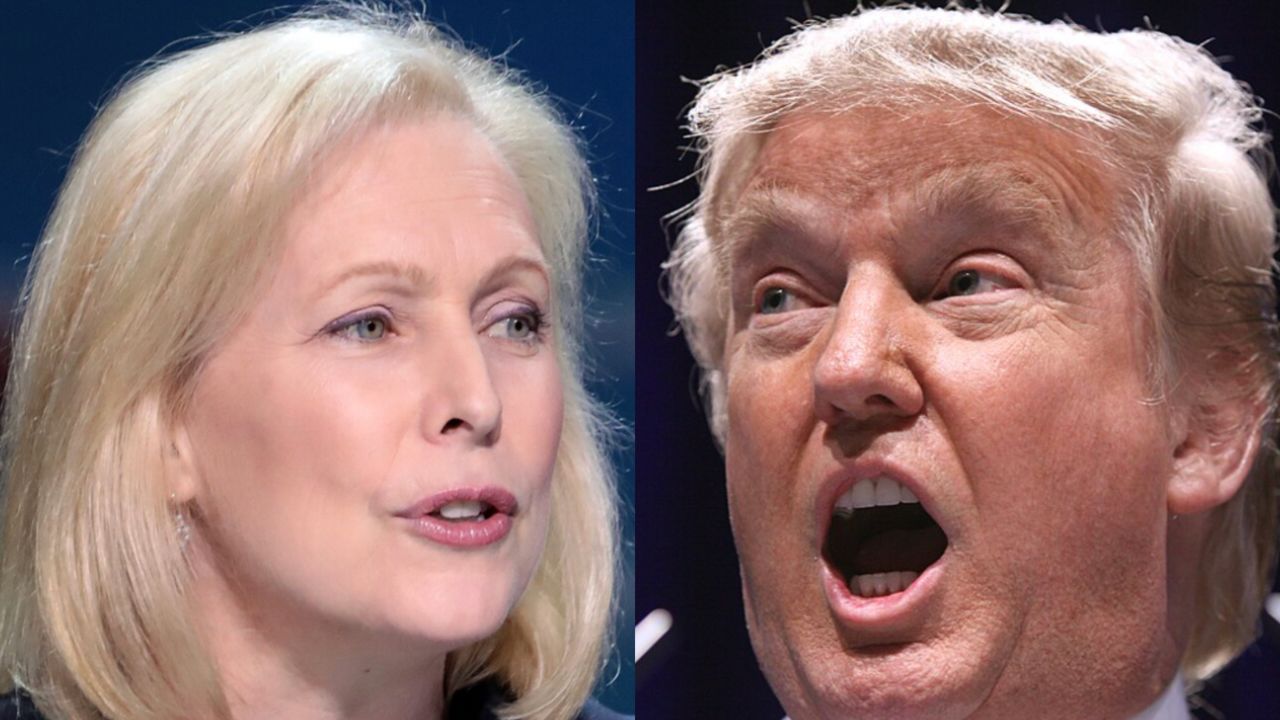
U.S. Senator Kirsten Gillibrand (D-N.Y.) on Wednesday accused President Donald Trump of inflicting a $100 billion financial burden on American consumers through his ongoing war in Iran, using a pointed social media post to tie record-high diesel prices directly to the president’s foreign policy and his 2016 campaign slogan.
Gillibrand’s post, published to X at 7:40 a.m. on September 9, 2026, read in full:
“Diesel just hit a record high. Trump’s war has driven $100 BILLION in extra energy costs for consumers. Remember when Trump promised America First?”
The senator’s post came in direct response to an Axios report published September 7, which found that the war in Iran has cost U.S. consumers $100 billion in higher energy prices, with the total climbing by approximately $1 million every two minutes, according to a real-time estimate from Brown University’s Watson School of International and Public Affairs.
The Iran War Energy Cost Tracker, maintained by Brown’s Watson School, calculates that higher gasoline and diesel prices have added more than $760 to the average U.S. household’s expenses since the war began on February 28, 2026. Most of that burden has come from gasoline, though researchers note the diesel component has been rising more sharply in recent weeks.
Diesel prices set a new all-time high on Friday, September 4, and have continued climbing every day since, reaching $5.90 a gallon as of Monday morning, September 7, according to AAA data cited by Axios. That figure represents an increase of roughly 60 percent compared to the same time last year and surpasses the previous record of $5.816 a gallon, which was set in June 2022 during the Biden administration.
State-by-state figures from the Brown University tracker show Texas has absorbed the largest share of the added costs, with consumers there paying an estimated $11 billion in extra gasoline and diesel expenses since the war began in late February. California follows at roughly $8 billion, with Florida close behind at approximately $5 billion.
Gillibrand’s Wednesday post is the latest in a monthslong campaign by the senator to link rising fuel costs directly to the war in Iran and to Trump personally. Days earlier, over Labor Day weekend, Gillibrand’s office issued a formal statement blaming the president for record diesel prices affecting New York families, farmers and small businesses. “Because of Donald Trump, New York families, small businesses, and farmers will be paying record high prices this Labor Day weekend,” Gillibrand said in that statement. “Every time New Yorkers go to the grocery store, take a trip, or buy something, they will be paying more because of Trump’s reckless war in Iran. Americans need relief, but all this administration is focused on is bombs, ballrooms, and billionaires. I won’t stop fighting to end the war in Iran and lower costs for hardworking New Yorkers across our state.”
That Labor Day release noted that gasoline had never previously exceeded $4 a gallon nationally over the holiday weekend, with the national average reaching $4.15 a gallon — $4.30 in New York — compared with $3.20 at the same point the prior year. The release also cited the August jobs report, which Gillibrand’s office said showed wage growth falling to its lowest level in five years even as inflation continued to erode workers’ earnings.
Gillibrand’s criticism of the administration’s handling of gas prices dates back further in the conflict. In a May virtual press conference, the senator said commuting, medical appointments and school carpools had all become significantly more expensive as a direct result of the war. “Every commute to work, every ride to a doctor’s appointment, and every carpool to school costs 50 percent more today than it did just a year ago due to skyrocketing gas prices. That is a direct result of President Trump’s reckless war with Iran,” Gillibrand said at the time. “The American people do not want this war; they want lower costs. President Trump must end the war once and for all and provide relief to Americans struggling with higher costs in his economy.”
That May release noted the average cost of gas in New York state had reached $4.59 per gallon, nearly 50 percent higher than the year before, and reiterated that Gillibrand has voted in favor of multiple War Powers Resolutions aimed at reasserting congressional authority over military action and demanding accountability from the administration.
The rising cost of diesel carries implications beyond the pump. Because diesel powers the trucking fleets that move the majority of consumer goods across the country, higher prices translate into elevated transportation costs for a broad range of everyday products. Major carriers including FedEx and UPS have raised fuel surcharge rates in response, while smaller trucking operations remain more exposed to the volatility, according to industry representatives.
The timing of the diesel spike has added strain to the agricultural sector as well, arriving just as harvest season for corn and soybeans — among the nation’s largest farm commodities — reaches its most energy-intensive period. Airlines have also raised airfare and baggage fees in response to soaring jet fuel costs, according to reporting from CNN Business.
Trump has publicly acknowledged the rising costs tied to the conflict, telling supporters at a rally in Garden City, New York, last month that Americans should be willing to accept modestly higher prices to prevent Iran from acquiring a nuclear weapon. “For you to pay a tiny little bit more for your gasoline, you’re doing it so that a very evil country cannot have a nuclear weapon,” Trump said. “Remember that when you’re paying $4. I’ll never apologize.”
The administration has pointed to other efforts to address the pump prices. White House spokesperson Taylor Rogers said in a statement earlier this month that the president remains focused on expanding domestic energy production. “This week the President met with nearly a dozen refiners to discuss ways to expand our refining capacity, which will lower prices at the pump,” Rogers said, adding that Trump “remains committed to unleashing American energy dominance.”
Polling has shown sustained public disapproval of the administration’s handling of the economy amid the fuel price increases. A July survey from The Associated Press and the NORC Research Center found that 66 percent of respondents disapproved of how the president is managing the economy, a figure that has persisted as gas and diesel prices have continued climbing through the summer and into the fall.
The war’s effect on global energy markets has been compounded by the closure of the Strait of Hormuz, a corridor through which roughly 20 percent of the world’s oil supply typically flows, as well as by continued Ukrainian strikes on Russian energy infrastructure, which have further tightened global diesel supplies, according to Axios.
With midterm elections less than two months away, the sustained rise in fuel costs is expected to remain a central point of political contention, as Democratic lawmakers including Gillibrand continue to press the administration over the economic toll of the conflict and Republicans face mounting pressure over its effect on voters’ pocketbooks.