
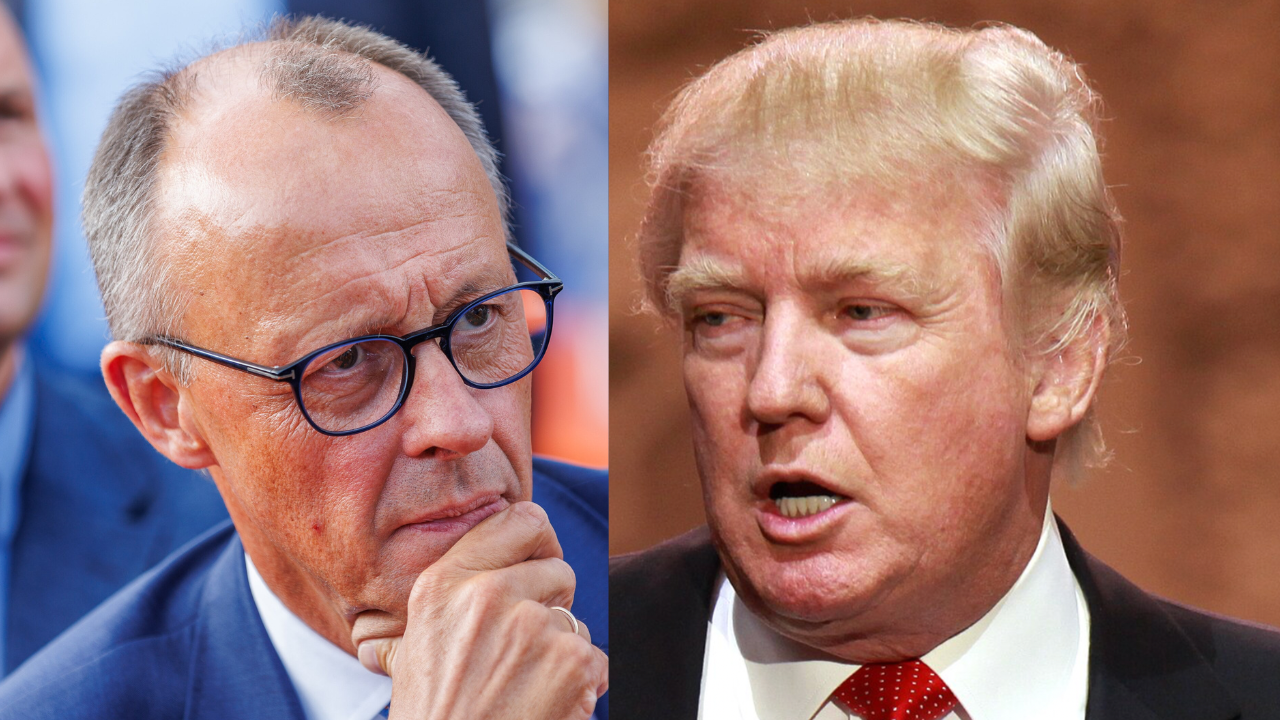
Germany is in talks to help finance Britain’s Trident nuclear deterrent, according to Telegraph reporting, marking one of the most significant shifts in European nuclear policy since the end of the Cold War. The discussions, still in early stages, would see Berlin offer financial and possibly industrial support to bolster the UK’s existing arsenal rather than pursue an independent German nuclear weapons program — a move driven largely by mounting anxiety in European capitals over whether the United States, under President Donald Trump, will remain a reliable security guarantor.
“We have a very strong interest that the existing nuclear powers in Europe extend their capabilities,” a well-placed source told The Telegraph, describing Berlin’s preference to integrate more closely with British and French nuclear forces rather than build its own weapons — a course German officials have avoided in large part because of the country’s wartime history.
The talks between Berlin, London and Paris have accelerated sharply in recent months. A diplomatic source in Germany described the mood inside government circles bluntly: “Policymakers are waking up each morning and asking themselves what the hell the Americans are going to do tomorrow.”
A Security Picture Growing More Urgent
The push comes as European nations scramble to reinforce their defenses against what officials describe as a rapidly escalating threat from Russia. Last week, Moscow deployed a warship armed with cruise and hypersonic missiles close to a German island in the Baltic Sea. The Telegraph has also reported that Vladimir Putin installed secret bases capable of launching high-powered drones deep into NATO territory.
Concerns intensified further this week after CIA Director John Ratcliffe made an unannounced visit to Moscow for talks with Russian military intelligence counterparts. The visit coincided with a U.S. intelligence report warning that Russia could soon attempt to test NATO’s resolve by attacking a member state directly.
Against that backdrop, Chancellor Friedrich Merz’s government has turned its attention toward strengthening nuclear-level deterrence as part of a broader campaign to reduce Europe’s reliance on Washington. “There is thinking and talking about how the existing nuclear capabilities [such as Trident] may play a bigger role for the defence of Europe, and of deeper cooperation among European countries,” a third security source said.
What Germany Could Offer
German military planners are reportedly examining more than direct financial contributions. Officials in Berlin believe Germany could also supply conventional forces to help protect and sustain Britain’s nuclear infrastructure — including the potential deployment of German-operated Patriot air-defense batteries to key sites such as the Faslane submarine base in Scotland, home to the UK’s Trident fleet.
Britain currently commits its roughly 200 nuclear warheads to NATO for the defense of the alliance. But while London retains full autonomy over any decision to fire its weapons, it cannot build, maintain or modernize the arsenal without American cooperation. Trident missiles are manufactured in the United States and serviced at a facility at Kings Bay submarine base in Georgia, and Britain’s new Astraea warhead is being developed alongside the American W93 warhead program as part of a £63 billion overhaul of the UK’s deterrent — a dependency that has become an increasing point of concern in Berlin as it seeks to promote continental independence from Washington.
German officials believe they could also assist Britain with future submarine construction, missile programs, or uranium enrichment for new warheads, noting that a German manufacturer has previously built submarines for Israel’s nuclear deterrent. Germany and Britain are already cooperating on new hypersonic stealth missiles under the Kensington House Treaty, the two nations’ first defense agreement since the Second World War.
Still, a British defense source raised doubts about whether German industry has the relevant expertise to build or maintain Britain’s nuclear submarine fleet, while acknowledging that conventional support — such as protecting Faslane — would be a more realistic contribution. “The ability to contribute to the defence of Faslane is more credible, likely and appropriate,” the source said.
Parallel Talks With France
Germany is holding similar discussions with France, and the two countries have already conducted joint exercises simulating how nuclear weapons could be used to defend Europe. Plans are also under discussion for German forces to take part in France’s flagship “Poker” nuclear exercises for the first time this autumn.
Unlike Britain, France does not participate in NATO’s nuclear sharing arrangement and has historically maintained its deterrent solely for homeland defense. French President Emmanuel Macron has nonetheless pledged to “open the strategic debate” with allies interested in coming under French protection. Macron’s overtures build on the Northwood Declaration, signed with the UK on July 10, 2025, in which Paris and London committed for the first time to coordinating their nuclear forces and establishing a joint Nuclear Steering Group to guide deeper cooperation.
France’s deterrent is entirely domestically produced, combining submarine-launched and air-launched weapons, and its independence from Washington makes it attractive to European states seeking to distance themselves from reliance on the Trump administration. However, Macron is due to leave office next year, raising uncertainty over whether France’s expanded nuclear posture will endure. Among the frontrunners to succeed him are Marine Le Pen of the National Rally and veteran hard-left figure Jean-Luc Mélenchon — both skeptical of the EU and NATO. Officials in Berlin reportedly believe either successor would likely revert to France’s original doctrine of purely domestic nuclear defense, a concern cited as one reason Germany is keen to pursue parallel cooperation with Britain.
Averting a New Wave of Proliferation
German officials have also cited a second motivation for promoting deeper European nuclear collaboration: preventing further nuclear proliferation on the continent. Russia’s invasion of Ukraine, combined with Trump’s stated eagerness to draw down U.S. forces in Europe, has already prompted discussions in Poland and the Nordic countries about developing independent nuclear arsenals. By reinforcing the credibility of British and French deterrents, German officials — long known for their sensitivity around nuclear issues — believe they can help discourage additional nuclear powers from emerging in Europe.
That sensitivity remains pronounced within the German government itself. “It’s Germany so of course the nuclear topic is going to be very sensitive, and many people tried to avoid it as best they could,” one German security source said, pointing to the country’s wartime guilt and the stance of the previous government under Olaf Scholz, which opposed Germany acquiring its own warheads.
Maximilian Terhalle, a nuclear expert and visiting scholar at Stanford University’s Hoover Institution, said Germany would first need to reconcile itself with the strategic logic underpinning Britain’s deterrent before any funding arrangement could proceed. “Aware of the size of Russia’s nuclear arsenal, the key to the UK’s nuclear policy has always been the so-called Moscow criterion, signalling we will strike Moscow in case of heightening escalation,” he said. “Now, it is this fundamental aspect the Germans would need to agree on before they discuss old-fashioned ideas of monetarily supporting the renewal and extension of the UK’s Trident.”
A Shift in Tone From Berlin
One source indicated that internal German discussions about acquiring an independent nuclear capability have themselves become more frequent, driven directly by uncertainty over Washington’s commitments. “The discussions were avoided with the argument that, when push comes to shove, the Americans will help us along with their nuclear forces. But now things are very different,” the source said.
A Ministry of Defence spokesman responded to the reporting by reaffirming the UK’s existing posture: “Our nuclear deterrent is the cornerstone of our national security, protecting the UK and our Nato allies every moment of every day. We remain the only European ally to commit its nuclear deterrent to the defence of Nato. This means that all Nato allies already benefit from the protection of our nuclear deterrent.”
Why This Matters
The scale of what is being discussed should not be understated. Germany has, since the end of the Second World War, deliberately avoided any formal role in nuclear weapons policy beyond hosting American B61 bombs under NATO’s nuclear sharing arrangement — a posture rooted in both historical guilt and decades of postwar consensus against German nuclear ambition. Talks over directly funding another nation’s sovereign deterrent, rather than simply hosting American weapons, would represent one of the most consequential departures from that posture in the alliance’s history.
It also reflects how far European capitals believe the transatlantic security relationship has shifted. Britain’s Trident program itself remains financially strained: the UK’s nuclear enterprise already accounts for roughly a quarter of the entire Ministry of Defence equipment budget, with the National Audit Office previously flagging billions of pounds in funding shortfalls even before the current Dreadnought-class submarine and Astraea warhead programs are complete. German financial backing could ease that burden considerably — but it would also tie Berlin’s fortunes to decisions over nuclear use that remain, by law and by treaty, entirely in London’s hands.
Whether the talks translate into a formal arrangement remains uncertain, and significant obstacles remain, including doubts over German industrial expertise and the political sensitivities on both sides of funding a foreign nuclear arsenal. But the fact that such discussions are occurring at all — between a country that has spent 80 years avoiding nuclear entanglement and a NATO ally whose deterrent has always depended on Washington — signals how seriously Berlin now regards the possibility of a Europe left to defend itself.