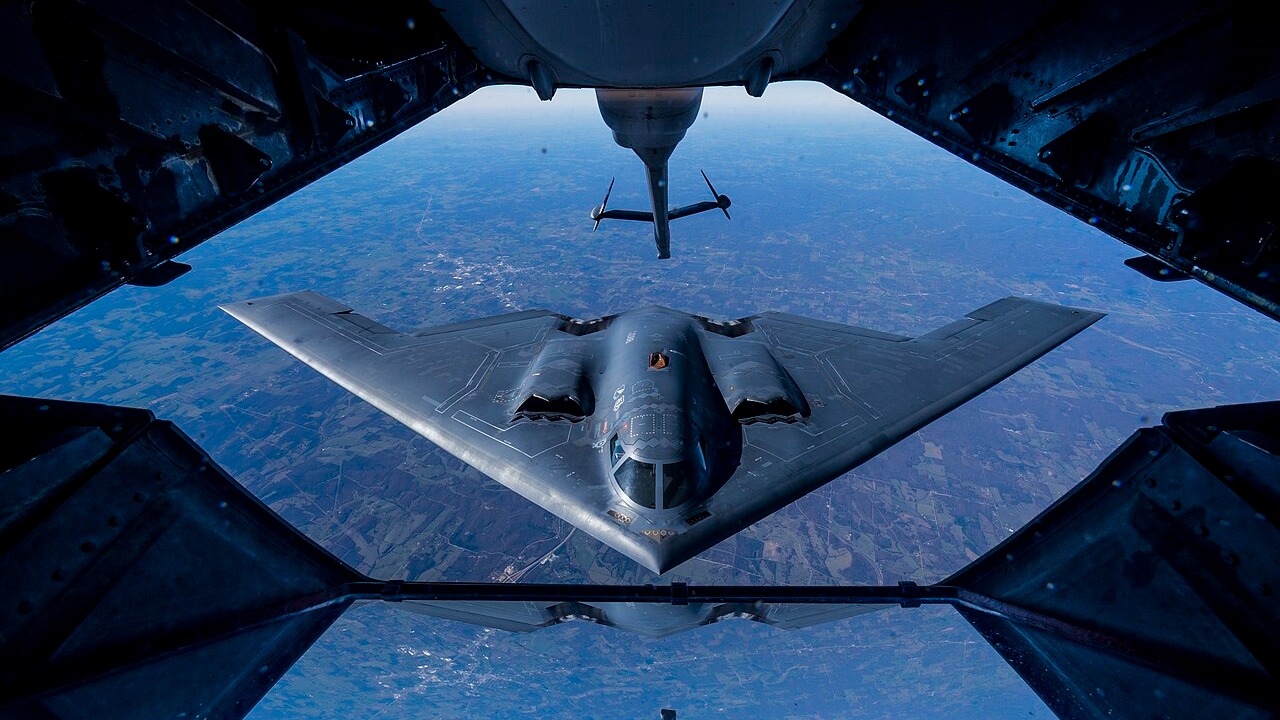
The US military’s airborne refueling fleet, a core enabler of long-range power projection, has fallen below the Air Force’s own readiness benchmarks, according to a new watchdog assessment. The finding suggests that the aircraft keeping fighters, bombers, and transports in the air may not be available in sufficient numbers or condition for a high-end conflict.
The Government Accountability Office report points to aging tankers, slow replacement programs, and persistent maintenance problems that have pushed mission-capable rates below internal targets. Together, these factors have produced a refueling enterprise that looks increasingly mismatched with the Pentagon’s plans for a potential fight across the vast distances of the Pacific.
How the watchdog report reshaped the picture of US tanker readiness
The GAO’s review of in-flight refueling lays out a sobering snapshot of the Air Force tanker inventory, which is dominated by legacy KC-135 Stratotankers and KC-10 Extenders while the new KC-46A Pegasus struggles through a prolonged rollout. Investigators found that the overall fleet fell short of the service’s readiness standards, with mission-capable rates that did not meet established goals for several key aircraft types. The report links those shortfalls to aging airframes, chronic depot backlogs, and gaps in spare parts that keep tankers grounded longer than planned.
Watchdog officials also concluded that the Air Force has not fully aligned its modernization plans with operational demand. The service is retiring KC-10s and some KC-135s faster than the KC-46A can replace them, which has reduced the number of available tankers even as Indo-Pacific and European commanders request more refueling support. Analysts noted that this shrinking capacity is occurring at the same time that the Air Force is trying to support global deployments, nuclear deterrence missions, and training pipelines that all depend on ready tankers.
The report further highlights how the KC-46A’s protracted development problems have limited its contribution. Persistent issues with the Pegasus’s Remote Vision System and refueling boom have forced operational restrictions, which means the aircraft cannot yet fully assume the missions planned for it. As a result, older KC-135s are flying more hours to cover gaps, a pattern that accelerates wear and deepens the maintenance burden that already drags down readiness.
Outside experts have underscored that these findings are not just a matter of percentages on a readiness chart. One analysis of the
refueling fleet notes that even modest drops in mission-capable rates translate into fewer sorties available for contingency operations, especially when tankers must be spread across theaters. The GAO’s data therefore point to a structural problem in how the United States sustains long-range air operations, rather than a short-term maintenance dip.
Why an understrength tanker force is a strategic problem right now
The timing of the watchdog’s warning is significant because Pentagon planning has increasingly focused on a potential conflict with China, which would require sustained operations at long distances over contested seas. Air campaigns in the Indo-Pacific would lean heavily on tankers to keep fighters like the F-35A and F-22, as well as bombers such as the B-1B and B-52H, on station far from home bases. If tanker availability is constrained, sortie rates and flexibility suffer, which in turn limits the options available to combatant commanders.
A separate assessment framed the issue in stark terms, arguing that the current refueling force is
unfit for war because it was built around assumptions from earlier conflicts. Those assumptions included relatively safe airspace for large, slow tankers and short distances between bases and operating areas. In a scenario where China can threaten forward bases with missiles and contest airspace with advanced fighters and surface-to-air systems, tankers would need to operate from farther away, which increases the number of aircraft required for each mission.
The GAO report, summarized in coverage of the
in-flight refueling review, notes that the Air Force has not fully tested its tanker concepts of operation against such high-end threats. Exercises and planning often assume permissive conditions, yet adversaries are fielding long-range weapons that could target large refueling orbits. If tankers must disperse, use more distant airfields, or fly more circuitous routes, the demand for aircraft and crews grows quickly, magnifying the impact of any readiness shortfall.
There is also a deterrence dimension. Allies in Europe and Asia watch US tanker posture closely because it signals how quickly and sustainably American airpower can arrive in a crisis. A fleet that cannot meet readiness standards risks sending the opposite message. If adversaries perceive that the United States would struggle to sustain combat air patrols or surge bombers over long distances, they may discount US commitments or miscalculate in a crisis.
The strain is already visible in day-to-day operations. Tankers support air policing in Europe, refuel surveillance and strike aircraft in the Middle East, and enable training ranges in the continental United States. With mission-capable rates depressed, commanders must prioritize which missions receive scarce tanker sorties. That triage can delay training, limit exercise realism, or reduce presence in secondary theaters, all of which carry long-term costs that are harder to quantify than a single readiness percentage.
Potential fixes and the uncertain path ahead for the tanker enterprise
The GAO offered a series of recommendations aimed at stabilizing and then improving tanker readiness. These include better forecasting of depot workloads, more rigorous planning for KC-135 and KC-10 retirements, and clearer milestones for resolving KC-46A technical deficiencies. The watchdog also urged the Air Force to refine its analysis of future tanker demand, particularly in Indo-Pacific scenarios, so that force structure decisions are grounded in realistic operational models rather than legacy assumptions.
Air Force leaders have already signaled some adjustments. Officials have discussed slowing the pace of certain retirements to avoid sharp drops in capacity, although this approach keeps older aircraft in service longer and can increase maintenance costs. There is also interest in accelerating upgrades to the KC-46A, especially improvements to its refueling vision system, so that the Pegasus can take on a larger share of missions and relieve the pressure on KC-135 crews.
Beyond the current fleet, the service is exploring concepts for a next-generation aerial refueling system that could include stealthy or survivable tankers, as well as the potential use of unmanned platforms. However, such initiatives remain in early stages and do not solve the near-term readiness gap identified by the GAO. Budget constraints and competing modernization priorities, from the B-21 Raider to new fighter programs, will shape how quickly any new tanker designs can move from concept to reality.
In the shorter term, the Air Force may need to rely on incremental measures. These could include targeted investments in spare parts, additional maintenance personnel at key depots, and adjustments to deployment cycles to reduce wear on the most heavily used aircraft. Improved data analytics for predictive maintenance might also help keep more tankers available, although that requires upfront investment in software, sensors, and training.
Allied contributions represent another partial offset. Several NATO partners operate tanker fleets, including Airbus A330 Multi Role Tanker Transport aircraft that already support coalition operations. In a major contingency, however, those assets would also be in high demand for national and regional missions. The GAO’s findings suggest that while allied support can help, it cannot substitute for a healthy US tanker force that is sized and maintained for global commitments.
Ultimately, the watchdog report frames a choice for policymakers. The United States can either align its operational ambitions with a refueling fleet that currently falls short of readiness standards, or it can invest to close that gap through modernization, maintenance, and more realistic planning. Given how central tankers are to every aspect of American airpower, from nuclear deterrence to humanitarian relief, the trajectory of this fleet will shape what the Air Force can credibly promise in any future crisis.