
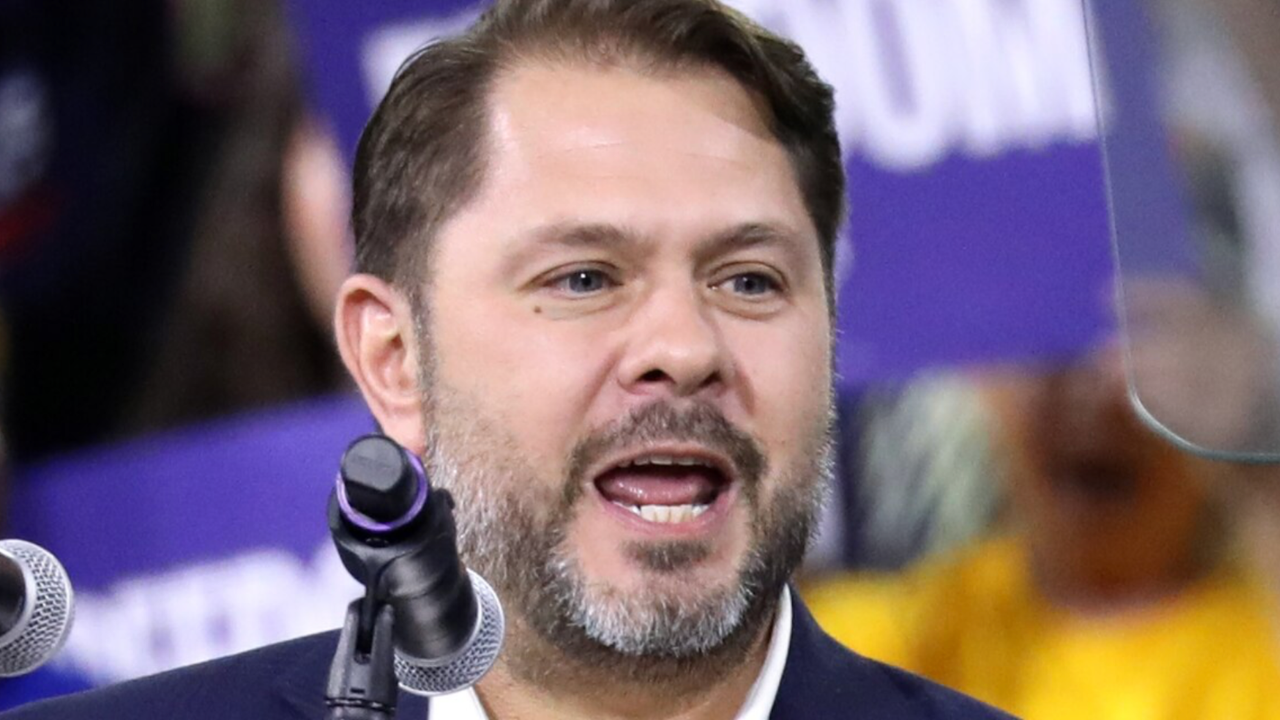
Sen. Ruben Gallego said Tuesday he is pursuing an official oversight visit to the USS Abraham Lincoln to investigate conditions aboard the carrier directly. “I’m seeking an official oversight visit with a bipartisan Senate Delegation to the USS Lincoln to investigate the reported alarming conditions,” Gallego wrote on X. “Unlike Donald Trump, I’ve seen active duty. The way he’s treating our service members as he carries out this illegal war is not just disgusting; it’s dangerous. These sailors are owed a sense of when they will go home.”
The Specific Conditions Gallego Cited
Gallego detailed the reports he said prompted his request. “The stories of crew members threatening to jump off the ship are a frightening alarm bell as to how bad the situation has become: moldy showers, sporadic hot water, rationed meals and soap, broken toilets, and grueling 12- to 16-hour shifts with no days off,” he wrote. “Congress must do its duty to provide oversight and hold the administration accountable for these actions.”
The Reporting Behind Gallego’s Post
Gallego linked an MS NOW report on a contentious August 6 meeting in San Diego, where roughly 200 family members confronted acting Navy Secretary Hung Cao over conditions aboard the ship. According to the report, one parent said her daughter “feels that she is never going to come home and believes she is going to die on the ship,” while another attendee said she found it difficult to be proud of her sailor given her belief that the military was “killing innocent civilians” — a comment MS NOW reported was met with applause from the audience.
How Long the Deployment Has Actually Run
As of the meeting, the Lincoln had been deployed 259 days after leaving San Diego on November 21, according to MS NOW’s reporting. The ship has stopped only twice — once in Guam in December, and once in Oman on July 7, following 208 continuous days at sea. The deployment has been extended twice, with the Navy unable to provide a return date.
What the Navy Told Families Directly
Cao told the in-person meeting that the USS Theodore Roosevelt carrier strike group was being prepared to relieve the Lincoln, but could not specify a timeline, citing operational security, according to MS NOW’s account. During a separate virtual meeting the same night, Vice Adm. Joseph Cahill acknowledged the strain directly: “We hear you loud and clear the impact this has on families, on service members, and the long-term ability of us to stand, sustain our forces’ health.” Vice Adm. Douglas Verissimo, addressing a spouse who described her husband missing his newborn daughter’s first months, said: “I wish we could give that to you. We are working to finalize that… I look forward to the day when we can have at least a date window for home port, and that means they’re heading in the right direction. But we don’t have that right now.”
How Navy Leadership Addressed the Specific Complaints
According to MS NOW, Navy officials offered explanations for several of the specific conditions families raised. They said a “stubborn clog” had left toilets in one zone of the ship non-operational for an extended period, though sailors were trained to make such repairs and most were fixed quickly. On reports of mold in the showers, officials said what sailors were seeing was more likely mildew from difficult ventilation systems — “not appealing to any of us,” in the leadership’s own words — but said industrial hygienists tested the bathrooms to verify air flow and fan function.
Why Supplies Fell Behind, According to the Navy
Verissimo attributed much of the supply backlog to the loss of the fleet’s regional logistics hub. “When Bahrain was no longer a port for logistics, food and mail… all of the gear that was there when the shooting started got stuck there,” he said, according to MS NOW, describing “very contested logistics, very difficult and long supply lines” that forced the Navy to prioritize food first, then ship’s store items like toothpaste and shampoo, then mail. “We’re doing a better job with supplies and mail. It’s getting better, it’s still not good, and it was extremely bad for a little while,” Verissimo said. “But we are, we are as a nation doing the best we can.”
How Navy Leaders Characterized the Crew Itself
Even while acknowledging the strain, Navy leaders repeatedly emphasized what they described as the crew’s professionalism throughout both meetings. “I cannot even tell you how proud we are of them. They have executed with a level of precision and professionalism that just goes to the quality of our people that have chosen to put the cloth of our nation on our shoulder and answer this call,” Cahill told attendees, according to MS NOW. Verissimo offered a similar assessment in his closing remarks: “I couldn’t be more proud of young people, old people, all of them working together in some extremely tough circumstances, tougher than I’ve ever experienced in 39 years in uniform.”
A Disputed Text Message Cited at the Meeting’s Close
Near the end of the virtual town hall, according to MS NOW, a force master chief said they had texted someone aboard the Lincoln directly and received a reply stating there was no mold, working air conditioning, clean water, and two protein options at meals — an account MS NOW noted came from an unidentified source and stood in some tension with the litany of complaints families had spent the meeting raising.
Gallego’s Own Military Background
Gallego’s “unlike Donald Trump, I’ve seen active duty” comment references his service as a Marine who deployed to Iraq in 2005 with a company that experienced some of the highest casualties of the war, according to his official biography. That record is central to how he has positioned himself on military oversight issues throughout his time in the Senate and, before that, the House.
The Home-Port Transition Adding to Families’ Uncertainty
Beyond the deployment’s length, MS NOW reported that families face a separate, compounding disruption: after this deployment, the Lincoln will be reassigned from San Diego to a new home port in Bremerton, Washington. Navy leaders said families would have a 58-day window to relocate once the ship returns, with December 31 cited as a potential target date for finalizing that timeline — leaving many families unable to plan their own moves until the ship’s return date itself is set.
Where This Leaves Things
As of Gallego’s Tuesday post, no bipartisan Senate delegation visit to the Lincoln had been confirmed, the Navy had not announced a specific return date for the carrier, and the dispute between family accounts of conditions aboard the ship and Navy leadership’s explanations for those conditions remained unresolved. Gallego’s push for a direct oversight visit represents an attempt to have members of Congress verify conditions firsthand rather than relying solely on family accounts or the Navy’s own characterizations.