
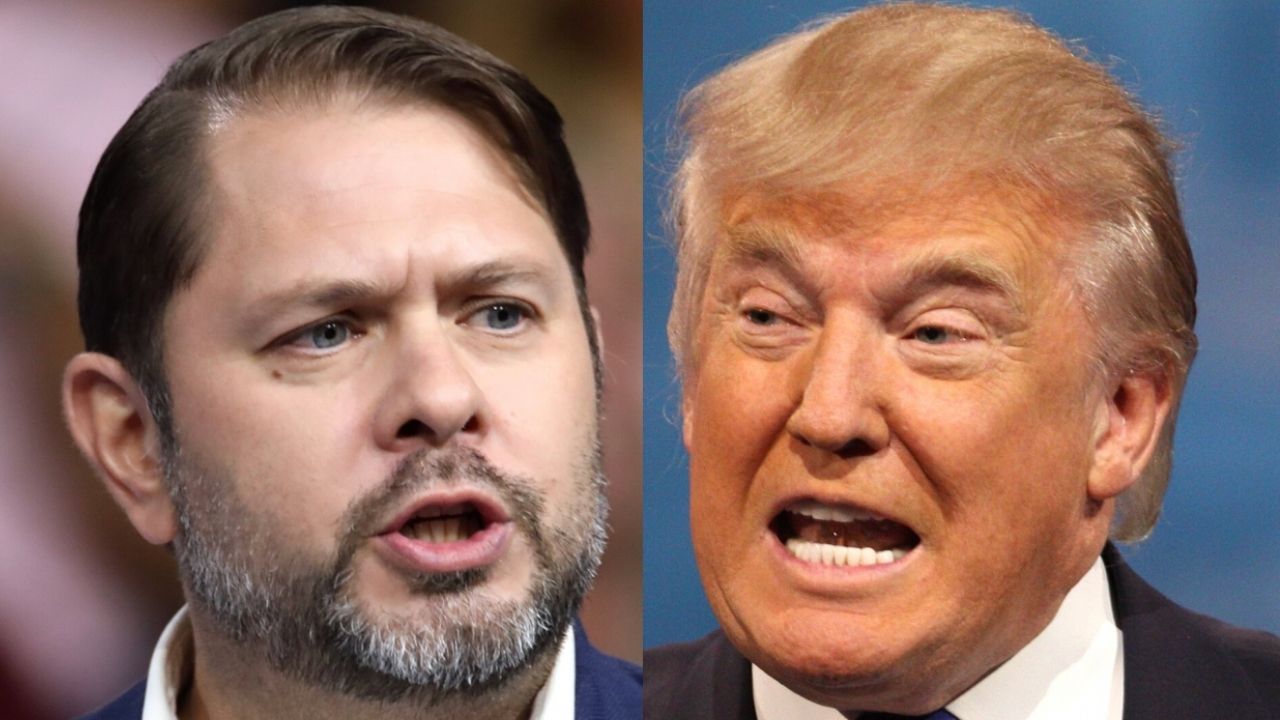
Sen. Ruben Gallego (D-Ariz.) accused President Donald Trump on Friday of concealing American combat deaths in the war with Iran rather than acknowledge failures in the administration’s war strategy, escalating a fight over Pentagon casualty accounting that has become one of the most politically charged fronts of the seven-month conflict. The Marine Corps combat veteran’s remarks, posted to X on the afternoon of September 19, came hours after The Washington Post reported that the true American death toll in the war is higher than what the Defense Department has publicly disclosed.
Gallego’s post read, in its entirety:
“This is disgusting. Donald Trump would rather fudge the numbers than admit he led us into a war with no plan and no exit strategy. And every day it drags on, more working-class kids pay for his ego with their lives.”
The Report That Triggered the Backlash
Gallego’s post was a direct response to Washington Post reporting published Friday afternoon that found more U.S. service members have died in the Middle East during the Iran war than the Pentagon has acknowledged. Citing six U.S. officials, the Post reported that at least 22 troops have died since the conflict began on February 28, four more than the 18 listed in the Pentagon’s public Defense Casualty Analysis System, or DCAS, with one official putting the total as high as 23. Not every undisclosed death was tied directly to combat, according to the Post, though all involved personnel stationed in the Middle East amid the ongoing hostilities. Three American contractors based in the region have also died since fighting began.
The discrepancy is not merely a matter of public record-keeping. Whenever a service member dies, the military opens a line-of-duty investigation to determine whether the fatality qualifies survivors for benefits, meaning any undercount carries direct financial consequences for military families. Officials who spoke to the Post described frustration that the additional deaths are not reflected in the Pentagon’s public casualty portal, and the department declined to answer questions about the discrepancy when approached by the newspaper.
Pentagon Denies the Report
Defense Secretary Pete Hegseth moved quickly to reject the Post’s findings, posting on X that the story was “a complete LIE” and accusing the newspaper of being “worse than Iranian state media.” Hegseth went further, suggesting the outlet had effectively sided with Tehran’s propaganda apparatus in its coverage of the war. The Post stood by its reporting, with a spokesperson stating that the story relied on six officials familiar with the department’s internal accounting data and noting that the Pentagon had declined to address the specific numerical discrepancy when given the opportunity.
The dispute is not the first time the administration’s casualty reporting has drawn scrutiny. Earlier this year, the names of four U.S. troops killed as a result of the Iran war were briefly excluded from the Pentagon’s official tally, an episode that coincided with the administration’s decision to reclassify renewed hostilities with Iran under a separate “Overseas Operations” category rather than tying them to Operation Epic Fury, the administration’s name for the campaign. That reclassification occurred as U.S. negotiators struggled to secure a lasting peace deal with Tehran and as the administration sought to portray the war as winding down even as Iranian forces continued striking American positions and shipping lanes.
A Marine Veteran’s Running Critique of the War
Gallego, who deployed to Iraq with the Marine Corps’ Lima Company, 3rd Battalion, 25th Marine Regiment — a unit that suffered some of the heaviest U.S. casualties of that war — has positioned himself as one of the Senate’s most vocal critics of the Trump administration’s handling of the Iran conflict since it began. In March, after the Senate failed to advance a war powers resolution from Sen. Tim Kaine (D-Va.) that would have required congressional authorization for continued hostilities, Gallego said Trump “illegally dragged the United States into a conflict with Iran without congressional authorization and without explaining the rationale, the strategy, or end goal,” adding, “Now, six Americans are dead, and Trump said we should expect even more.” He said at the time that he had “lost friends” in Iraq and lived “with PTSD every day,” and warned against “repeat[ing] the mistakes of the past by sending another generation of young working-class Americans to die in a war that hasn’t been explained to the American people.”
Gallego reiterated similar themes in May, telling an audience at the Center for American Progress’s IDEAS Conference that the war’s costs were showing up directly in Americans’ household budgets. “When you look at the price of gas hitting $5 a gallon in Arizona, or the soaring cost of groceries and housing, these aren’t abstract data points,” Gallego said. “This is a war that wasn’t planned, wasn’t authorized by Congress, and isn’t making us safer. Trump got his war, and working families got stuck with the bill.”
By July, five months into the conflict, Gallego was warning that a decisive American victory would come at an unacceptable human cost. “I don’t want to win this war, to be clear, because the way you win this war is going to cost tens of thousands of men’s lives,” he told KTAR News 92.3 FM, arguing the administration had entered the war “on the basis of hope” without a strategy for how to conclude it. He said ending the conflict would require serious diplomacy and questioned whether the administration had sent capable negotiators to pursue it.
Democrats Press for a Full Accounting
Just two days before Friday’s post, Gallego joined Sen. Elissa Slotkin (D-Mich.) and 44 other Senate Democrats in a letter to Hegseth demanding a full accounting of the war’s human and financial costs, criticizing the Pentagon for withholding basic budget information from Congress even as casualties and taxpayer expenses continued to mount. The letter noted that the war had by then stretched more than six months beyond the six weeks Trump initially predicted, with 18 service members killed, more than 820 wounded and over 50,000 troops deployed to the Middle East, according to the Pentagon’s own figures at the time.
Broader Congressional Pushback Intensifies
The casualty accounting dispute has drawn a response beyond the Senate. On Friday, Rep. Pat Ryan (D-N.Y.), Rep. Jason Crow (D-Colo.) and ten other House Democrats, all military veterans, said they were introducing legislation to bar the Pentagon from manipulating government data on troop casualties, mirroring a bill Sen. Tammy Duckworth (D-Ill.) introduced with seventeen Senate Democratic colleagues last month. Separately, Rep. Thomas Massie (R-Ky.) moved this week to force a House vote on impeaching Hegseth, alleging the defense secretary violated the War Powers Resolution of 1973 by pursuing hostilities without congressional authorization. Senate Democrats have said they intend to investigate the Pentagon’s handling of casualty notifications should they regain the majority after the November midterms.
The dispute over casualty figures follows a separate flashpoint earlier in March, when Gallego told MS NOW that the U.S. had entered the war “on somebody else’s word” after Secretary of State Marco Rubio said the administration had acted preemptively against Iran to avoid higher American casualties. “This president hasn’t planned longer than a couple of days,” Gallego said at the time, faulting the administration’s shifting timelines for the conflict and arguing that “top-rate military planning” would not have produced the toll of American dead.
Mounting Political and Financial Costs
The war has become an increasing liability for Trump and congressional Republicans heading into the midterms. A September Reuters-Ipsos poll found that just 28 percent of Americans support Trump’s approach to Iran, while 62 percent disapprove. On Tuesday, a record seven Republican lawmakers joined Senate Democrats to pass a largely symbolic measure aimed at halting the war, the latest in a string of war powers resolutions to advance in Congress despite ultimately falling short of ending U.S. involvement.
The financial toll has climbed alongside the human one. According to a document reviewed by The Washington Post, U.S. Central Command has estimated the war’s cost at approximately $43.6 billion through early September, including $28 billion in expended munitions, a figure that does not account for damage to U.S. bases across the Persian Gulf. More than 820 U.S. service members have been wounded in action since the war began, many suffering traumatic brain injuries from Iranian counterstrikes, and the conflict has strained American stockpiles of precision weapons while roiling global energy markets after Iran closed the Strait of Hormuz, a critical route for oil and fertilizer shipments.
Two additional deaths further complicate the Pentagon’s public accounting. Army Sgt. Devin Seibel died in a training accident in Irbil, Iraq, on May 31 while assigned to the long-running Operation Inherent Resolve mission against Islamic State remnants, and his name does not appear among that operation’s tally in DCAS. Maj. Sorffly Davius died of an unspecified medical emergency in Kuwait on March 6 while deployed under Operation Spartan Shield; it remains unclear whether his death was connected to an Iranian attack. Both bases have been targeted by Iranian strikes during the war, though the Pentagon has said the two deaths are unrelated to the Iran conflict specifically.
Outlook
With the Pentagon disputing the Post’s findings and Hegseth publicly rejecting the reporting outright, the underlying casualty figures remain contested even as pressure builds on Capitol Hill for greater transparency. Gallego’s Friday post placed him firmly among the war’s most persistent Democratic critics, tying the disputed death toll to his long-standing argument that the administration entered the conflict without a defined strategy or exit plan. With legislation targeting Pentagon casualty reporting now pending in both chambers and Democrats vowing further investigation if they retake the Senate majority in November, the fight over how many Americans have died in the war with Iran is likely to remain a flashpoint through the midterm elections.