
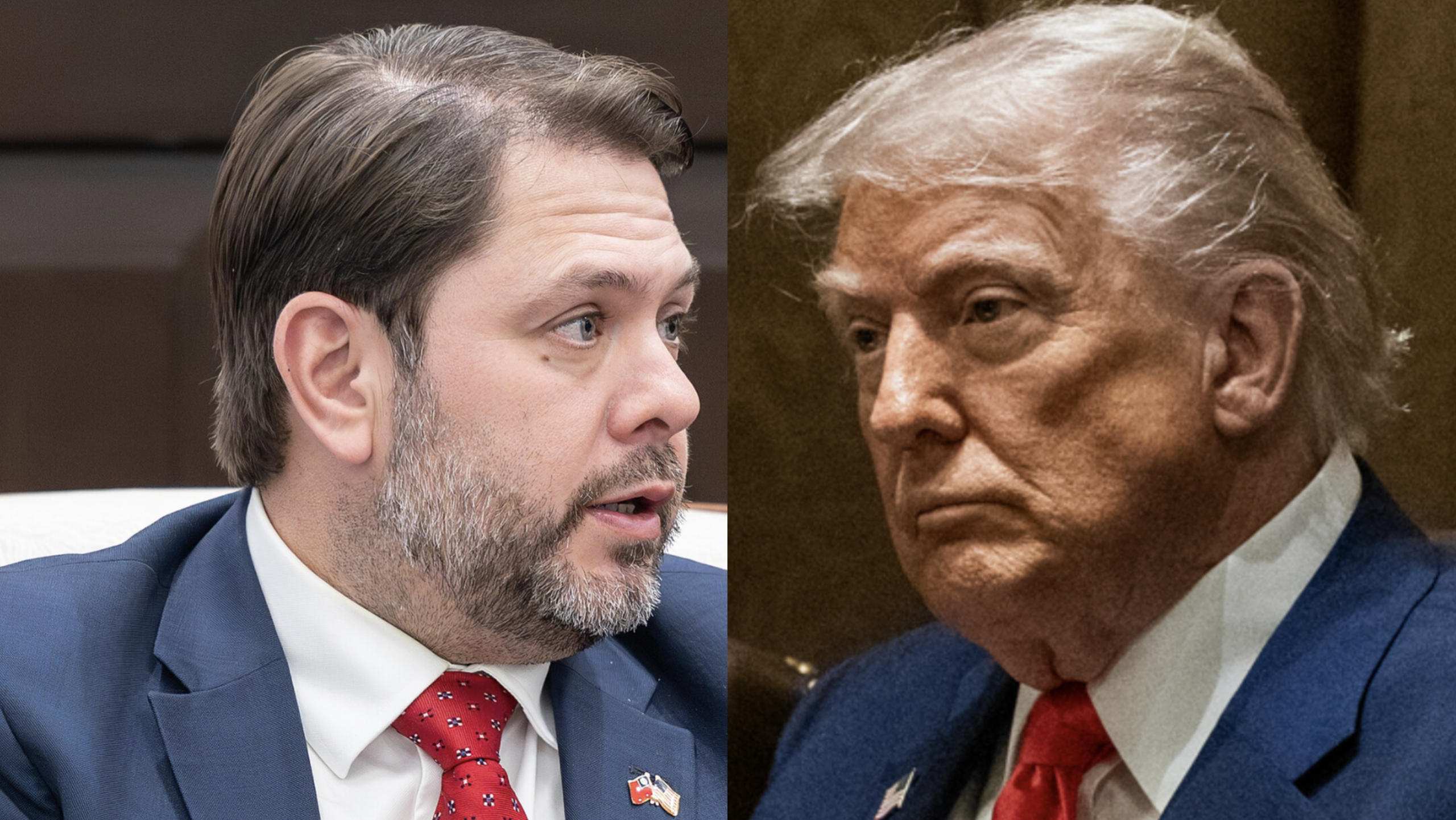
Arizona Senator Ruben Gallego, a Marine Corps combat veteran, leveled a pointed accusation at the Trump administration on Sunday, June 28, 2026, charging that American negotiators involved in the ongoing Iran conflict are more concerned with their private Middle East investment interests than with protecting United States national security. The broadside came as diplomatic talks between Washington and Tehran collapsed into a fresh round of military strikes along the Strait of Hormuz, plunging an already fragile peace process deeper into crisis.
A War That “Didn’t Need to Happen”
Gallego’s remarks arrived on X in direct response to breaking reports that upcoming U.S.-Iran technical talks in Switzerland had been canceled following attacks in the Strait of Hormuz. Iran’s Islamic Revolutionary Guard Corps had declared that American strikes “violated Article 1 of the Islamabad Memorandum of Understanding” and that the violations “will result in a total halt of all processes.” In full, Gallego’s post read:
“We are in a war that we didn’t need to get into, with leadership that doesn’t know what to do, and with negotiators that care more about their Middle East Investors than US National Security.”
The senator’s reference to “negotiators” with Middle East financial interests pointed directly at Jared Kushner and Steve Witkoff, both of whom have served as key figures in the Trump administration’s diplomatic engagement with Iran while simultaneously maintaining deep financial ties to Gulf sovereign wealth funds.
The Kushner Conflict at the Heart of the Criticism
Kushner, who founded the private equity firm Affinity Partners in 2021 after serving as a senior adviser during Trump’s first administration, has taken on the role of peace envoy in Trump’s second term, working on negotiations between Ukraine and Russia, Israel and Hamas, and most recently the U.S. and Iran. Affinity’s largest and earliest investor is Saudi Arabia’s Public Investment Fund, which invested roughly $2 billion after the first Trump White House ended, with sovereign wealth funds tied to Qatar and the United Arab Emirates also participating.
Between 2021 and 2026, Kushner raised billions of dollars into his investment firm from leading Middle Eastern monarchies — Saudi Arabia, Qatar, and the United Arab Emirates — often then investing those very same funds in Israeli companies closely tied to the military and defense sectors. By March 2026, Senate Finance Committee Ranking Member Ron Wyden and House Oversight Ranking Member Robert Garcia formally demanded answers from the White House, stating that Kushner “raising billions from Middle Eastern governments for his private equity firm, pocketing tens of millions in fees each year, while serving as Donald Trump’s Middle East envoy raises serious concerns about his potential conflicts of interest.”
The conflict-of-interest concerns deepened further in late May, when reports emerged that the Trump administration was considering creating a massive investment fund for Iran as part of a peace deal — an idea that appeared to be spurred by Kushner and Witkoff, both real estate investors, who some mediators said had pitched promoting real estate projects and an investment fund for Tehran in the event a deal was reached.
The Collapse of the Switzerland Talks
The immediate trigger for Gallego’s Sunday post was the reported cancellation of U.S.-Iran technical talks that had been scheduled to take place in Switzerland. After Iran said it canceled its participation in technical talks with the United States amid mutual strikes in the Strait of Hormuz, the two countries ultimately agreed to halt attacks on each other and to meet again in Doha, Qatar, to discuss the standoff.
Iran’s Foreign Minister Abbas Araghchi stated on Sunday in Baghdad that Iran alone is responsible for managing and fully reopening maritime traffic in the Strait of Hormuz under recent understandings, while Iran’s Foreign Ministry condemned U.S. airstrikes on several monitoring and surveillance facilities along the country’s southern coast, calling them a renewed violation of the interim agreement meant to end the war. The crisis unfolded despite JD Vance, joined at earlier negotiations by Trump’s special envoy Steve Witkoff and Jared Kushner, having told media just days before that “great” progress had been made toward a future “where everyone can work together to promote peace and prosperity.”
Gallego’s Record of Opposition: From Day One
Sunday’s post was far from Gallego’s first salvo against the Trump administration’s handling of the Iran war. His opposition dates to the moment hostilities began. In an official statement released March 1, 2026, from his Senate office, Gallego declared: “I watched brave young men die in Iraq for a mission that was never clearly justified to the American people. I came home carrying the weight of that war, and I live with PTSD every single day. President Trump promised no more forever wars. Instead, he has illegally dragged us into another one without congressional authorization and no long term strategy. This is not leadership.”
That same weekend, appearing on CNN’s State of the Union with Dana Bash, Gallego responded to reports of U.S. servicemember deaths by saying: “This is always the fear, and this is why it’s so important that we actually have real leadership that understands the consequences of war. As someone, unfortunately, who had to experience an illegal war, there’s nothing worse than seeing your friends die for a cause that isn’t in the national interest of this country.”
“President Bone Spurs” and the Cost to Working Families
At a veterans town hall organized by VoteVets, Gallego drew on his personal history — including the 23 people he knew killed in action and two IED strikes, one of which killed his best friend in the convoy directly behind him — to argue that opposing the war was itself an act of support for the troops. “We thought we’d have learned. We should have learned after the Vietnam War. We didn’t. We should have learned after what happened in Iraq and Afghanistan. We didn’t,” Gallego told the crowd. “And again, President Bone Spurs thinks he’s fricking Grant and he’s trying to send our men and women to another war.”
The economic dimension of the conflict has been central to Gallego’s broader case against the administration. Opening the Center for American Progress IDEAS Conference in May 2026, Gallego told the audience: “When you look at the price of gas hitting $5 a gallon in Arizona, or the soaring cost of groceries and housing, these aren’t abstract data points. These are the direct consequences of a war of choice in Iran. This is a war that wasn’t planned, wasn’t authorized by Congress, and isn’t making us safer. Trump got his war, and working families got stuck with the bill.”
Backing War Powers, Questioning Leadership
In early March 2026, Gallego aligned with Sen. Tim Kaine to advance a War Powers Resolution aimed at ensuring any U.S. military involvement in Iran received explicit congressional authorization, stating: “I lost friends in Iraq. I don’t want another generation of young working-class kids paying the price. The Constitution is clear: no President has the authority to drag this country into open-ended conflict without Congress.”
Days into the conflict, Gallego went further, appearing on MSNBC to argue that the United States was no longer a “world power” after entering the conflict with Iran, and lamenting that “young American men and women are dying because of these idiots,” drawing a direct comparison to the early days of the Iraq War. “These idiots that are just willing to sacrifice U.S. men, U.S. women, without any real thought about what they’re doing and what the consequences are going to bring to these families,” he said. “I feel like I’m repeating what I saw 20 years ago.”
A Veteran’s Lens on an Unfolding Crisis
Veterans at Gallego’s town halls have voiced concern about how often they see service members on active duty openly displaying political affiliations, and about Defense Secretary Pete Hegseth — himself a veteran of Iraq and Afghanistan — who has insisted of the Iran conflict, “This is not those wars.” For Gallego, who deployed to Iraq at 24 as part of a Marine unit that suffered some of the war’s heaviest casualties, those distinctions ring hollow.
His general rule for defining a war, he told one crowd, is blunt: “If someone’s going ‘pew-pew’ to you and you’re going ‘pew-pew’ back, that’s a war. That’s just very simple.” As the Strait of Hormuz continues to simmer and diplomatic talks move from Switzerland to Doha in search of firmer ground, Senator Gallego’s warning that America entered a conflict driven in part by the financial interests of its own negotiators is unlikely to fade from the conversation. The question of who is truly being served — and at what cost — remains very much open.