
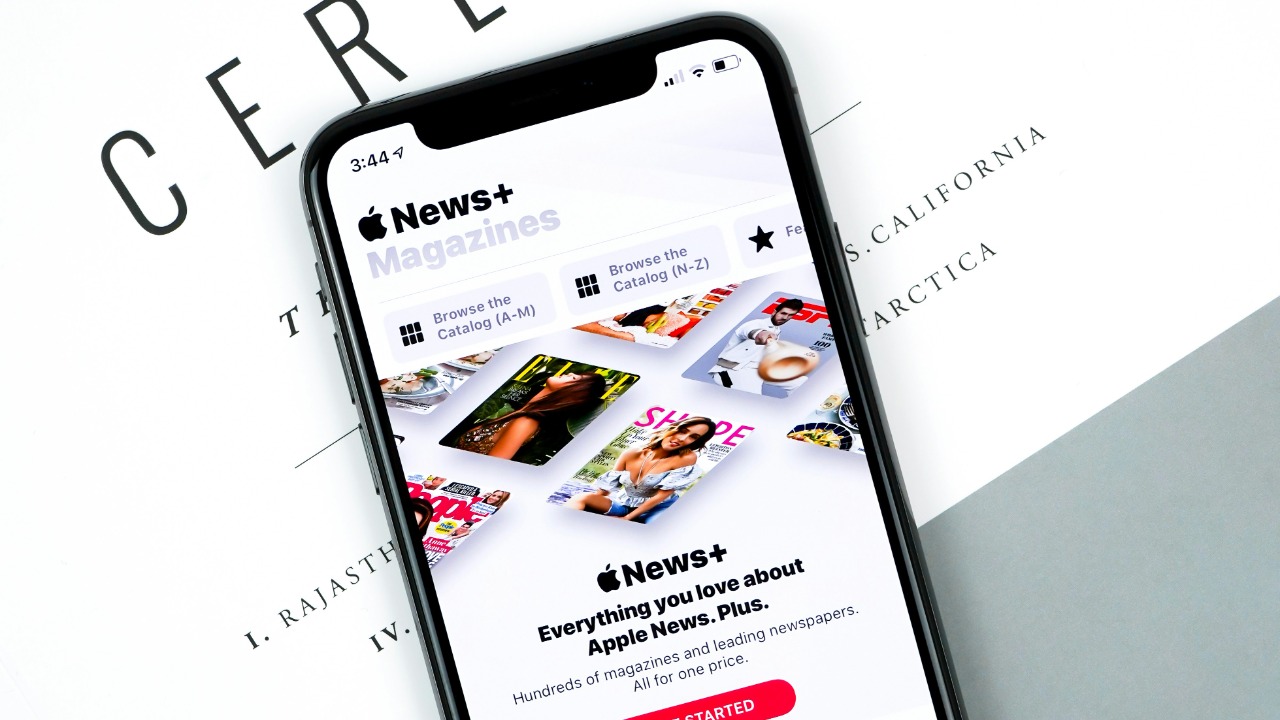
The Federal Trade Commission has moved Apple’s curated news service into the center of a political and regulatory fight over alleged ideological favoritism. At issue is whether Apple News quietly steers users toward left-leaning outlets and away from conservative sources, and if so, whether that behavior crosses the line from private editorial judgment into a potential consumer protection problem.
The dispute raises a difficult question about how much control a dominant platform can exert over news exposure before regulators step in. It also tests whether a government agency can pressure a tech company over perceived viewpoint bias without drifting into the territory of policing speech.
FTC letter puts Apple’s news curation under formal scrutiny
The Federal Trade Commission escalated long-simmering complaints about Apple News when it sent a formal warning to Apple CEO Tim Cook. The agency signaled that it is examining whether the way Apple presents political content in its news app could mislead users about the breadth of viewpoints they are receiving. In its outreach, the FTC framed the issue as a potential matter of consumer protection rather than a direct attempt to dictate which outlets Apple must carry.
According to the FTC’s correspondence, which was described in detail in a warning letter, staff pointed to reports that Apple News rarely highlights conservative publications in prominent placements. The agency suggested that if Apple markets the app as a neutral gateway to major news but in practice privileges one side of the political spectrum, that gap between promise and reality could raise issues under the FTC Act. The letter to Apple CEO Tim Cook therefore, serves both as a request for information and as an early signal that the company’s curation practices are now on the regulator’s radar.
Study alleging left-leaning tilt fuels political pressure
The FTC’s move did not emerge in a vacuum. Conservative activists and media watchdogs had already seized on fresh research that portrayed Apple News as structurally slanted toward liberal outlets. The Media Research Center reviewed the “top” slots in the app and reported that out of a set of 620 prominent stories, 440 came from left-leaning sources. The group further asserted that none of the 620 articles in its sample came from right-leaning outlets, and that the remaining stories were drawn from centrist publications, which in its view left conservatives effectively shut out of marquee placements.
Those figures, including the specific counts of 440 out of, quickly migrated from research paper to political talking point, giving critics a concrete data set to cite when accusing Apple of partisan gatekeeping. Reports described how the review focused on the most visible Apple News slots, such as a recurring top section in the morning, and argued that the absence of right-leaning outlets from that high-traffic space could shape what millions of users see when they first open the app. That framing helped turn an abstract debate about algorithms into a more tangible complaint about which brands appear at the top of a screen.
FTC Chair Andrew Ferguson’s theory of harm
Federal Trade Commission Chairman Andrew Ferguson has tried to cast the inquiry as a straightforward application of consumer protection law to a new context. In public comments and in his letter to Apple CEO Tim Cook, he suggested that if Apple News represents itself as a broadly representative news product, yet its algorithmic choices routinely sideline conservative outlets, the company might be engaging in unfair or deceptive practices. Ferguson has also indicated that such behavior could place Apple in breach of the FTC Act if users are not given a clear picture of how stories are selected.
Coverage of the letter describes how the FTC chair linked alleged bias in Apple’s algorithm to potential misrepresentations and omissions to consumers. Separate reporting on the broader political context notes that the Donald Trump Fires Two Democratic Commissioners event, described as a “Really Devastating Sign Of What Could Be To Come” in an Update, has intensified scrutiny of how the reconfigured commission might approach tech platforms. Against that backdrop, Ferguson’s focus on Apple News is being read not only as a legal maneuver but also as an early test of how aggressively the agency will challenge perceived ideological bias in digital services.
Free expression concerns and the risk of regulatory overreach
The FTC’s posture has drawn sharp criticism from civil libertarians and some policy analysts who argue that the agency is blurring the line between protecting consumers and policing speech. One analysis by David Inserra contends that the commission is “confusing free expression and censorship” by pressuring Apple over which outlets it features. That critique stresses that Apple, as a private company, has its own First Amendment rights to curate content, and warns that government pressure on editorial judgments, even when framed as consumer protection, can chill lawful expression.
From that perspective, the agency’s actions risk turning into a de facto content mandate, where platforms feel compelled to balance ideological representation in order to avoid investigation. The critique by David Inserra argues that regulators should not be in the business of second-guessing the mix of outlets on a news feed, and that users who dislike Apple’s editorial choices can switch to other apps. That argument is echoed in a broader policy essay that warns against using antitrust or consumer protection tools to influence viewpoint diversity, linking to a detailed critique of the FTC.
Apple is also facing a parallel wave of political scrutiny that goes beyond the FTC. Reporting on Capitol Hill pressure describes how Apple is “facing mounting political questions after a conservative watchdog said that its study of the app’s top stories in the morning last month found no right-leaning outlets in that slot. That account, which highlights the mounting political concern, has been amplified through broader coverage of the FTC warning and Apple’s response. A related summary of the dispute notes that Apple is facing questions not only from regulators but also from lawmakers who see the app’s curation as part of a larger fight over perceived tech bias. As the debate widens, Apple must now defend its editorial choices on two fronts: in the court of public opinion and before an agency that is weighing whether those choices can be treated as a matter of law.