
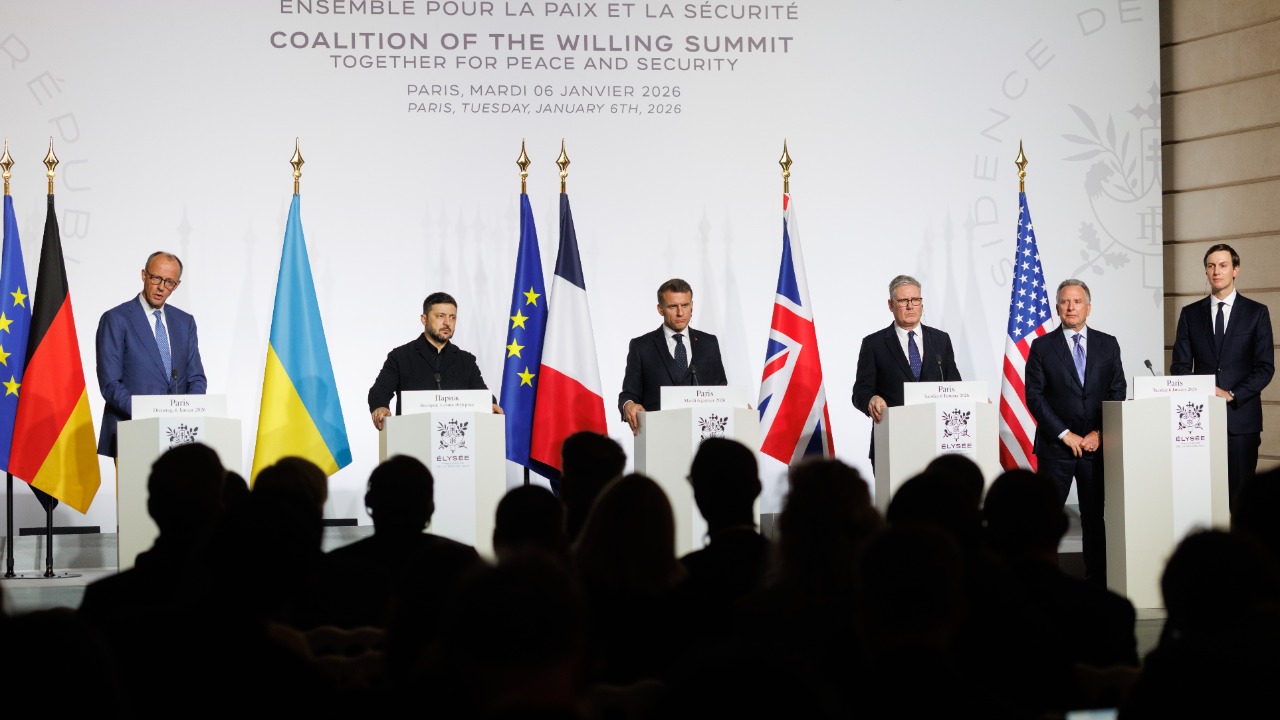
The decision by London and Paris to promise troops for a future peace in Ukraine marks a sharp turn in Europe’s approach to the war. Instead of limiting support to weapons and training, both capitals are now tying their security to the shape of any eventual settlement. I see this as an attempt to lock in a postwar order before the guns fall silent, and to signal to Moscow that any ceasefire will come with Western boots on the ground, not just statements of solidarity.
From military aid to postwar boots on the ground
The shift from indirect support to a pledge of future deployment is significant. For nearly two years, the focus in UK and French debates has been on artillery, air defence and sanctions, not on sending soldiers. Now, The UK and France have agreed that their troops will enter Ukraine only if a peace deal with Russia is reached, and only as part of a broader security package. I read that as a deliberate sequencing choice. They want to reassure Kyiv that it will not be left alone once the front lines freeze, while also avoiding a direct clash with Russia during active hostilities.
The language used in the emerging plans is careful. The UK and France speak of a “reassurance force” and of military hubs that would support a sovereign Ukraine rather than occupy it. Reporting suggests that, even in the most ambitious scenario, Britain and France together could field about 15,000 troops for such a mission. That figure is modest compared with Ukraine’s own mobilised forces, but it carries political weight. It would put NATO soldiers, from two nuclear powers, on Ukrainian soil once a ceasefire holds, and that is precisely the kind of tripwire presence that can shape calculations in Moscow.
A conditional pledge built around a future ceasefire
The entire concept rests on a big “if”. The commitment is explicitly framed as contingent on a peace deal or at least a durable ceasefire. As one account put it, “If and when a ceasefire is ever reached to end the hostilities in Ukraine, the plan is for two NATO members to deploy military forces.” I see that conditionality as both a legal and political shield. It allows London and Paris to argue at home that they are not sending soldiers into an active war, and it signals to Russia that escalation will be tied to its own decision to keep fighting.
That nuance matters inside the alliance. The United States has backed security guarantees for Ukraine, but it has been more cautious about any talk of Western troops on the ground. Washington supports the idea that France and UK will establish “military hubs” and deepen training, yet it has balked at endorsing the postwar troop idea outright. That divergence leaves Kyiv with a mixed picture. On one hand, it gains written commitments from key European powers. On the other, it sees the alliance leader hesitate, which could limit how far any reassurance force can go in deterring a renewed Russian push.
Inside the coalition of the willing
The Franco British move does not stand alone. It sits within a wider effort to build what has been called a coalition of the willing for Ukraine. After the After the September Coalition summit in Paris, President Macron announced that 26 nations had formally pledged to deploy troops as part of a future multinational presence. I interpret that as an attempt to Europeanise the burden. Rather than leaving any postwar mission to NATO as a whole, or to the United States, Paris wants a broad group of states to share the risk and the symbolism of standing on Ukrainian soil.
The diplomatic choreography has been intense. At a meeting of the “coalition of the willing” in Paris, The UK and France signed a declaration of intent that set out their readiness to send troops once a Russia Ukraine peace deal is in place. Another report notes that The UK and France have signed a declaration of intent to send forces to Ukraine if such a deal is agreed. I see these texts as more than symbolism. They create expectations among allies and among Ukrainians, and they will be hard to walk back if domestic politics in London or Paris turn more cautious.
Capabilities, limits and the road ahead
The practical side of the pledge is now coming into focus. The UK government has accelerated £200 million in defence funding to equip its Armed Forces with new kit so they are ready to deploy as part of the Multinat force in the event of a peace deal. Another account notes that The UK has accelerated £200 m to prepare its forces for potential deployment to Ukraine. I read these moves as a signal that London wants to be seen as ready, not just willing. Money for equipment and training is a concrete step that can be measured, unlike the more abstract language of declarations.
Yet the limits are clear. Analysts point out that, Even the most optimistic estimates suggest that Britain and France could only scrape together 15,000 troops for deployment, which underlines how stretched European armies already are. One assessment asks What such a deployment could look like in practice, and another notes that Even as France and the offer a written commitment to Ukraine to deploy troops in the event of a peace deal, doubts remain about timelines and rules of engagement. I find those doubts justified. The UK and France have agreed to deploy troops to Ukraine as part of a reassurance force, but the mission’s success will depend on how Russia, Ukraine and other NATO members respond once the war’s next phase begins, and that remains unverified based on available sources.
For Paris, this is also about leadership. President Macron has long argued that France must shape Europe’s security order, not simply follow Washington. For London, it is about proving that The UK and France, alongside other NATO partners, can still project power on the continent after Brexit and years of defence cuts. For Kyiv, the calculus is more basic. Ukraine needs guarantees that any future ceasefire will not be a pause before the next assault. As I weigh the evidence, I see the Franco British troop pledge as an imperfect but meaningful step toward that goal, one that ties their own security to the fate of Ukraine in a way that will be hard to unwind.