
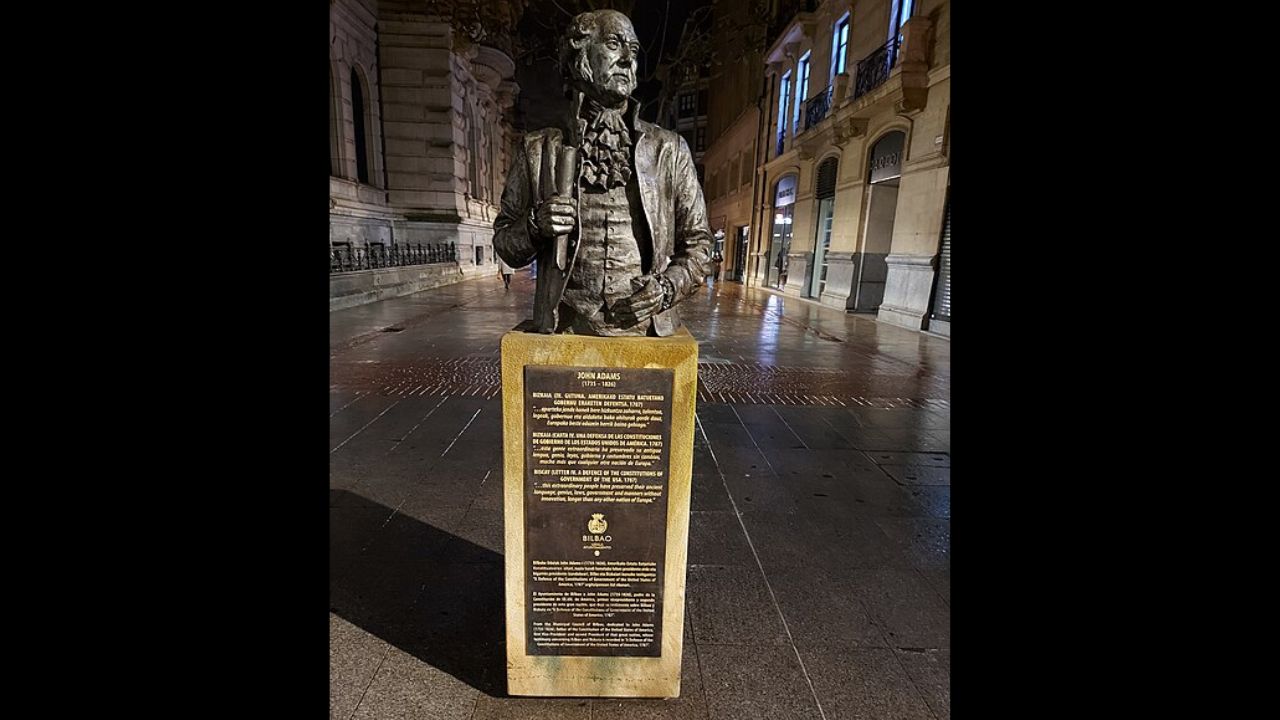
When John Adams placed his hand on the Bible in March 1797, the United States was still a nervous experiment with wobbly legs. The Constitution was barely a decade old, the capital was still a work in progress, and people were arguing—loudly—about what the country was even supposed to be. Adams didn’t inherit a settled government so much as a busy workshop full of sharp tools and sharper opinions.
He also inherited something else: George Washington’s shadow. Washington had been the steady, nearly mythic figure who made the presidency feel legitimate, and now the job was being handed to a brilliant, prickly New England lawyer who didn’t exactly ooze effortless calm. Adams knew the comparison was unfair, but that didn’t stop everyone from making it.
A new presidency, and the first real handoff of power
Adams wasn’t the first president, but he was the first to follow one. That sounds like a technicality until you remember how fragile republics can be when leadership changes hands. The peaceful transition from Washington to Adams was a huge test, and it happened without the safety net of tradition, precedent, or a “how to do this” manual.
Even the election itself was awkward by modern standards. Adams became president while Thomas Jefferson—his rival, critic, and future nemesis—became vice president under the old electoral system. Imagine starting your new job and discovering your office’s second-in-command openly disagrees with your entire management philosophy.
Party politics arrived early and didn’t knock first
By the time Adams took office, the country had already split into factions that were quickly hardening into political parties. Federalists tended to want a stronger national government and closer commercial ties with Britain, while the Democratic-Republicans rallied around Jefferson’s vision of agrarian independence and sympathy for revolutionary France. Nobody was pretending it was just a “healthy debate” anymore; it was personal, and it was loud.
Adams, a Federalist, was stuck trying to govern a country where half the political class thought the other half was steering straight toward disaster. Newspapers, often openly aligned with one side, went for the rhetorical jugular. If you think social media feels intense, picture the same energy—but printed in ink, read aloud in taverns, and carried from town to town.
Foreign policy was a live wire: France, Britain, and a young nation in the middle
The biggest immediate danger wasn’t domestic policy. It was that the United States might get dragged into the ongoing conflict between Britain and revolutionary France, two powers that didn’t have much patience for a small nation trying to trade with both sides. Washington had tried to keep things neutral, but neutrality was easier to declare than to enforce.
France, angry about U.S. policies it saw as pro-British, started seizing American ships. This escalated into what became known as the Quasi-War, an undeclared naval conflict that rattled nerves up and down the coast. Adams had to decide how to respond without lighting the fuse on a full-scale war the country wasn’t ready to fight.
The XYZ Affair made diplomacy feel like a street fight
Then came the XYZ Affair, one of those moments that makes you blink and think, “Wait, that really happened?” American envoys sent to negotiate with France were approached by intermediaries—later labeled X, Y, and Z—who suggested that talks would go smoother if the U.S. provided loans and, essentially, a bribe. Americans were furious when the story became public.
“Millions for defense, but not one cent for tribute” became the mood of the day. War fever surged, and suddenly Adams was navigating a political climate where caution could be mistaken for weakness. The hard part wasn’t knowing what anger looked like; it was resisting it when it felt popular.
Building a government while trying to keep it together
It’s easy to forget how underbuilt the federal government was in the 1790s. Institutions that feel permanent today—professional departments, stable funding systems, clear executive norms—were still being hammered into shape. Adams faced big decisions with limited administrative machinery and even fewer guardrails.
On top of that, national identity wasn’t settled. Many Americans still felt stronger loyalty to their state than to the federal government. The president wasn’t just running a country; he was helping convince people the country was real.
The Alien and Sedition Acts: crisis politics with a long shadow
The period’s most controversial domestic move came in 1798 with the Alien and Sedition Acts. Supporters argued the laws were necessary to protect national security during a tense standoff with France, especially amid fears of foreign influence and internal sabotage. Critics saw them as a direct attack on political dissent and a troubling test of the First Amendment.
The Sedition Act, in particular, made it risky to publish harsh criticism of the government, and it was used against journalists and political opponents. Adams didn’t personally author the laws, but he signed them, and his administration enforced them. It handed his enemies a powerful argument: that the Federalists talked like republicans but governed like monarchists.
An unpopular choice that may have kept the country out of war
Here’s where Adams becomes especially interesting—and, frankly, more complicated than the caricature of a thin-skinned elitist. Even as many in his own party pushed for a full war with France, Adams kept looking for a negotiated exit. He believed a major war could fracture the young republic and burden it with debt and militarization.
In 1799, he sent a new diplomatic mission to France, a move that infuriated hardline Federalists, including Alexander Hamilton. But it helped lead to the Convention of 1800, which eased tensions and effectively ended the Quasi-War. Adams paid a political price for choosing peace over applause, but the country arguably benefited from the restraint.
He didn’t just follow Washington—he followed the legend
Any president would’ve struggled as Washington’s immediate successor. Washington was the rare leader almost everyone agreed to admire, which is like inheriting a job from a coworker who somehow never missed a deadline and always remembered birthdays. Adams, by contrast, was brilliant, earnest, and sometimes allergic to charm.
He also had a habit of saying the quiet part out loud, especially about how hard the job was and how ungrateful politics could be. That honesty didn’t always help him, but it makes his presidency feel oddly modern. He was doing high-stakes leadership in a country still figuring out what leadership should look like.
A one-term presidency shaped by pressure on all sides
By 1800, the political temperature had only risen. Federalists fractured, Jefferson’s Democratic-Republicans organized effectively, and the Alien and Sedition Acts hung around Adams’s neck like a weight. He lost reelection to Jefferson in a bitter contest that confirmed parties weren’t a temporary nuisance—they were the system.
Still, it’s hard to look back and see Adams as simply failing to live up to Washington. He took office at a moment when war seemed plausible, institutions were fragile, and political rivals were practically sharing a stage. If the early republic was a storm, Adams didn’t get clear skies—he got the steering wheel.