
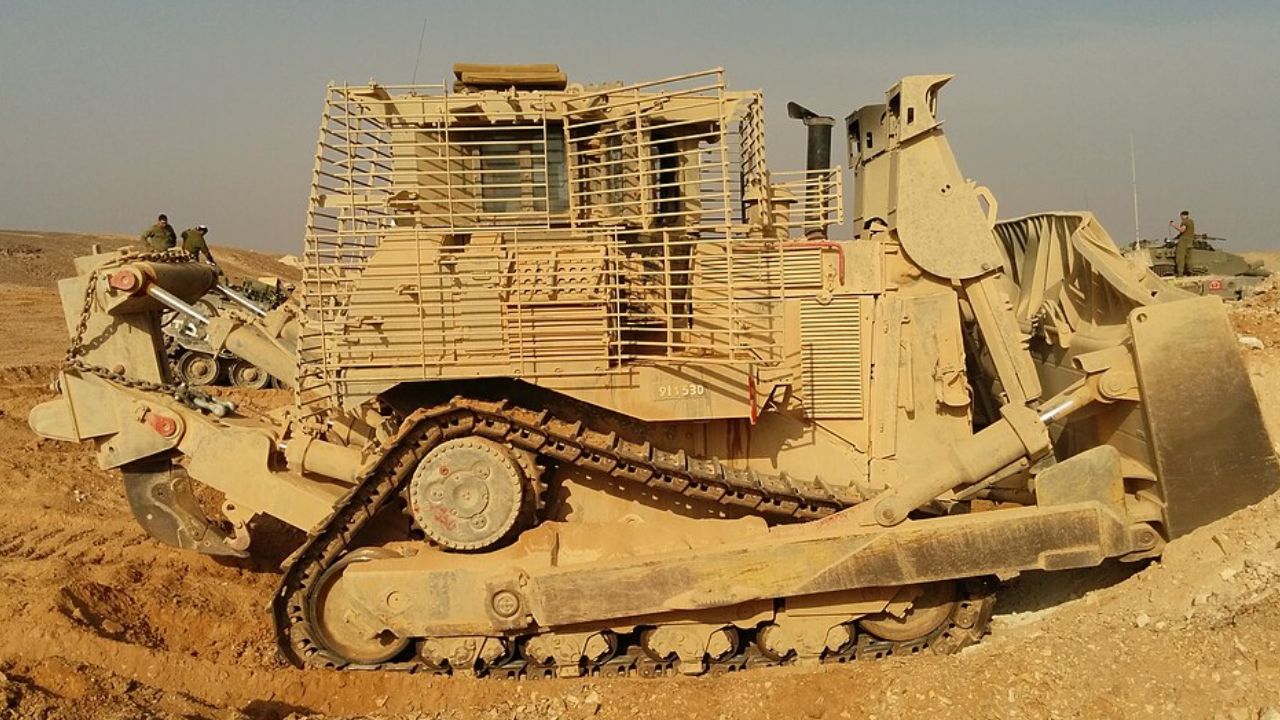
From mine sites to mountain roads, from land clearing to major infrastructure projects, the D9 has earned a reputation that’s hard to fake. People don’t talk about it like a tool so much as a force. And honestly, that’s pretty close to the truth.
A dozer that became a benchmark
The D9 sits in Caterpillar’s lineup as one of the company’s most recognized large track-type tractors. It’s not the biggest dozer in the world, but it’s often the biggest one that’s widely used, widely seen, and widely trusted. That combination matters, because “legendary” doesn’t come from spec sheets alone—it comes from showing up everywhere and lasting.
Over the years, “D9” has become shorthand on job sites for a certain class of machine: heavy, high-horsepower, meant to push serious material and keep doing it all day. Even folks who don’t follow equipment closely tend to know what a D9 is, the same way non-car people still recognize a pickup truck’s role. It’s a cultural reference point, just made of steel and track pads.
What it’s built to do (and why it’s so good at it)
At its core, the D9 is about traction, weight, and controlled power. Those wide tracks spread the machine’s mass and help it keep moving where wheeled machines might spin out. That’s useful on loose soil, rock, mud, and steep grades—the places where work doesn’t politely wait for perfect conditions.
The front blade is the star of the show, but the whole machine is tuned for the push. It’s designed to keep its footing and transfer power to the ground efficiently, which is a fancy way of saying it can shove a lot of earth without getting pushed around itself. Add the rear ripper (common on many setups) and it becomes a one-two punch: break tough ground, then move it.
From early models to today’s high-tech muscle
The D9 has been around in various generations for a long time, and that’s part of the story. Earlier versions built their name on straightforward mechanical toughness—big diesel power, heavy frames, and systems you could understand with a wrench and some experience. That simplicity helped it spread across industries and continents.
Modern D9 models, like other current heavy equipment, lean into electronics, efficiency, and operator comfort. You’ll find more advanced monitoring, better fuel management, and cabs that feel less like a vibrating metal box and more like a serious workstation. It’s still a beast, just one with smarter sensors and a nicer seat.
The projects that made the D9 famous
If you’ve driven past a highway expansion or watched a mine operation from a safe distance, there’s a good chance a D9 (or something in its weight class) was involved. These machines are workhorses for bulk earthmoving, site prep, haul road maintenance, and heavy clearing. When timelines are tight and material volumes are huge, reliability becomes its own kind of superpower.
In mining, especially, big dozers earn their keep fast. They can push overburden, manage stockpiles, maintain ramps, and keep the site moving when conditions change. The D9’s reputation here isn’t about glamour—it’s about being the machine that’s still working while everyone else is waiting for a tow.
Why operators respect it (and sometimes fear it a little)
Running a D9 is one of those jobs where skill shows immediately. With that much mass and power, smooth control matters, because small mistakes can become expensive ones. Operators talk about “feel”—how the machine responds, how it loads up in a push, how it tracks on a slope—and the D9 has long been praised for being predictable in the best way.
There’s also the simple fact that you sit high, you see a lot, and you’re piloting something that can rearrange a landscape. It’s empowering, but it demands respect. The gentle humor on job sites is that a D9 doesn’t really “move dirt” so much as it convinces dirt to relocate.
More than a machine: a symbol of heavy construction
Some equipment becomes iconic because it looks cool. The D9 becomes iconic because it keeps showing up where the work is hardest. It’s been photographed on massive civil projects, in quarries, on fire breaks, and in remote areas where spare parts and help aren’t exactly around the corner.
That visibility makes it a symbol, even for people outside construction. The silhouette—tall cab, long track frame, big blade—reads instantly as “serious earthmoving.” In a world full of specialized machines, the D9 is a reminder that sometimes the most important tool is the one that can take a hit and keep pushing.
The economics of “expensive, but worth it”
No one buys or rents a D9 because it’s cheap. They choose it because downtime is even more expensive. On big jobs, a delay can ripple through crews, trucks, schedules, and contracts, and that can cost far more than fuel or wear parts.
The D9’s value is tied to productivity and durability—how much material it can move per hour and how consistently it can do that over years. Owners also look at serviceability, parts availability, and resale value, and Caterpillar equipment has a long history of staying relevant in those categories. The math isn’t romantic, but it’s persuasive.
Competition, evolution, and why the D9 still matters
The D9 has never existed in a vacuum. Other manufacturers build powerful dozers, and fleets often compare machines closely based on application, dealer support, and operating costs. But the D9 keeps its seat at the table because it’s a known quantity: proven design philosophy, widespread support, and a track record that’s hard to argue with.
It also matters because it bridges eras. You can trace the story of modern earthmoving—bigger projects, tighter schedules, stricter safety expectations, more data-driven maintenance—through the way machines like the D9 have changed. Yet the core idea hasn’t changed at all: when you need controlled brute force, you bring a dozer that’s built for it.
The quiet legacy it leaves behind
The funny thing about a D9’s impact is that you don’t always notice it directly. You notice the road that’s now driveable, the pad that’s level, the mine bench that’s shaped correctly, the slope that’s stabilized. The dozer did its work, then moved on, leaving behind progress that looks almost inevitable once it’s finished.
That’s why the Caterpillar D9 has shaped construction in such a lasting way. It’s not just a machine people admire—it’s one they plan around. And when a piece of equipment becomes part of the plan, year after year, that’s when it turns into a legend.