
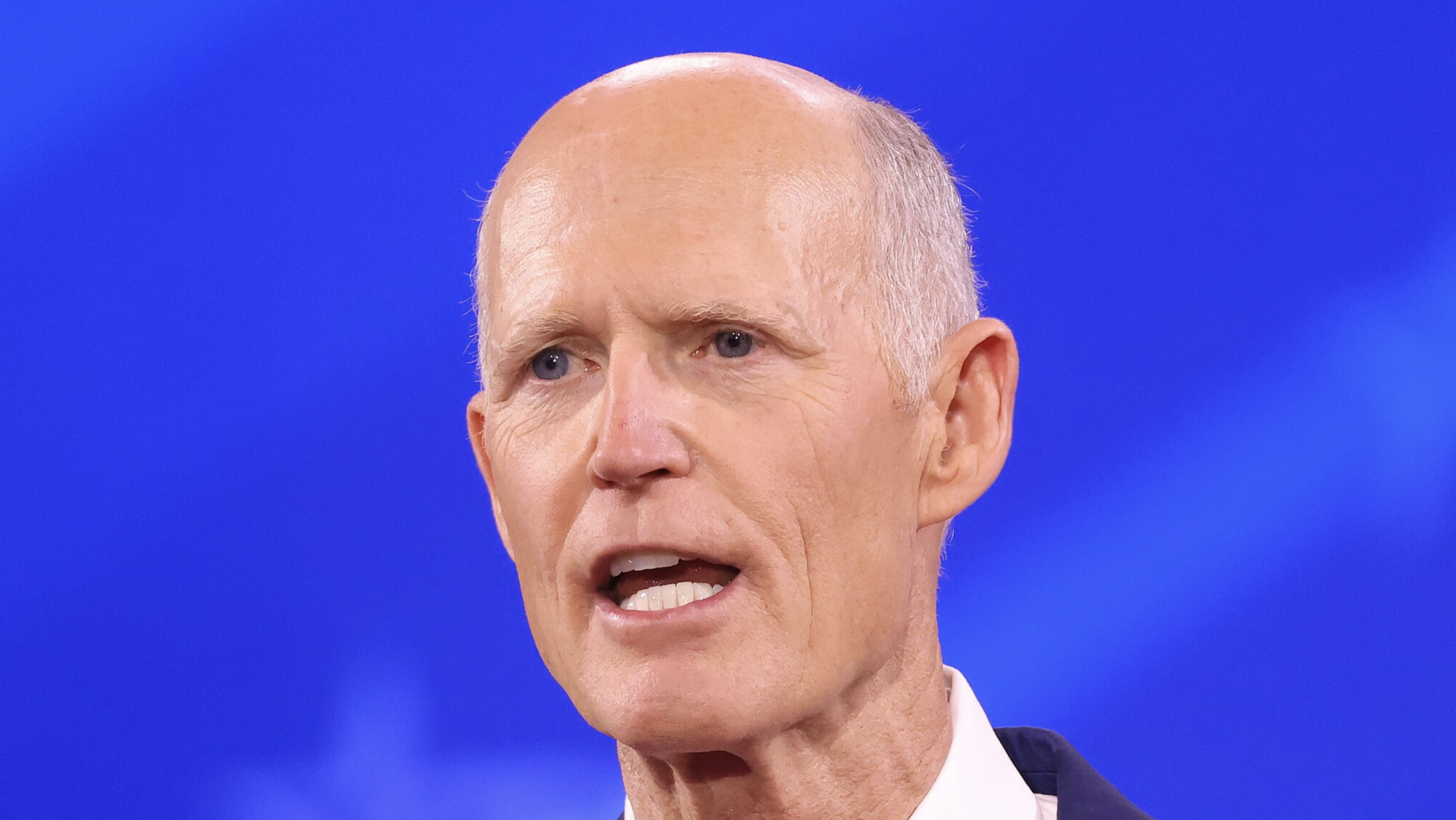
Florida Republican Sen. Rick Scott took to X on Friday morning to publicly back Secretary of State Marco Rubio’s latest round of Cuba sanctions, calling the communist regime in Havana “the root of instability in Latin America for decades” and declaring its “evil, illegitimate dictatorship” a direct threat to the United States. Scott’s post came less than 24 hours after Rubio announced the designation of five Cuban entities under President Donald Trump’s sweeping May 1 executive order — the third round of Cuba sanctions in under a month and one of the most aggressive steps yet in the administration’s accelerating pressure campaign against the island.
Scott’s Full Statement
Scott’s Friday post was a direct response to Rubio’s own announcement, and the Florida senator left little ambiguity about his stance on both the regime and the administration’s course of action. “The Communist Cuban regime has been the root of instability in Latin America for decades,” Scott wrote. “Its evil, illegitimate dictatorship has been propped up by radicals that pose a direct threat to our country. Thank you @SecRubio for working to stop this dangerous regime from harming our citizens.”
Rubio’s Announcement That Prompted the Response
The post Scott was responding to came from Secretary Rubio on Thursday, June 4, when Rubio unveiled the five new entity designations and issued a stark warning to the international financial community. “For decades, Cuba has been the world capital for radical left-wing terrorism,” Rubio wrote on X. “The regime in Havana has recruited, trained and backed violent Marxist and third-worldist movements across our hemisphere and beyond. Today, we are targeting the network that enables and funds Cuba’s subversive and radical operations.”
Rubio identified the five newly designated entities as the Ministry of the Revolutionary Armed Forces of Cuba (MINFAR), the Cuban Institute of Friendship with the Peoples (ICAP), Amistur Cuba S.A., the Committees for the Defense of the Revolution (CDR), and Minera La Victoria S.A. He then issued a direct warning to the global banking and business community: “Anyone providing services to these sanctioned actors is at risk of sanctions themselves. Foreign banks and other companies that provide services to these entities should freeze those activities.” Rubio closed with a declaration of intent: “The Trump Administration will no longer tolerate radical Marxist regimes in our hemisphere seeking to threaten U.S. national security and engage in influence operations to export their poisonous and evil ‘revolution’ to our country and around the world.”
What the Five Designations Target
The State Department’s accompanying fact sheet framed Thursday’s action as part of the Trump administration’s comprehensive push to end the Cuban regime’s decades-long campaign of political, ideological, and institutional warfare against the United States and to hold accountable those who sustain its operations and profit from the Cuban people’s oppression.
Rubio also addressed the military economic dimension directly, stating he was continuing to crack down on “the military cartel that has consolidated all economic power in Cuba for the benefit of a small circle of regime elites and their overseas hidden bank accounts,” noting that with MINFAR now sanctioned, its majority holdings and subsidiaries — many of which are identified on the State Department’s Cuba Restricted List — are considered blocked. ICAP, founded by Fidel Castro in 1960, has long been identified as a platform for Cuban state intelligence and counterintelligence activities both inside and outside the island. Amistur Cuba S.A. was designated as a result of its direct ties to ICAP. The CDR functions as a nationwide network of neighborhood-level enforcers for the regime, and Minera La Victoria S.A. is a Cuban gold mining joint venture linked to Australian-based entity Antilles Gold Ltd and Cuban state enterprise Geominera SA.
Scott’s Long Record on Cuba
Scott’s Friday post reflects a position he has held and argued consistently for years. In February 2025, when reintroducing the DEMOCRACIA Act, Scott declared that “Cuba is the root of instability in Latin America and a constant threat to the national security of the United States,” adding that “the illegitimate, communist Castro/Díaz-Canel regime harbors terrorist groups, denies freedom and democracy to the Cuban people while providing a secret police force to Maduro to oppress the Venezuelan people, and hosts a Chinese Communist Party spy station 90 miles from Florida.”
In April 2026, Scott sent a letter directly to President Trump urging him to expand the pressure campaign authorized under the January 29 executive order targeting Cuba — specifically calling on the administration to go after Cuba’s coercive medical missions program and GAESA, the military conglomerate Scott described as “the regime’s financial backbone.” That letter came weeks before Rubio’s May 7 initial designation of GAESA — a step Scott had been publicly advocating for months.
A Pressure Campaign That Has Been Escalating for Months
Thursday’s action was the third round of Cuba sanctions in less than a month under Executive Order 14404, signed by President Trump on May 1, 2026. The Trump administration had already begun tightening the financial architecture around Havana well before Thursday. In January 2026, Trump reinstated Cuba’s State Sponsor of Terrorism designation and signed an executive order declaring a national emergency. On May 7, Rubio sanctioned GAESA — the military conglomerate estimated to control at least 40 percent of the Cuban economy — and its president, Ania Guillermina Lastres Morera. A second round followed on May 19, when the State Department targeted 11 Cuban regime officials and three security and intelligence entities, including Cuba’s Ministry of Interior, the National Revolutionary Police Force, and its Directorate of Intelligence.
The sanctions come amid a deepening crisis in Cuba. The country is facing its worst economic downturn in decades, characterized by severe fuel shortages, prolonged blackouts, and a collapse in tourism. The U.S. intervention in Venezuela in early 2026, which led to the removal of President Nicolás Maduro — a key Cuban ally — has further isolated Havana.
The Secondary Sanctions Dimension
The designation of entities under Executive Order 14404 carries consequences that extend well beyond U.S. borders. The State Department’s fact sheet made clear that the Cuban regime continues to demonstrate it prioritizes the exportation of radical left-wing violence through its malign influence networks and the enrichment of the regime over the well-being of the Cuban people, and that these sanctions are designed to hold international actors supporting the Cuban regime accountable — with foreign banks and companies providing services to those designated now at risk of sanctions themselves and advised to freeze those activities.
That secondary sanctions dimension is what gives Rubio’s warning its global reach. Unlike pre-2026 Cuba sanctions, which were largely confined to Cuba and Cuban persons, Executive Order 14404 created a modern secondary sanctions regime modeled on frameworks the United States has previously deployed against Iran, Russia, and North Korea — meaning any non-U.S. financial institution or company worldwide that continues doing business with the designated entities now faces potential U.S. sanctions exposure.
Scott and Trump Both Signal More to Come
Scott’s endorsement of the Rubio sanctions on Friday fits within a broader pattern of Florida Republicans signaling that the pressure on Havana will not relent. Earlier in 2026, after the capture of Venezuelan dictator Nicolás Maduro, Scott had predicted the fall of the Cuban regime, telling reporters: “So who knows when it’s gonna happen. But we’re gonna get democracy.” President Trump, for his part, told reporters aboard Air Force One that “Cuba is ready to fall” — and has made increasingly explicit statements in recent months that Cuba is next on his foreign policy agenda once the Iran conflict concludes.
The State Department’s fact sheet further underscored that all property and interests in property of the designated persons that are in the United States or in possession or control of U.S. persons are blocked and must be reported to the Treasury Department’s Office of Foreign Assets Control (OFAC), and that all entities owned 50 percent or more by one or more blocked persons are also blocked. The State Department has signaled that additional designations remain possible, and the broad language of Executive Order 14404 gives Rubio and Treasury Secretary Scott Bessent wide authority to expand the list across Cuba’s energy, defense, mining, financial services, and security sectors.
What Comes Next
For Scott, Friday’s post was not simply an expression of support for a colleague — it was a validation of a policy posture he has argued for years and actively shaped through legislation, letters to the White House, and public pressure. Since January 2026 alone, the United States has implemented over 240 new sanctions against Cuba, reinstated the island on the list of State Sponsors of Terrorism, and issued the executive order declaring a national emergency concerning Cuba.
With five major Cuban entities now blocked — Cuba’s military ministry, its primary intelligence outreach organization, its neighborhood surveillance network, a tourism subsidiary, and a gold mining joint venture — and with Cuban President Miguel Díaz-Canel himself designated under the same round of sanctions, the financial and institutional walls around the Cuban regime are tightening at a pace not seen in decades. As Secretary Rubio put it on Thursday, the Trump administration has decided it is finished tolerating what it describes as Cuba’s decades-long export of revolutionary violence — and as Sen. Rick Scott made clear on Friday morning, that position has strong backing on Capitol Hill.