
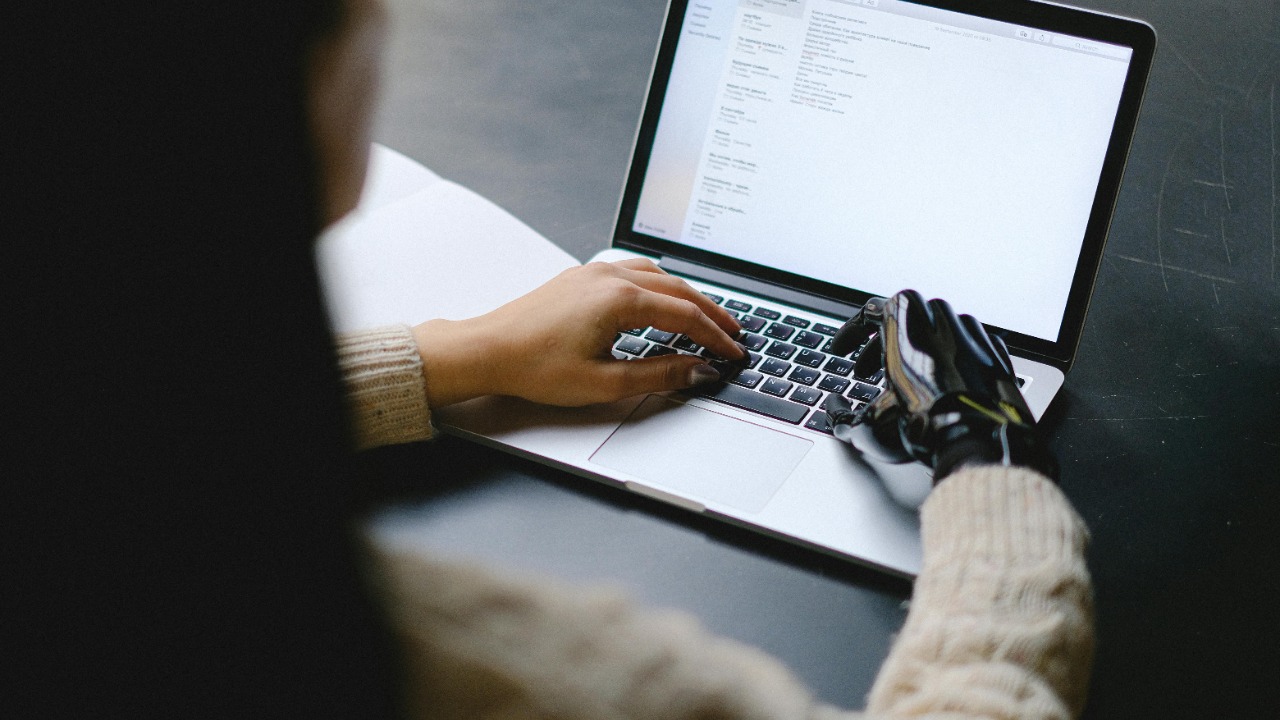
Engineers at the University of Utah NeuroRobotics Lab have unveiled an AI-driven bionic hand that can grasp everyday objects with near-human precision, turning once-delicate tasks into almost automatic motions. By combining advanced sensors, artificial neural networks and a shared control system, the device lets amputees handle cups, utensils and other fragile items with far less conscious effort. The work signals a shift in prosthetics from tools that merely follow commands to intelligent partners that anticipate what the user is trying to do.
The study, titled “Shared human-machine control of an intelligent bionic hand improves grasping and decreases cognitive burden for transradial amputees,” shows how artificial intelligence can quietly manage the fine details of grip while the user focuses on intent. It also lays the groundwork for future versions that plug directly into the nervous system, promising not just better control but a restored sense of touch.
How Utah engineers gave a prosthetic hand a ‘mind of its own’
The breakthrough comes from a team of Researchers at the University of Utah who set out to solve a familiar problem in upper-limb prosthetics: devices that look sophisticated on the outside but demand constant micromanagement from the person wearing them. Instead of asking users to consciously think through every finger movement, the Utah group built an intelligent control system that lets the hand handle the details of grasping while the person simply signals what kind of motion they want. That shift from manual control to shared autonomy is what allows the bionic hand to behave less like a mechanical tool and more like a natural limb.
To achieve this, the Utah NeuroRobotics Lab integrated custom hardware and software into an existing robotic hand platform, creating what Dec reports as a system that can grip with human-like precision. The device is part of a larger vision at the Lab to improve quality of life for amputees by pairing advanced robotics with neural and muscular interfaces, a strategy that has already produced prosthetic arms that respond to subtle muscle signals in the forearm. In this latest iteration, the engineers in Utah added an artificial intelligence layer that interprets those signals and automatically coordinates the fingers, giving the bionic hand what they describe as a “mind of its own” while still keeping the human firmly in charge of intent.
Inside the AI: sensors, neural networks and shared control
At the core of the new hand is a dense web of sensory feedback that lets the device feel the world in ways earlier prosthetics could not. Each fingertip is fitted with pressure sensors and optical proximity sensors that together mimic a basic sense of touch, allowing the system to detect not only when it has made contact but how close it is to an object and how firmly it is squeezing. The sensors are sensitive enough to register extremely light items, such as a cotton ball, which is critical for tasks that require a gentle grip rather than brute force. By integrating proximity and pressure in the same custom fingertips, the engineers created a stream of data that the AI can use to refine each grasp in real time.
That sensory data flows into an artificial neural network trained on natural grasping movements, so the hand can infer how each finger should move to secure an object without crushing or dropping it. Instead of the user manually adjusting every joint, the AI automatically tunes finger positions and grip strength for a stable hold on items with different shapes and textures, from a plastic cup to a smartphone. The system operates under a shared control framework, where muscle signals from the forearm indicate the user’s intent and the AI handles the fine motor details, a balance that Dec reporting describes as improving precision and reducing mental effort for amputees who tested the device.
From exhausting to intuitive: reducing the cognitive burden on amputees
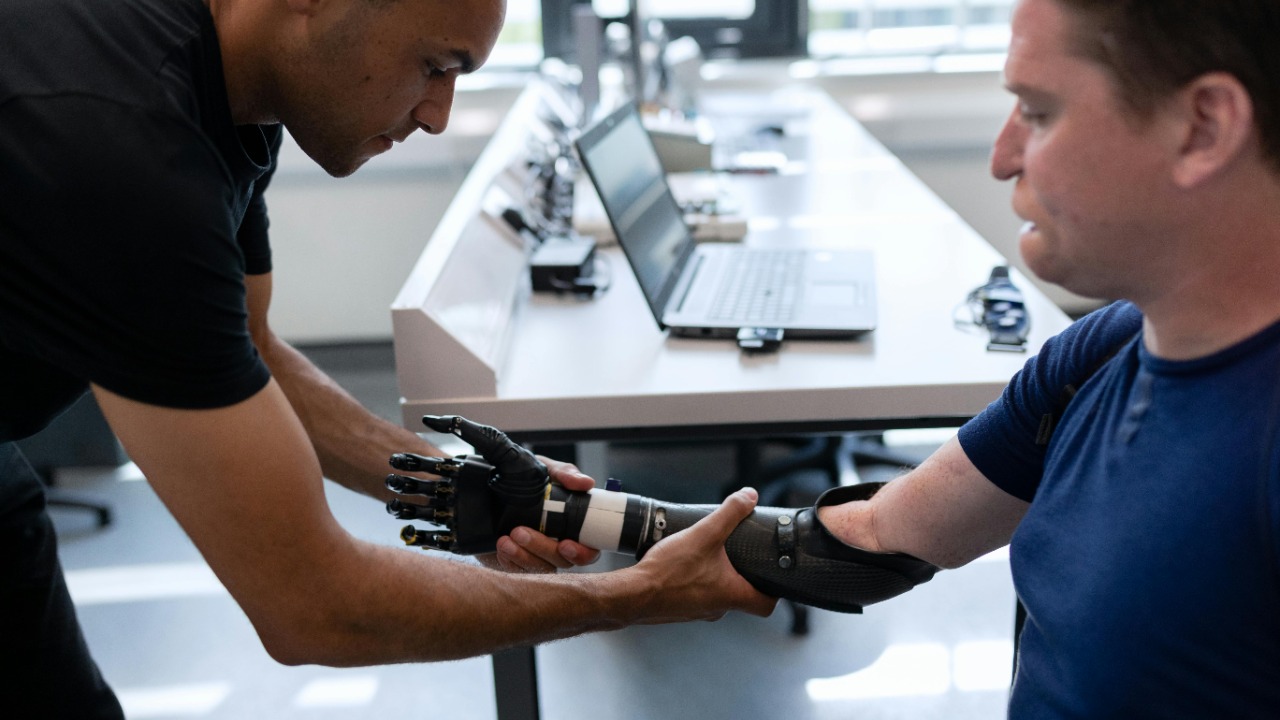
For many people who rely on prosthetic hands, the real challenge is not just moving the device but the constant attention it demands. Traditional myoelectric prostheses often require users to think through every action, switching modes to open or close the hand and carefully monitoring grip strength to avoid dropping or crushing objects. Over time, that cognitive load can be so draining that Some existing devices end up abandoned, with users reverting to one-handed strategies or simpler body-powered hooks that, while less advanced, are more predictable in daily life.
The Utah team’s shared human-machine control model directly targets that problem by letting the AI shoulder the tedious parts of grasping. Study participants could, for example, pick up a flimsy plastic cup, bring it to their lips and set it down again without having to consciously modulate pressure at every moment, because the neural network adjusted each finger automatically to keep the cup stable but intact. In the Nature Communications study, which focused on transradial amputees, the intelligent hand not only improved grasp success rates but also decreased the mental effort required to complete tasks, a result that aligns with broader efforts by Scientists to use artificial intelligence to make bionic limbs act more like natural ones and to reduce how much users have to pay attention to every movement.
What the Nature Communications study reveals about performance
The peer-reviewed study in Nature Communications provides the clearest window yet into how this technology performs outside the lab’s idealized scenarios. The research, formally titled “Shared human-machine control of an intelligent bionic hand improves grasping and decreases cognitive burden for transradial amputees,” evaluated how amputees handled a range of everyday tasks with and without the AI assistance. When the intelligent control was active, participants achieved more stable grasps, completed tasks more quickly and reported that the actions felt more natural, especially when dealing with fragile or oddly shaped objects that typically trip up conventional prostheses.
Crucially, the study did not just measure mechanical success but also cognitive load, using standardized assessments to capture how mentally taxing each task felt. With the AI-driven shared control engaged, users reported lower perceived effort, suggesting that the system genuinely offloads mental work rather than simply adding another layer of complexity. The findings, published in Dec in Nature Communications, reinforce earlier observations from Dec coverage that the Utah design allows amputees to perform complex fine motor tasks, such as drinking from a plastic cup without crushing it, by letting the AI manage subtle grip adjustments in the background.
Why this could change the future of prosthetics
The implications of this work extend far beyond a single lab prototype. Nearly half of all prosthetic users are estimated to abandon their devices, often citing poor control schemes, unreliable performance and the sheer concentration required to use them effectively. By demonstrating that an AI-driven hand can both improve grasping and reduce cognitive burden, the Utah team is challenging the assumption that more advanced prosthetics must inevitably be more complicated to operate. Instead, the intelligent hand suggests a future in which the most sophisticated devices feel simpler to use because they quietly handle the details that used to exhaust their wearers.
The researchers are already looking ahead to the next phase: integrating the shared control system with implanted neural interfaces that would allow users to control the prosthesis with their minds and receive sensory feedback directly in the nervous system. Work at the Utah NeuroRobotics Lab, supported by Dec reports on Utah and the Lab, envisions a closed loop in which muscle or brain signals drive the hand, fingertip sensors feed information back into the AI and that processed feedback is then delivered as a natural sense of touch. As Dec coverage of US engineers in Utah has noted, the long-term goal is a prosthetic that not only grips like a human hand but also feels like one, turning what is now a remarkable engineering achievement into an everyday extension of the body.
That trajectory also fits into a broader shift in assistive technology, where artificial intelligence is increasingly used to augment, rather than replace, human control. In the context of upper-limb prosthetics, the Utah hand shows how shared autonomy can respect the user’s agency while still leveraging machine precision to handle the physics of grasping. If future clinical trials confirm the early results and if manufacturers can translate the design into durable, affordable products, the AI-driven bionic hand emerging from Dec work in Utah could mark the moment when advanced prosthetics finally start to feel less like gadgets and more like living, responsive parts of the people who rely on them.