
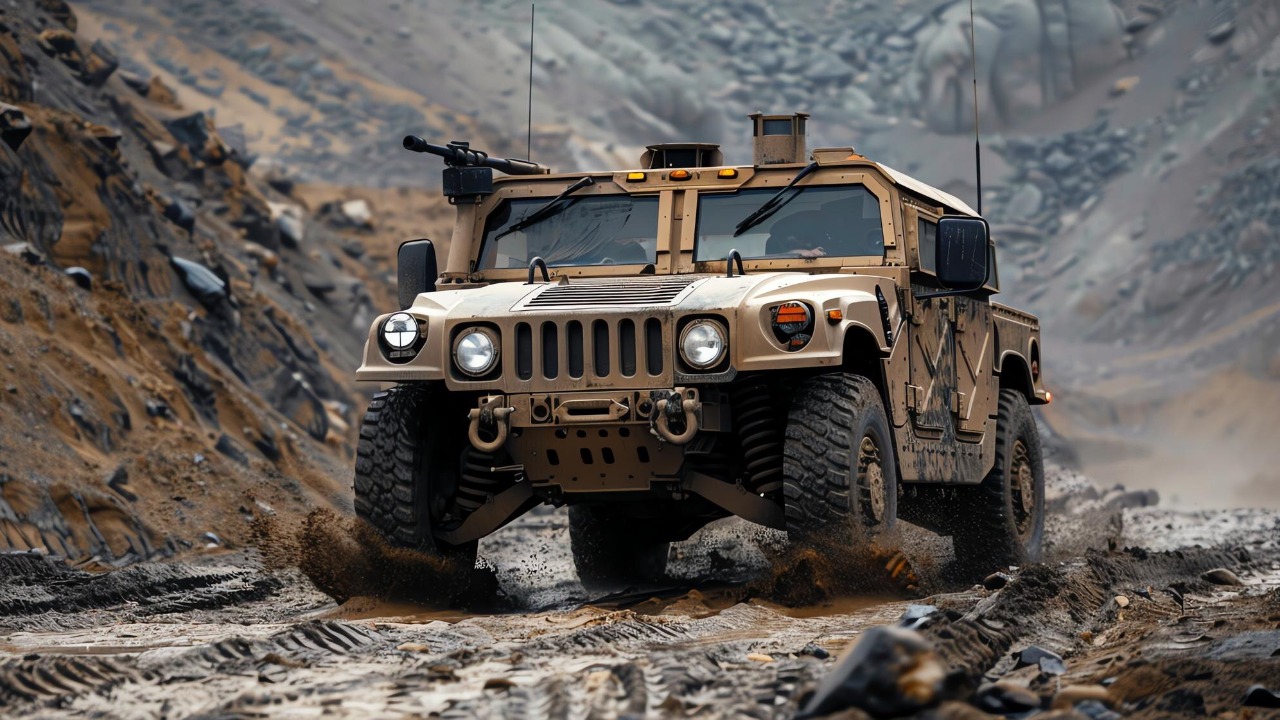
Long before it became a pop-culture cameo and a driveway status symbol, the Humvee was built for a much more practical job: get troops and gear across ugly terrain, fast, and keep going when conditions were at their worst. Its official name is the High Mobility Multipurpose Wheeled Vehicle—HMMWV if you like acronyms, “Humvee” if you like saying it in one breath. Either way, it’s one of those machines that quietly rewrote how modern militaries move.
The story isn’t just about a vehicle, though. It’s about a shift in thinking: away from specialized trucks for every single task and toward one rugged platform that could be configured for almost anything. That flexibility changed logistics, tactics, and even the look of military convoys for decades.
A problem the old fleet couldn’t solve
By the late 1970s, the U.S. military’s light vehicle lineup was showing its age. The Jeep-style vehicles that had served through earlier eras were nimble but limited in payload and protection, while larger trucks could haul more but weren’t always happy off-road. Commanders needed something that could do a bit of everything—carry people, tow equipment, run radios, move through sand and mud, and keep pace with mechanized units.
It wasn’t simply about comfort or convenience. When a vehicle can’t carry enough water, ammo, or communications gear, missions get harder and riskier. So the requirement was ambitious: high mobility, higher payload, and the ability to accept a bunch of different roles without reinventing the wheel each time.
Enter the HMMWV: one platform, many jobs
AM General’s design won the contract and, in the early 1980s, the Humvee began rolling into service. The key idea was modularity—build a sturdy base vehicle, then adapt it for troops, cargo, ambulances, communications, weapon mounts, and more. Instead of fielding a small army of niche vehicles, units could rely on a common “family” that shared parts and maintenance practices.
That standardization mattered more than it might sound. When you’re supporting thousands of vehicles worldwide, common parts reduce downtime and simplify supply chains. Mechanics can become fluent in one system, and commanders can swap configurations as missions change, rather than waiting for a specific vehicle type to be flown in.
Mobility first: the design choices that made it famous
The Humvee was built around clearance, suspension travel, and stability—three things you appreciate most when the road disappears. Its wide stance helped it feel planted on uneven ground, while its suspension let it crawl over obstacles that would make ordinary trucks complain loudly. It wasn’t designed as a luxury ride, but it was designed to keep moving.
That “keep moving” attitude is the whole point of mobility in military terms. If a unit can maneuver faster and more reliably than an opponent expects, it can reach key terrain first, resupply under pressure, or evacuate casualties without waiting for perfect conditions. The Humvee became a tool for that kind of operational flexibility, especially in environments where tracked vehicles weren’t practical for every task.
From supply runs to front-line workhorse
In many people’s minds, the Humvee is inseparable from images of long convoys and dusty roads. That’s fair—it became a common sight in major operations from the late Cold War era through the conflicts of the 1990s and 2000s. Units used it to shuttle troops, haul supplies, scout routes, carry radios, and do all the in-between jobs that keep a military functioning.
It also ended up doing more front-line work than originally envisioned. As threats evolved, the Humvee was often asked to operate in environments where small arms fire and explosives were a constant concern. That’s where the conversation around protection, armor, and vehicle roles started to change in a big way.
The armor era: an upgrade that came with trade-offs
Early Humvees weren’t built as armored vehicles, and that distinction matters. As roadside bombs and ambush threats intensified in the 2000s, many Humvees received add-on armor and later more integrated protective kits. The goal was straightforward: keep crews safer in a vehicle that was already everywhere and already essential.
But extra armor adds weight, and weight is the natural enemy of speed, braking, and drivetrain longevity. Some versions became heavier, slower, and tougher on components, and off-road agility could suffer. In other words, the Humvee’s strengths were still there, but they had to share the spotlight with the demands of survivability.
How it changed military logistics and everyday operations
One underrated impact of the Humvee is how it streamlined daily military movement. A common vehicle platform makes training more consistent and maintenance planning less chaotic. When a unit can rely on the same basic vehicle for patrols, transport, and communications, it frees up time and attention for everything else that makes missions succeed.
It also shaped how militaries thought about “multipurpose” platforms. The idea that you can field a versatile vehicle in huge numbers—and adapt it through kits, mounts, and variants—became a model repeated across other systems. Even people who never drove one felt its influence, because it affected how quickly supplies moved and how reliably units could coordinate.
A cultural icon—almost by accident
The Humvee didn’t set out to be famous, yet it became instantly recognizable. It appeared in news coverage, documentaries, movies, and video games, and for many civilians it became the visual shorthand for “modern military vehicle.” There’s a reason you can sketch a boxy silhouette with a wide stance and people immediately know what you mean.
That visibility eventually spilled into the civilian world, including the rise of the street-legal Hummer brand. It’s a slightly strange career arc: designed to haul gear through mud, then celebrated in suburban parking lots. History has a sense of humor like that.
Legacy and what came next
Over time, changing battlefields pushed militaries toward more purpose-built protected vehicles for certain missions, especially where explosive threats were severe. In the U.S. case, MRAPs (Mine-Resistant Ambush Protected vehicles) and later the JLTV (Joint Light Tactical Vehicle) reflected a new balance between mobility and protection. Those vehicles didn’t erase the Humvee’s role so much as redefine where it fit best.
Still, the Humvee’s legacy is hard to overstate. It proved the value of a highly mobile, multipurpose vehicle deployed at scale, and it set expectations for what “go anywhere” really means in a military context. Even as newer platforms take over the toughest assignments, the Humvee remains a symbol of an era—and a reminder that sometimes the biggest transformation comes from a vehicle designed simply to keep moving.