
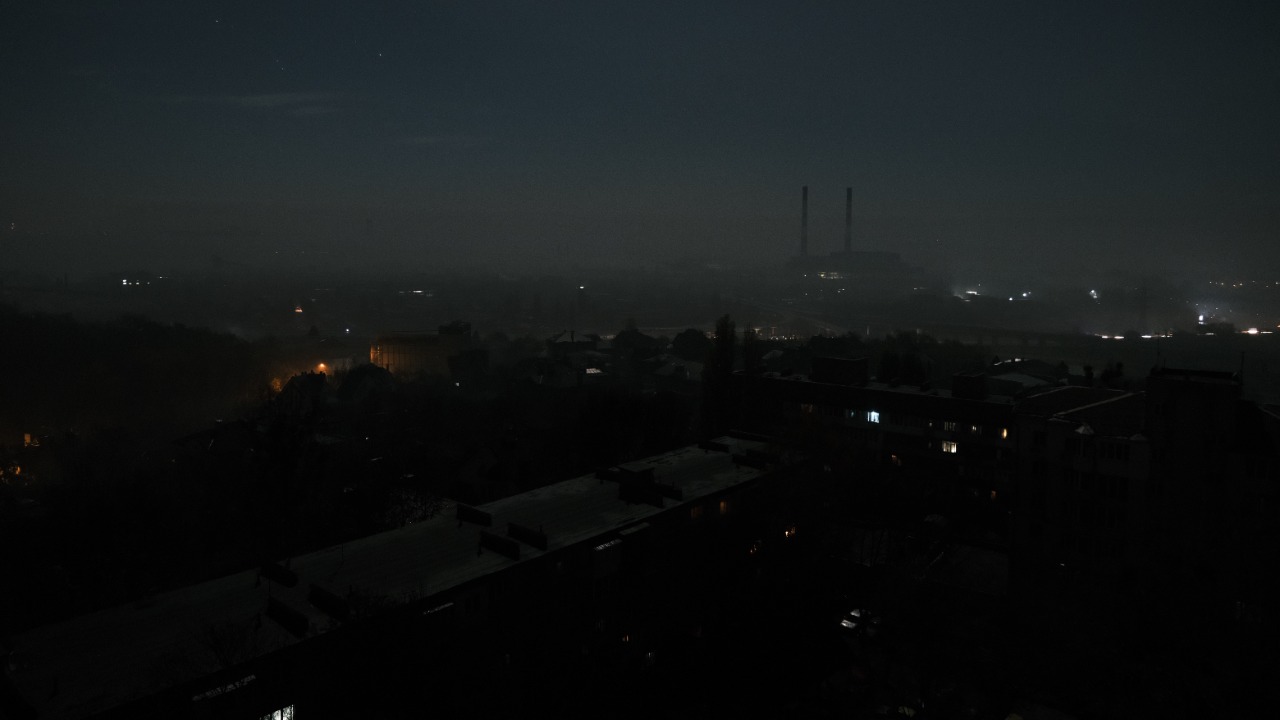
Sirens, stalled trains, and sudden darkness across major cities turned a technical grid failure in Ukraine into a geopolitical scare, as residents and observers rushed to assume a hostile cyber operation. Within hours, officials were forced to balance the urgent task of restoring electricity with the equally delicate work of calming fears about a fresh digital assault on critical infrastructure. The scramble to explain the blackout has exposed how deeply cyber anxiety now shapes public reaction to any large-scale disruption in a country already scarred by war and past attacks on its power system.
From grid malfunction to instant cyber panic
The latest outage began as a cascading failure inside the national energy system but was almost immediately interpreted by many Ukrainians as a sign of a new digital strike. Parts of the country lost power at once, and the scale of the disruption, which affected major hubs and transport, fed a narrative that only a coordinated cyberattack could have produced such a shock. That assumption rested on the lived experience of a society where the power grid has been a battlefield for years and where the very name Ukraine has become shorthand for hybrid war.
Officials moved quickly to push back on that storyline, insisting that the emergency was rooted in the physical network rather than malicious code. Energy managers described a sudden, simultaneous disconnection of key power grids that triggered automatic protections and widespread outages, a pattern they argued was consistent with internal malfunction rather than external hacking. Their technical explanation was intended not only to clarify what had happened but also to counter the wave of cyberattack rumors that had already begun to spread across social networks and into international commentary.
Kyiv’s message: a crisis, but “not a cyberattack.”
Facing a jittery public, the government framed the blackout as a serious but contained systems failure, and it did so with unusual speed and specificity. The Digital Transformation Ministry stated that the power grid failure and blackout in Jan were not related to any cyberattack, stressing that the emergency in the energy system had technical roots. Officials acknowledged that trains were running behind schedule and that daily life had been disrupted, but they argued that the pattern of failures did not match known attack signatures and that no evidence of hostile access to control systems had been found.
President Volodymyr Zelenskyy reinforced that message, saying there was no indication of outside meddling in the grid breakdown even as he conceded that conditions remained difficult in Kyiv. He framed the incident as part of a broader struggle to keep the energy system functioning under wartime strain rather than as a fresh front in cyber conflict. In a separate statement, Zelenskiy underlined that there was no confirmation that the outage was a cyberattack, a careful formulation that left room for further investigation but clearly aimed to cool speculation.
Regional shockwaves and a battered energy system
The blackout did not stop at the border, which amplified both the practical impact and the sense of vulnerability. Parts of Ukraine, including both capitals, were plunged into darkness on Saturday after what authorities described as a grid malfunction, underscoring how tightly the regional power systems are intertwined. In Moldova, the transmission operator Moldelectrica reported that the incident likely brought down 110 kV lines that are critical to supporting the smaller country’s electricity supply, a reminder that technical shocks in Ukraine can ripple quickly into neighboring states.
Inside Ukraine, the government highlighted the speed of the recovery as proof that the system, while fragile, remains resilient under pressure. Officials said that power crews restored electricity in all regions after the system-wide failure, even as they warned that rolling outages would continue to stabilize the grid. Prime Minister Denys Shmyhal said Power was restored in all regions of Ukraine after the systemwide outage and described an emergency headquarters meeting focused on preventing a repeat. Analysts noted that the incident came after months in which Russian forces had significantly degraded the Ukrainian energy grid with strikes on infrastructure in Kyiv, Zhytomyr, and Kharkiv oblasts, leaving the system more vulnerable to internal shocks even without a fresh cyber component.
Why cyber fears are so hard to shake
The intensity of the cyberattack panic cannot be understood without looking at the history of digital operations against Ukrainian infrastructure. A decade ago, on December 23, 2015, Ukrainian power companies experienced unscheduled outages that cut electricity to a large number of customers, an incident later tied to malicious interference in industrial control systems. In a separate case, a power cut that hit part of the Ukrainian capital Kiev in late 2016 was judged a cyberattack that left residents in the dark until shortly after 01:00, reinforcing the perception that the grid is a prime target. Those episodes, which affected Ukrainian customers directly, have become reference points for every subsequent disruption, even when current evidence points to mechanical or operational causes instead.
More recent events beyond Ukraine’s borders have kept those fears fresh. Cybersecurity researchers at ESET linked the Sandworm group to a late 2025 cyberattack on Poland’s power grid, noting that Sandworm has a long history of targeting Ukraine on a regular basis and identifying the DynoWiper malware as Win32/KillFiles.NMO. Another report described how the Sandworm hacking group was tied to a major cyberattack on the Polish energy grid that left thousands in the dark for hours. Security analysts also pointed to new malware families, including a trojan used to plant a wiper dubbed KillDisk that caused a 4–6 hour power outage for approximately 230,000 people in an attempted attack earlier in Jan, as evidence that the toolkit for disrupting electricity networks is evolving fast.