
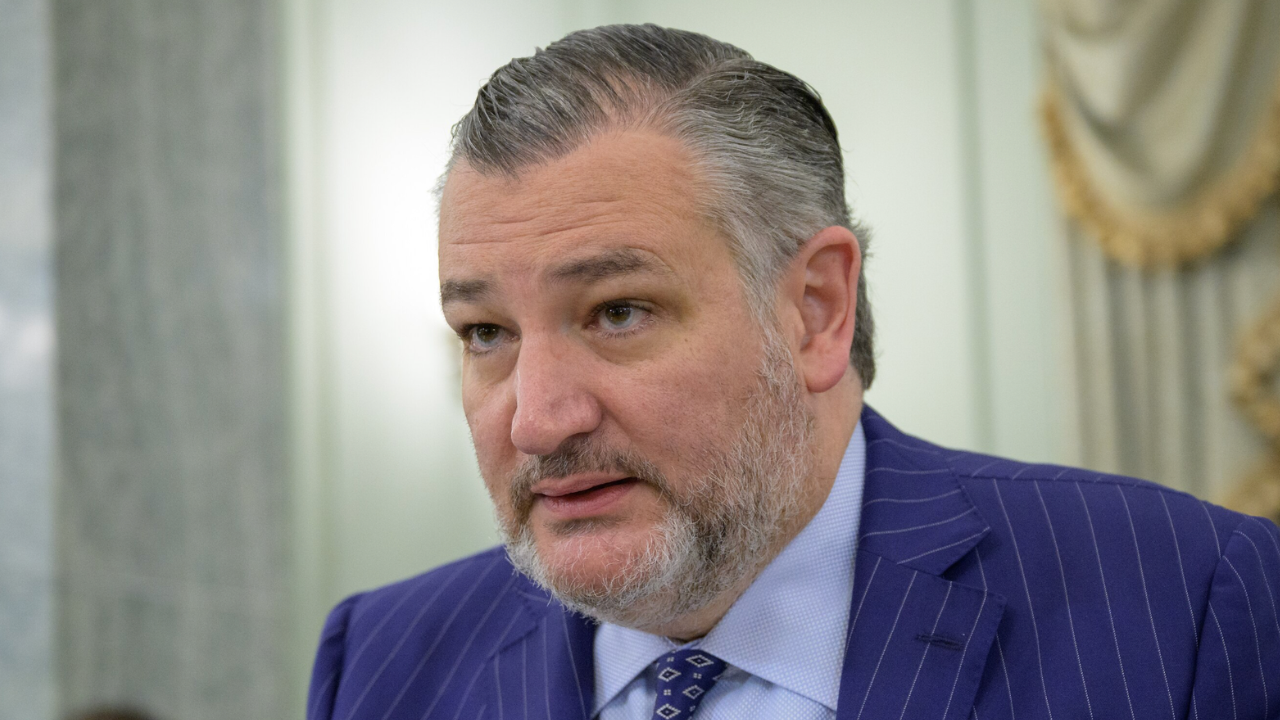
Sen. Ted Cruz told Fox News on Friday that arming Iranian protesters was necessary because the alternative — American ground troops — was never going to happen. “President Trump is not going to send American boots on the ground. We should not have American soldiers in harm’s way in Iran,” Cruz said during his appearance on “The Story.” That confident assertion sits in tension with Trump’s own repeated public statements on the same question over the preceding months.
What Trump Told the New York Post Directly
Rather than ruling out ground troops, Trump went out of his way in a March interview to keep the option open. “I don’t have the yips with respect to boots on the ground — like every president says, ‘There will be no boots on the ground.’ I don’t say it,” Trump told the New York Post, in comments reported by Time. Time’s report specified Trump added he “probably” didn’t need ground troops but would use them “if necessary” — a conditional framing rather than the flat denial Cruz described months later.
Hegseth Went Further on 60 Minutes
Defense Secretary Pete Hegseth was even more direct about keeping the option available when pressed by CBS’s Major Garrett. “We reserve the right. We would be completely unwise if we did not reserve the right to take any particular option, whether it included boots on the ground or no boots on the ground,” Hegseth said in an interview with 60 Minutes. Asked whether the U.S. had any covert forces already operating inside Iran, Hegseth did not deny it outright, telling Garrett: “I wouldn’t tell you that if we did.”
A Direct Public Split With Sen. Lindsey Graham
Trump’s ambiguity created a visible rift with a normally close ally. Sen. Lindsey Graham said repeatedly on NBC’s “Meet the Press” that the U.S. would not put boots on the ground in Iran. “Our job is to make sure Iran is no longer the largest state sponsor of terrorism, to help the people reconstruct a new government, no boots on the ground,” Graham said, according to contemporaneous coverage of the program. He added: “America First is not to get entangled. We’re not going to have any boots on the ground in Iran.” Trump and Hegseth both declined to match that certainty in their own subsequent public remarks.
Republicans in Congress Declined to Press for a Vote
Faced with that ambiguity, most congressional Republicans chose not to seek a formal check on the president’s authority. Asked whether they would want a vote to authorize war if Trump did put boots on the ground, several senators told MS NOW they preferred not to engage with the scenario. “That is incredibly speculative. I don’t have any comment,” said Sen. James Risch. “I’m not going to answer hypotheticals,” said Sen. John Kennedy, adding, “I don’t think the president is going to commit troops.” Sen. Joni Ernst said, “I don’t think we’ll have to deploy conventional forces,” while Sen. Mike Rounds called the entire scenario “hypothetical at this point.”
Sen. Hawley Took a Different View
Not every Republican was willing to simply defer. Sen. Josh Hawley told MS NOW that “when you put troops into combat situations, I think that Congress would need to authorize that,” drawing a comparison to his own stated position on the earlier operation that captured former Venezuelan President Nicolás Maduro. Rep. Michael McCaul, the former House Foreign Affairs Committee chairman, separately told MS NOW that a congressional vote on ground troops would represent a “red line” for him personally.
Trump’s Later Comments Moved Toward Dismissing the Idea
By later in March, Trump’s tone on the question had shifted. He told NBC News by phone that it would be a “waste of time” to consider a ground invasion, given what he described as Iran’s military losses. “It’s a waste of time. They’ve lost everything. They’ve lost their navy. They’ve lost everything they can lose,” Trump said, dismissing as a “wasted comment” an earlier warning from Iran’s foreign minister that Iran was prepared to repel a ground invasion.
What the Public Believed at the Time
Polling from the period suggests the ambiguity was not lost on ordinary Americans. A Reuters/Ipsos poll conducted March 17-19 found that 65 percent of Americans believed Trump would eventually “order troops into a large-scale ground war” in Iran, while only 7 percent said they supported such a move, according to USA Today’s report on the poll results. Fifty-five percent opposed deploying any ground troops at all, while 34 percent said they would support a small number of special forces troops specifically. The same report noted a Navy warship carrying more than 2,000 Marines had been spotted moving into the region even as Trump publicly maintained the U.S. was not sending troops to the Middle East.
Concrete Deployments During the Same Period
Beyond the rhetorical ambiguity, actual troop movements during this window added further weight to the uncertainty Cruz’s later claim glossed over. Reporting from the period noted that additional American forces, including personnel from the 82nd Airborne Division, joined thousands of troops already stationed in the Middle East as the conflict continued — movements that occurred alongside, rather than in contradiction of, the administration’s public refusal to rule out ground operations.
Whether Cruz’s Framing Holds Up Against the Record
Cruz’s Friday assertion that “Trump is not going to send American boots on the ground” is consistent with Trump’s later, more dismissive comments about the practicality of a ground invasion, but is difficult to reconcile with the extended period of deliberate ambiguity — Trump’s own “yips” comment, Hegseth’s explicit refusal to rule anything out on 60 Minutes, and the visible public disagreement with Graham — that defined the administration’s position for weeks after the war began.
Hegseth’s Own Later Acknowledgment
Hegseth himself later referenced the pattern of shifting statements directly. Speaking to supporters at the end of March, Hegseth said he didn’t understand why “the base” wouldn’t trust Trump’s track record on the ground-troops question, an offhand remark that implicitly acknowledged the administration’s public position had shifted multiple times over the preceding weeks rather than remaining fixed.
Where This Leaves Things
As of Cruz’s Friday remarks, no ground invasion of Iran had occurred, and Trump’s most recent public comments on the subject leaned toward characterizing such a move as unnecessary rather than permanently off the table. Whether that reflects a settled policy position, as Cruz’s comment implied, or simply the current state of a question the administration has at various points deliberately kept open, remains difficult to determine from the public record alone.