
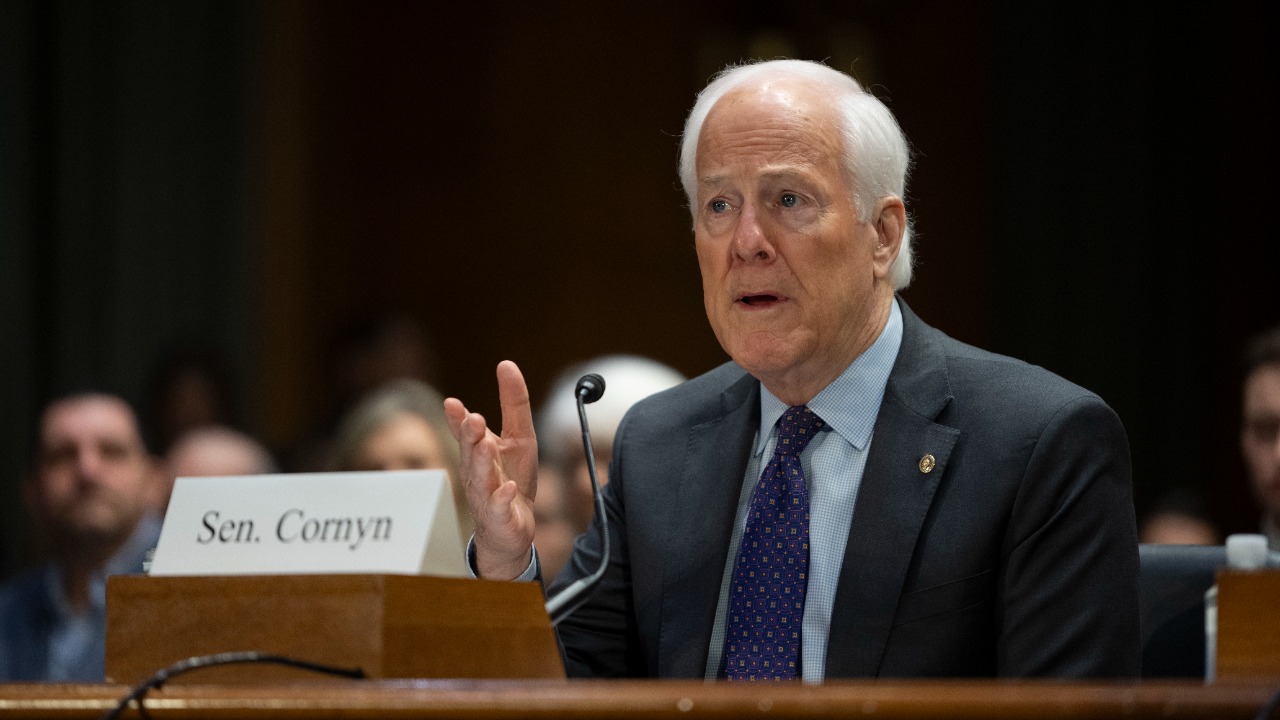
Sen. John Cornyn is pressing ahead with the Defeat Sharia Law in America Act just as criticism inside Texas grows louder over what opponents describe as an unnecessary and inflammatory measure. The clash over his bill has quickly become a test of how far culture-war legislation can go in a state where the political ground is shifting under both parties.
Cornyn’s bill and the push to define Sharia as discrimination
At the center of the fight is Cornyn’s proposal to write Islamic Sharia Law into federal civil-rights statutes, not as a protected practice but as a specific basis for unlawful discrimination. The Defeat Sharia Law in America Act would treat any enforcement of Sharia in the United States as a violation of existing protections and would classify adverse treatment “based on Sharia Law” as a civil-rights offense, effectively singling out a religious legal tradition in federal code. Cornyn introduced the bill alongside Sen. Tommy Tuberville, framing the measure as a foreign-affairs and national-security initiative, grouped with his efforts to address perceived threats to American constitutional rights in family life, housing, and public accommodations linked to Sharia-based practices.
The legislation does not emerge in a vacuum. Cornyn’s long record on foreign affairs and security has increasingly emphasized perceived dangers from non-state actors and ideological movements, and the Sharia measure extends that logic into domestic civil law. On his official platform, he highlights work on terrorism, border security, and religious extremism, and now folds the Defeat Sharia Law in America Act into that same narrative of defending constitutional guarantees against outside legal systems. His partnership with Tuberville, who has previously backed proposals such as The No Sharia Act that would bar courts and public agencies from recognizing Sharia when it conflicts with constitutional rights, signals a coordinated Republican effort to codify a hard line against any formal role for Islamic jurisprudence in American civic life.
Texas backlash and civil-rights concerns
The sharpest early reaction has come from civil-rights advocates and Muslim organizations in the South, who argue that Cornyn’s bill stigmatizes Islamic faith under the guise of protecting victims. The Council on American-Islamic Relations’ Alabama chapter, referred to in the sources as The Council on American Islamic Relations Alabama, condemned the proposal as an unconstitutional attack on religious freedom and warned that labeling Sharia itself as a civil-rights trigger could invite discrimination against ordinary religious observance, from marriage contracts to burial practices. In their view, the legislation risks encouraging landlords, employers, or local officials to treat Muslim religious norms as inherently suspect, even though existing law already prohibits violence or coercion regardless of the ideology behind it.
In Texas, that critique merged with broader unease over how far the state’s political leaders are willing to align with national conservative activists. Local reporting on Cornyn’s filing of the Defeat Sharia Law in America Act highlighted his coordination with Tuberville and other Republicans in the self-described Sharia Free America effort, along with his public attacks on CAIR as ‘a radical group of terrorist sympathizers with a long history of undermining American values.’ Supporters of the bill argue that it merely clarifies that no religious code can override constitutional rights in areas such as housing, family law, or access to public services, while critics counter that by singling out Islamic Sharia Law, the measure invites government scrutiny of one faith community in a way that would never be tolerated if applied to Christian canon law or Jewish halakha.
Electoral stakes for Cornyn in a volatile Texas
Cornyn’s strategy cannot be separated from the unsettled politics of Texas, where both parties are grappling with rapid demographic change and volatile primary electorates. Analysts have noted that no candidate on the ballot this year generated more immediate attention than Ken Paxton, the firebrand Texas Attorney General whose own bid has scrambled expectations in the state’s Senate race and forced Republicans to confront internal divisions between traditional conservatives and harder-line activists. In that environment, Cornyn’s decision to champion a high-profile Sharia bill looks less like an abstract policy exercise and more like a bid to shore up his standing with voters who respond strongly to cultural and religious issues, particularly those wary of any perceived accommodation of Islamic law.
At the same time, statewide data point to growing risks for Republicans who lean too heavily on polarizing themes. Political scientist Cal Jillson has described a “massive shift of disaffected Republicans and independents who voted for the Democratic candidate” in recent contests, a warning sign that the party’s rightward turn on social issues could open space for Democrats in suburban districts and diverse urban counties. For Cornyn, that tension is acute: he must navigate a primary electorate that rewards sharp rhetoric on topics such as Sharia while also facing a general-election audience that includes moderate Republicans, Latino voters, and younger Texans who may see the Defeat Sharia Law in America Act as evidence that the party is focused on symbolic fights instead of economic concerns.
National conservative agenda and the future of religious pluralism
The Defeat Sharia Law in America Act also fits into a broader national pattern in which Republicans elevate specific religious or cultural practices as stand-ins for larger debates about identity, immigration, and national security. Cornyn’s own record on foreign affairs and national security, which he presents as a defense of American constitutional norms against external threats, now extends that framing into domestic civil-rights law by treating Sharia as a category of discrimination that must be policed by federal authorities. This approach mirrors earlier efforts such as The No Sharia Act, which aimed to prevent any U.S. court, public agency, or legal institution from enforcing or recognizing Sharia when it conflicts with constitutional rights, reflecting a belief among some conservatives that explicit statutory language is necessary even where constitutional protections already exist.