
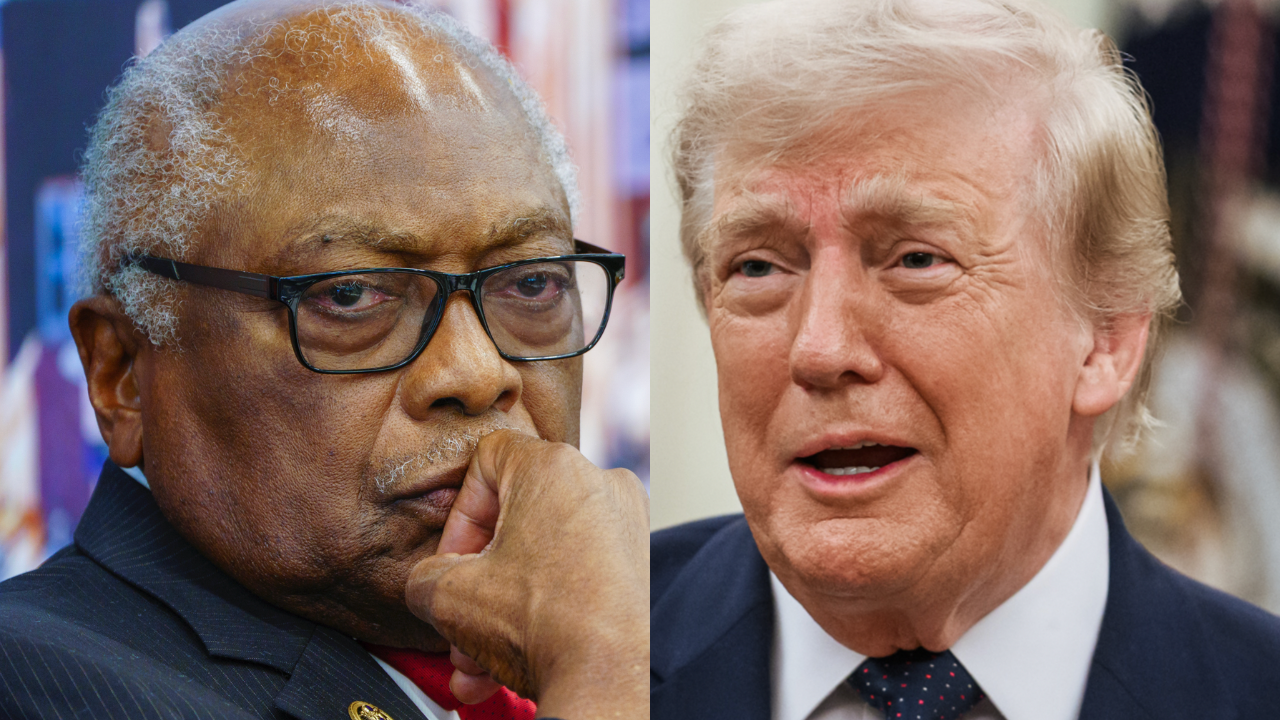
Rep. James Clyburn said Thursday that months of fighting and tens of billions in war spending may leave Iran with more control over the Strait of Hormuz than it held before the conflict began. “Before Trump launched his senseless war on Iran, ships could move freely through the Strait of Hormuz,” Clyburn wrote on X. “Then Iran closed it. Gas prices shot up. Now, a reported proposal would put Iran in charge of the Strait. After tens of billions of taxpayer dollars spent and months of high gas prices, it appears Iran could end up in a stronger position than it was before Trump launched his war.”
How the Strait Operated Before the War
Clyburn’s starting premise is well-documented. According to a Congressional Research Service report, roughly 20 million barrels per day of crude oil and petroleum products moved through the Strait of Hormuz during 2024 — about 27 percent of global maritime oil trade and roughly a fifth of world petroleum liquids consumption — under longstanding freedom-of-navigation norms, without Iran exercising the kind of unilateral control over transit that has emerged since the war began.
What Changed After February 28
Iran’s posture toward the strait shifted immediately once U.S. and Israeli strikes began. In the war’s opening days, tanker traffic through the strait dropped to zero, according to Reuters reporting at the time, even as an Iranian Revolutionary Guard spokesman insisted, “We did not close the Strait of Hormuz and will not, but we will target ships belonging to the U.S. regime and the Zionist entity transiting the Strait of Hormuz.” Whatever the precise legal characterization, the practical effect was a severe disruption to a waterway that had operated as an open international passage.
The Direct Hit to Gas Prices
The disruption translated quickly into higher costs at the pump. According to AAA data cited in contemporaneous reporting, the national average price for regular gasoline was $2.94 a gallon the day after the war began on March 1; within two weeks it had climbed past $3.70, and by summer it was regularly exceeding $4 a gallon — up from under $3 in the weeks before the conflict. Diesel prices rose even more sharply, a detail analysts said mattered more for the broader economy than gasoline alone. “Because of course that is the lifeblood of the U.S. economy,” Christian Lawrence, head of Americas and energy market strategy at Rabobank, told CNBC.
The Administration’s Own Predictions Have Repeatedly Slipped
Trump and administration officials made a series of public predictions about price relief that did not hold up on the timelines given. In March, Trump told NBC News he expected gas prices to fall below record lows, saying “it’s being clogged up a little bit. It’ll be unclogged very soon.” Energy Secretary Chris Wright said at the time there was “a very good chance” prices would fall below $3 a gallon before the summer travel season. Neither prediction materialized on schedule; gas prices instead climbed toward $4 through the summer as the strait remained effectively closed or severely restricted for months.
The Reported Deal Clyburn Is Referring To
The “reported proposal” in Clyburn’s post refers to emerging talks between Iran and Oman described in detail by the New York Times and corroborated by subsequent reporting from Stars and Stripes and other outlets. Under the arrangement described by Iranian and American officials, inbound vessels to the Persian Gulf would transit a channel controlled by and close to Iran’s coast, while outbound vessels would use a route near Oman — a structural change from the prior arrangement, which relied more heavily on internationally recognized lanes without formal Iranian control of entry.
The Fee Structure at the Center of the Dispute
Iranian officials have described the arrangement as including a “service fee” — separate from a formal toll — to cover environmental impact, cargo security, and staffing, with revenue split between Iran and Oman. A U.S. official disputed that characterization to the Times, saying any “temporary” routes established through the strait would not involve Iranian approvals or fees at all. That basic disagreement over the deal’s actual terms remains unresolved even as the talks near completion.
Why This Would Represent New Iranian Leverage
The core of Clyburn’s argument mirrors an assessment offered by Ali Vaez, deputy Middle East program director for the International Crisis Group, who told the Times that Iran views control of the strait as the one concrete gain it can point to from the entire war. “Whatever solution leaves Iran in control of the strait will be a very tough sell for Trump,” Vaez said, “but there is also no military solution to remove Iran’s control of the strait. Trump’s options are between an unwinnable war and an unpalatable peace.”
Rubio’s Public Position Runs Counter to the Reported Deal
The arrangement described in reporting on the talks sits in direct tension with public commitments Secretary of State Marco Rubio made earlier in the year. Speaking at the ASEAN Post-Ministerial Conference, Rubio said any precedent allowing “a nation state to decide that they are going to control an international waterway, charge a toll, and if you don’t pay them, blow up your ships” would be “a very dangerous precedent which will repeat itself in other parts of the world.” He added: “What is at stake here is not simply the issue of what’s happening in the Straits of Hormuz. It’s a very fundamental principle about freedom of navigation.”
What the War Has Cost So Far
Clyburn’s “tens of billions of taxpayer dollars” figure aligns with cost estimates that have climbed steadily over the course of the conflict. Defense Secretary Pete Hegseth told Congress the war had cost approximately $37.5 billion as of mid-summer, and the administration separately sought a $67 billion supplemental funding request tied largely to replenishing munitions consumed during the fighting — figures that predate any additional costs incurred in the weeks since, meaning the true total by early August likely runs higher than either figure alone.
Even Administration Allies Have Voiced Concern About the Deal
Skepticism about the emerging Oman arrangement has not been confined to Democrats. The New York Times reported that senior Pentagon officials view the deal with real concern, with some worried it amounts to capitulation, noting that even the proposed Oman-side route remains heavily mined — meaning ships would still need to coordinate directly with Iran to navigate it safely regardless of how the final agreement is structured.
Where This Leaves the Debate
As of Clyburn’s Thursday post, the Iran-Oman negotiations remained unfinished, with the basic dispute over tolls, approvals, and genuine “freedom of movement” still unresolved between the parties’ competing public accounts. Clyburn’s framing — that a war fought at enormous cost may conclude with Iran holding more practical control over a critical international waterway than it held before the fighting started — remains, on the available reporting, a real and live risk rather than a settled outcome, with the administration continuing to pursue a deal it has not yet been able to close on terms consistent with Rubio’s own stated freedom-of-navigation principle.