
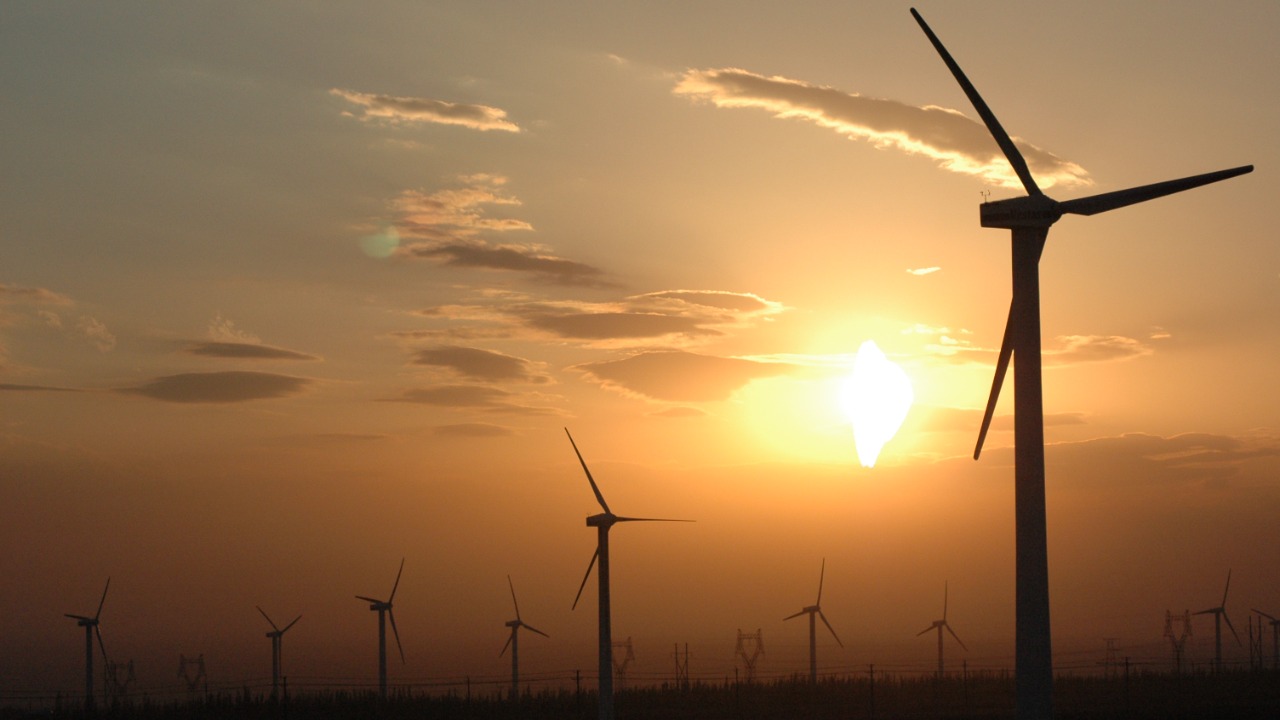
Across China’s coastlines, deserts, and even skies, wind projects are being reimagined as multi purpose platforms that reshape industry, food production, and marine ecosystems. Turbines that once served a single function are now anchoring hydrogen hubs, aquaculture complexes, and airborne test beds that hint at a very different energy future. The country’s wind build out is evolving from a story of sheer capacity into one of integration, where each new megawatt is expected to unlock value far beyond the power grid.
This shift reflects a deliberate strategy to fuse clean electricity with heavy industry, offshore resources, and advanced engineering. It is also turning China into a live laboratory for ideas that other nations are only beginning to sketch on paper, from floating fish farms to flying generators. The result is a wind sector that is no longer just about spinning blades, but about redesigning how energy, food, and infrastructure interact.
From capacity race to integrated energy system
The first phase of China’s wind story was about scale, with vast turbine fleets rising across northern grasslands and coastal shallows. While China manufactures a vast number of turbines, it has also built extensive wind farms nationwide, giving it a generating footprint that far exceeds that of the second-ranked United States. That build out has now matured into a system level push, with policymakers seeking to use wind not only to decarbonize the power sector but to feed new value chains in transport, chemicals, and heavy manufacturing.
Planning documents show that new-era strategies are explicit about this pivot, with China targeting renewable energy use in fertilisers, shipping, and other hard-to-abate sectors. Officials have highlighted a figure of 41 as a benchmark in these plans, underscoring how specific penetration targets are being set for clean power in industrial processes. At the same time, January briefings on the sector stress that China now operates a large share of global installed wind capacity, according to industry association data.
Offshore platforms that farm fish and restore seas
Nowhere is the multifunctional turn more visible than offshore, where turbines are increasingly sharing space with fish cages and marine research gear. One flagship project off Pingtan Island in Fujian Province, for example, is described as the first all in one floating fish farm powered by wind and solar, with a hexagonal caged structure built into the platform so that the same footprint can host aquaculture operations. The unit, developed by a leading wind company, is presented as a way for China to produce seafood and electricity in tandem, reducing competition for coastal space.
Further south, an integrated wind power and aquaculture platform in the South China Sea off Guangdong has secured formal certification, signaling that regulators now see such hybrid structures as part of the mainstream offshore portfolio. The project brings together turbine manufacturers, shipbuilders, and fish farmers on a single asset, using South China Sea conditions as a proving ground. Scientific work around these sites is challenging assumptions about ecological harm, with one study of a Chinese offshore array finding that turbine foundations had become a haven for oysters, barnacles, and other species, suggesting that carefully designed farms can enhance marine life rather than damage the seabed.
Wind farms as climate shields and coastal infrastructure
Beyond direct co use with aquaculture, Chinese wind arrays are increasingly framed as protective infrastructure for vulnerable regions. Research cited in Jan coverage of how China’s wind farms are doing more than generating electricity points to large scale solar and wind installations altering local microclimates, with the shading and surface changes associated with panels and turbine bases helping to moderate extreme heat in the regions where they were installed. That reporting describes how the expanded use of solar energy, often paired with wind, could serve as a crucial defence against intensifying heatwaves.
Offshore, the same structures that host turbines and fish cages are also being evaluated as breakwaters and anchors for future coastal development. Studies of one Chinese offshore wind farm, for instance, found that the dense forest of monopiles and associated scour protection had created calmer zones that benefited both marine organisms and nearby human activity, turning the site into a haven for oysters and barnacles that in turn stabilize the local environment. The study that documented this effect explicitly framed it as a counterpoint to long standing fears about seabed damage, suggesting that with careful siting and design, wind farms can double as ecological buffers.
Green hydrogen and industrial decarbonisation at sea
Perhaps the clearest sign that China’s wind sector is moving beyond simple power generation is the emergence of offshore projects built from the ground up to feed electrolysers rather than the grid. In Guangdong’s Yangjiang area, the Baowu Qingneng Green Hydrogen Demonstration Project is being developed with 1.5 G of offshore wind capacity directly connected to hydrogen production equipment, targeting an output of 80 k tonnes per year and supported by plans for dedicated pipeline infrastructure. Energy analysts note that this configuration effectively turns the sea into a primary energy and feedstock zone, with 1.5 G of capacity no longer treated as just another power plant but as the heart of a new industrial cluster.
The corporate architecture behind this shift is equally telling. Baowu Clean Energy, a subsidiary of the Chinese steel giant Baowu, has held an official launch ceremony for a 1.5 billion dollar offshore wind to green hydrogen project that will supply low carbon fuel to its parent’s furnaces and potentially to external buyers. Coverage of the event emphasised how Baowu Clean Energy and the wider Baowu steel group view offshore wind as a direct lever for reducing blast furnace emissions. In parallel, Jan briefings on WHY China is widely recognised as a global leader in wind note that Below are facts showing how China has run large scale demonstration projects that tie turbines to industrial loads, with HOW BIG WIND ENERGY has become central to decarbonising heavy sectors.
Flying turbines and the next frontier of multifunctional wind
Even the sky above China is becoming a test field for wind technology that aims to do more than feed conventional grids. Between September 19 and 21, engineers launched the S1500, described as the world’s most powerful flying wind turbine, an airship like structure about the size of a basketball court and as tall as a 13 storey building that hovered in western China while sending power down through heavy duty cables. Reports on this experiment, which highlighted the S1500’s potential to tap stronger high altitude winds, framed it as a milestone in airborne generation, with between September flights demonstrating that turbines need not be fixed to the ground or seabed.
Follow on projects have pushed this concept further, with Chinese energy innovation teams testing high altitude floating wind systems that generated 385 kWh of electricity in early trials and were explicitly pitched as opening new possibilities for clean urban generation. One January report described how a Chinese airborne wind system was part of a broader wave of high-altitude energy experiments. Another account argued that China has achieved a major renewable energy breakthrough by successfully testing the S1500 as the world’s largest airborne wind turbine, suggesting that such platforms could accelerate the transition to greener energy solutions, with China positioning flying turbines as complements to ground based fleets.