
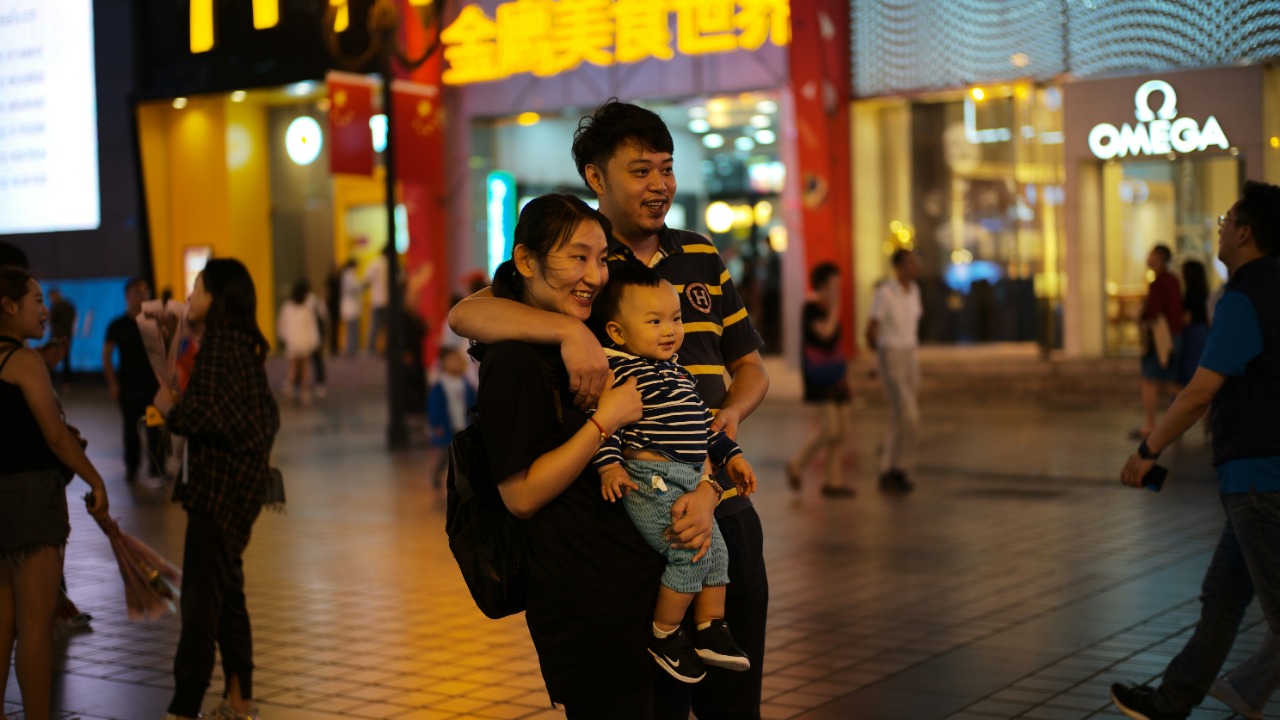
China has entered a new demographic era, with its population shrinking for a fourth consecutive year as births fall to record lows and deaths outpace new arrivals. The country now faces a structural shift that is reshaping its labor force, social contract, and long-term growth prospects far faster than many policymakers once assumed.
Behind the headline numbers lies a deeper story of delayed marriages, rising costs of child rearing, and fading confidence in the future, all converging despite generous state incentives to have more children. The result is a population that is not only smaller, but also older, and increasingly out of sync with the economic ambitions set in Beijing.
China’s shrinking population by the numbers
China’s total population fell again in 2025, extending a decline that has now lasted four straight years and confirming that the country has moved past its demographic peak. Official figures show that the number of residents dropped by 3.39 m, a contraction that reflects both fewer births and a rising tally of deaths in an aging society. Separate data put the national headcount at 1.405 billion, underscoring how quickly the country is drifting away from the era when its vast population was seen as an almost limitless economic asset.
The pace of decline is modest in percentage terms but striking in direction and persistence. One detailed breakdown notes that in 2025 the population shrank by 0.24 per cent, or 3.39 m people, a sharper drop than in previous years. Government statistics cited in multiple reports describe a country that once counted its citizens in upward surges, now grappling with a steady erosion, even as some tallies still round the total to about 1.4 billion people. The trend is clear, and demographers quoted across the coverage expect further decline in the years ahead.
Births plunge to historic lows despite policy shifts
The core driver of the population slide is not emigration or a sudden spike in mortality, but a collapse in fertility that has pushed births to unprecedented lows. During 2025, the number of newborns fell to 7.92 m, down from 9.54 m the previous year, a drop that one national tally describes as a 17 percent fall in Births. The National Bureau of Statistics has reported a birth rate of 5.63 per 1,000 people in 2025, down from 6.39 in 2023, while another official series puts the rate at 5.6, a discrepancy that reflects different counting approaches but not the underlying direction.
What unites the data is the conclusion that China’s fertility has fallen to its lowest level since the founding of the People’s Republic, despite years of policy reversals and incentives designed to encourage larger families. Authorities have scrapped the one-child rule, endorsed three-child households, and rolled out Financial support such as cash bonuses and extended maternity leave, yet official figures released on a recent Monday still showed the birth rate sliding to just 5.63 per 1,000 people. Reports from major cities, including places like Shenzhen in Guangdong province, describe young couples postponing or abandoning plans to have children, citing high housing costs, intense education pressures, and uncertainty about future income.
A rapidly aging society and economic headwinds
The demographic shift is not only about fewer babies, but it is also about a society that is aging at speed, with profound implications for growth, welfare systems, and China’s role in the global economy. Analysts warn that the combination of falling birth rates and a swelling elderly population is eroding the pool of working-age citizens that powered decades of export-led expansion. One detailed account notes that people in their 60s already make up about 23 percent of the total, a share that will rise further as earlier baby boom cohorts retire and smaller generations take their place.
This aging pattern is already complicating Beijing’s economic plans, from efforts to boost domestic consumption to ambitions to move up the value chain in manufacturing and technology. With the population shrinking and the workforce plateauing, the government must find ways to sustain growth while funding pensions and health care for tens of millions more retirees, even as local authorities try to rein in debt and property markets remain fragile. Several reports highlight how the demographic squeeze is feeding into a broader sense of “people shortage” that could weigh on productivity, strain public finances, and limit China’s ability to offset external pressures such as tariffs imposed by President Donald Trump.
Policy limits and the social choices behind the numbers
Beijing’s response so far has leaned heavily on incentives and exhortation, but the data suggest that policy levers have limited power against deeper social and economic currents. Local governments have experimented with housing subsidies, tax breaks, and direct payments for newborns, yet national statistics still record a fourth consecutive annual decline in the population. Demographers quoted in coverage of the latest figures argue that once fertility expectations fall and small families become the norm, it is extremely difficult to reverse the trend, especially in a context of high urban living costs and intense competition for education and jobs.
Social patterns are reinforcing the demographic slide. Reports describe rising divorce rates and delayed marriages, with several major municipalities noting sharp increases in couples splitting up even before full-year marriage data are available. In cities from Shenzhen to provincial capitals, young professionals speak of choosing careers, personal freedom, or migration over early parenthood, a shift that financial incentives alone are unlikely to change. As China’s population continues to contract and age, the country is being forced to rethink assumptions that once treated demographic scale as an automatic advantage, and to confront a future in which fewer people must carry a heavier economic and social load.