
Deep beneath the Yangtze River, a stalled tunnel threatened to become a symbol of sunk cost and technical overreach. Instead, Chinese engineers turned that buried setback into a showcase of precision, patience, and methodical risk management that now stands as a benchmark for complex underground work.
I see in this story not only a rescue of machinery but a quiet redefinition of what large infrastructure projects can attempt in hostile ground. The recovery of a stranded boring machine, and the decision to meet it underground with a second unit, has transformed a near-disaster into a case study in how failure can be dissected and then rebuilt into strength.
The day a mega-project ground to a halt
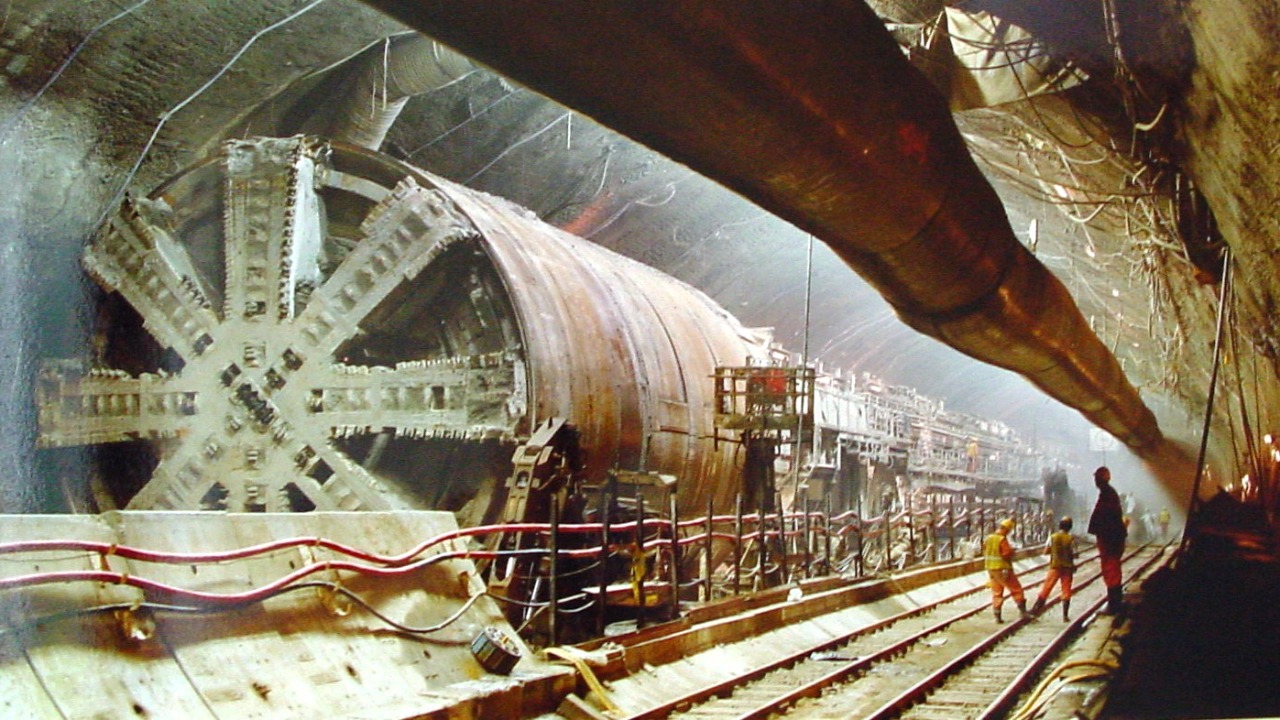
The drama began when a massive tunnel boring machine, part of a major crossing under the Yangtze River, came to a sudden stop. The machine was buried deep below the riverbed, trapped in unstable geology that threatened to flood or collapse if engineers tried to dig it out from the surface. The project risked becoming a monument to miscalculation, with a stranded cutter head entombed in soft ground and a half-finished tunnel stretching back to shore, as described in detailed accounts of the rendezvous beneath the Yangtze River.
From my perspective, what stands out is how quickly the narrative shifted from embarrassment to experimentation. Instead of abandoning the buried machine or attempting a risky surface shaft, the project team treated the failure as a live laboratory. They mapped the stalled equipment in three dimensions, recalibrated their understanding of the riverbed, and began to plan an underground interception that would demand millimetre-level accuracy over kilometres of tunnel. The crisis became the catalyst for a new level of technical discipline.
Turning a $50 million problem into a precision test
At the heart of the story was a stranded asset worth $50 million, a tunnel boring machine that could not simply be written off. The decision in China was to send in a second machine, drive it through the same treacherous strata, and meet the first unit face to face underground. That choice turned a financial liability into a live test of guidance systems, structural design, and geotechnical modelling, with the recovery effort framed as a landmark feat of $50 million engineering.
As I read through the technical descriptions, I was struck by how the team treated alignment as a non-negotiable constraint rather than a best effort. The second machine had to approach the first within a tolerance of just a few centimetres, all while the surrounding ground remained waterlogged and unstable. Guidance systems were tuned, survey networks densified, and every segment ring installed with the knowledge that a small deviation early on could make the final rendezvous impossible. The project became a live demonstration of how digital models, on-site measurements, and mechanical control can be fused into a single, precise trajectory.
Freezing the riverbed: 363 pipes and a man-made shield
Precision alone could not keep the river out, so the engineers turned to ground treatment on a scale that reads almost surgical. Workers drilled 363 pipes from within the stalled and approaching machines, using them to inject grout and then circulate coolant through the surrounding soil. In my view, that number, 363, is not just a statistic but a measure of how granular the control had to be to stabilise the ground and create a continuous frozen arch that could resist the enormous water pressure above, as detailed in reports on how Workers transformed the soil.
They did not simply freeze a block of earth and hope for the best. They monitored temperature gradients, adjusted flow rates, and treated the frozen zone as a living structure that had to be maintained until the two machines could be safely connected and the damaged components removed. As I see it, the operation turned the riverbed into a temporary, man-made shield, one that was arguably among the most water-pressure-resistant ground improvement systems attempted in such a setting. The success of that shield is what allowed crews to cut into the stalled machine, transfer loads, and eventually restore a continuous tunnel path without catastrophic inflow.
From local rescue to global playbook
What began as a localised rescue has, in my assessment, broader implications for how the world thinks about underground risk. By proving that a buried machine under a major river can be reached, stabilised, and salvaged, the team has expanded the envelope of what future projects might attempt in high risk geological environments. The rendezvous under the Yangtze River is now more than a dramatic anecdote, it is a reference case that design firms, insurers, and regulators will study when weighing whether to approve similarly ambitious crossings in other countries.
I also see a cultural shift embedded in the technical achievement. Instead of hiding the failure, the engineers and project leaders dissected it, documented the recovery, and turned it into a training ground for the next generation of tunnel specialists. The combination of a stranded $50 million asset, a second machine sent into harm’s way, and a lattice of 363 freezing pipes has produced a narrative that blends humility with confidence. For me, that is the real precision win: not just the alignment of steel and concrete under a river, but the alignment of planning, transparency, and learning that will shape how complex infrastructure is built long after the Yangtze project is complete.