
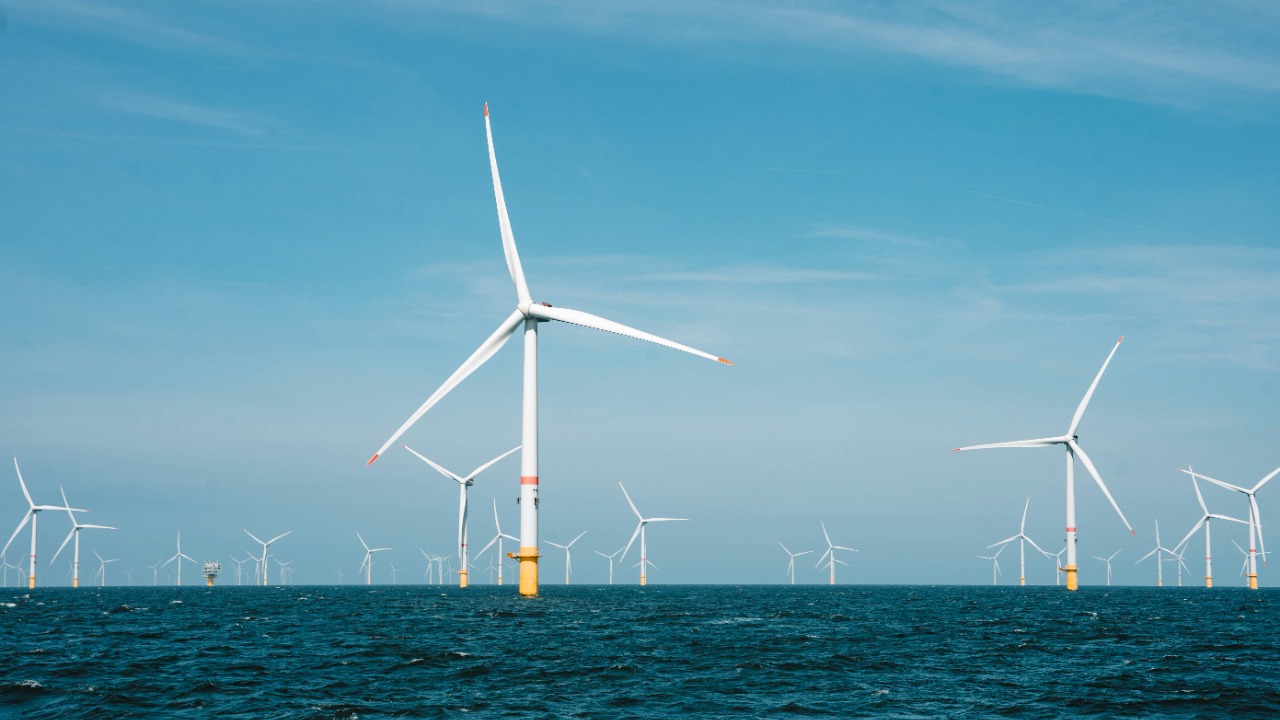
China has quietly crossed a symbolic threshold in offshore wind, installing a single turbine rated at 20 megawatts that can supply electricity for roughly 40,000 homes. The machine, standing in the waters off the coast of Fujian, turns a stretch of sea into a live test bed for how far industrial design and grid planning can be pushed. I see it as a marker of how quickly the balance of technological ambition in clean energy is tilting toward China.
Record‑setting hardware off the coast of Fujian
The new turbine sits in the waters off southeast China, in an offshore project near Fujian that has been built up as a strategic cluster for large scale wind. It is described as the world’s first 20 megawatt offshore unit, a label that matters because it signals a step change in how much power a single foundation at sea can host. The machine’s nacelle and tower were installed after a sequence of heavy lift operations that, according to an update marked “Updated 2026.01.13 19:03 GMT+8” and credited to Gong Zhe, involved equipment capable of lifting 2,000 tonnes, a reminder of how much industrial muscle is now routine in Chinese infrastructure work, as detailed in one installation report. I read that reference to “Updated 2026.01.13 19:03 GMT+8” as more than a timestamp, it is a marker of how quickly such milestones are now stacking up.
From a national perspective, the project fits neatly into a pattern. China has concentrated offshore wind development along its eastern and southeastern seaboard, and the choice of Fujian aligns with that strategy. Official accounts describe the unit as part of a broader build out in the waters off southeast China’s Fujian Province, framed within a narrative labeled “Xi’s Time” that links coastal energy projects to long term planning for the region, as set out in a Fujian overview. When I look at that framing, I see a deliberate attempt to present offshore wind not as a niche experiment but as core infrastructure for one of China’s most dynamic coastal economies.
Engineering scale, from 150 meter blades to 482 foot spans
The raw dimensions of the turbine are startling even by the standards of modern wind power. Engineers used advanced positioning systems to hoist three giant blades, each nearly 150 meters long, to a hub height of 174 meters, a level of precision lifting that would have been unthinkable in commercial projects a decade ago, according to a detailed technical account. Those figures, 150 meters and 174 meters, are not just trivia, they define the aerodynamic and structural envelope within which the turbine must operate in harsh marine conditions. When I picture a single blade longer than many skyscrapers are tall, I see how far composite manufacturing and logistics have advanced.
Other descriptions translate the span into imperial units, noting that the three blades reach 482 feet from tip to tip, a number that helps non specialists grasp the sheer footprint of the rotor swept area, as highlighted in an engineering analysis. That same analysis credits the design team with achieving a 20 percent reduction in turbine weight per megawatt compared with the industry average, a gain that matters because lighter machines are easier to install and place less stress on foundations, a point reinforced in a separate performance breakdown. When I connect those two facts, 482 feet of rotor and a 20 percent weight cut, I see a design philosophy that treats size and efficiency as complementary rather than competing goals.
From 40,000 homes to a new benchmark in global wind
The headline promise of this turbine is simple enough to grasp. At full output, the 20 megawatt unit is described as capable of powering about 40,000 homes, a figure that has circulated widely among engineers and enthusiasts and is echoed in community discussions that note how “China has installed the world’s first 20 MW offshore wind turbine” and stress that such hardware shows how renewable energy hardware is scaling, as captured in one online thread. I treat that 40,000 figure as a useful shorthand, a way to translate megawatts and kilowatt hours into kitchen lights and phone chargers. It is also consistent with more formal estimates that the turbine can power about 44,000 homes under favorable conditions, a range that reflects different assumptions about household consumption, as noted in the same technical account. When I weigh those numbers, I see a consensus that a single machine now rivals the output of a small conventional power plant.
What makes this more than a one off is how it fits into a broader race to build ever larger turbines. Earlier, China’s Dongfang Electric had already installed a 26 megawatt offshore prototype, described as the world’s largest yet, a machine that set a new ceiling for nameplate capacity and signaled that 20 megawatts would not remain the upper bound for long, as described in an industry overview. In that context, the Fujian turbine looks less like an isolated marvel and more like a production ready counterpart to earlier prototypes, a bridge between experimental hardware and the workhorse machines that will anchor commercial wind farms. I read the sequence from 20 megawatts to 26 megawatts as evidence that China is setting the pace at the very top end of turbine scale.
China’s offshore wind strategy and the next frontier
For me, the most revealing detail is how integrated this project is with China’s wider industrial system. The 20 megawatt unit in Fujian follows a series of advances that include the rollout of CRRC’s Qihang 20MW floating offshore wind turbine, which successfully rolled off the production line in Sheyang, Jiangsu, on October 10th, a milestone that showed how manufacturers are preparing for deeper water sites that require floating platforms, as described in a company briefing. When I connect Sheyang in Jiangsu with the fixed bottom unit off Fujian, I see a country methodically covering both the shallow and deep water segments of the offshore market. That breadth matters because it positions Chinese firms to export not just turbines, but complete solutions for very different marine environments.
The design philosophy behind the Fujian turbine also reflects a focus on lightweight construction and integrated systems. Technical summaries emphasize that the world’s first 20 megawatt offshore wind turbine installed in waters near Fujian Province uses an overall lightweight design, a choice that reduces material use and eases transport while still handling the stresses of typhoons and rough seas, as outlined in a design summary. Another account, labeled with terms such as Jan, New and China in its metadata, reinforces that this is treated domestically as a new record in offshore wind, a point underscored in a record summary. When I step back from the individual figures, from 150 meters to 482 feet and from 40,000 homes to 20 percent weight savings, I see a coherent strategy: use scale, coastal geography and manufacturing depth to turn offshore wind into a field where China not only participates, but sets the benchmark for what is technically and economically possible.