
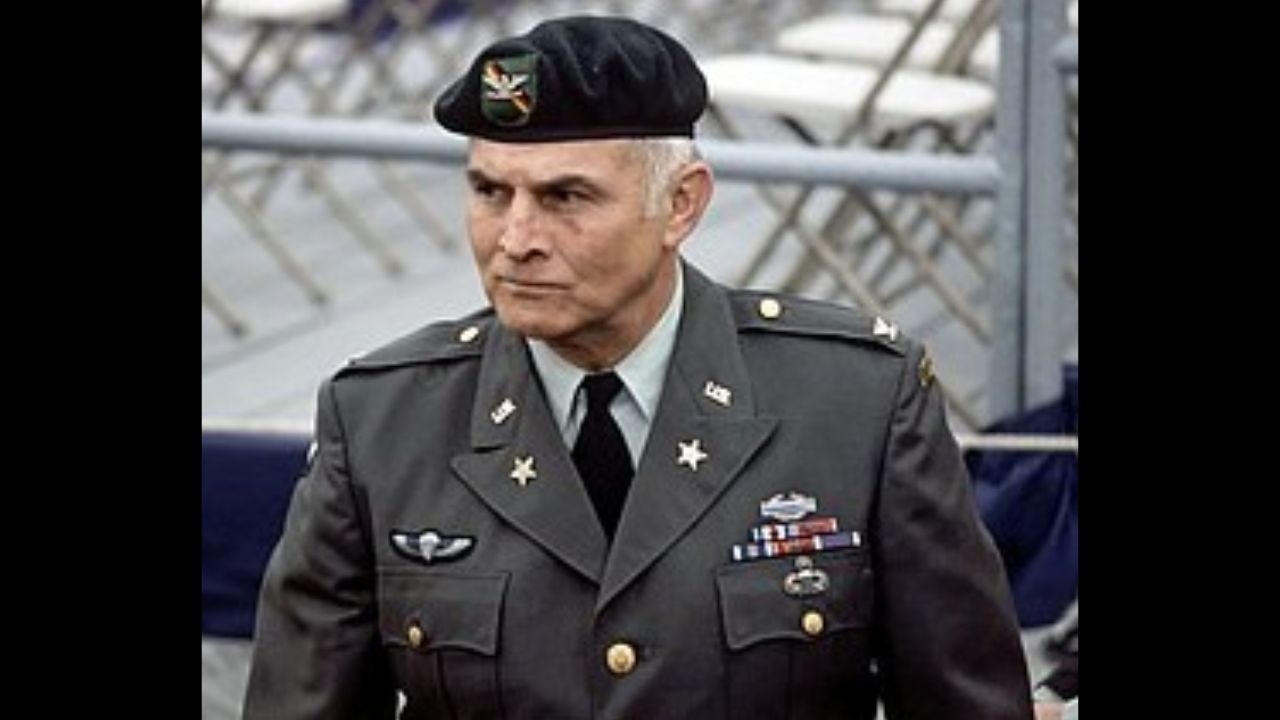
Charles Beckwith, a visionary U.S. Army officer, transformed the landscape of military operations by founding the elite Delta Force. His insights were heavily influenced by studying enemy special forces, leading to a revolutionary approach in tactical warfare.
The Genesis of Delta Force
Charles Beckwith’s inspiration largely stemmed from his time with the British Special Air Service (SAS) in the early 1960s. It was here that he observed the effectiveness of small, highly trained units capable of rapid, precise action. The SAS’s emphasis on initiative, adaptability, and rigorous training left a lasting impression on Beckwith. He saw the potential for a similar unit in the U.S. military, one that could operate independently and respond swiftly to emerging threats. Beckwith’s experience with SAS wasn’t just an eye-opener; it was a blueprint for what would become Delta Force.
The necessity for a U.S. counter-terrorism unit became increasingly apparent as global threats evolved in the latter half of the 20th century. The 1972 Munich Olympics massacre and other terrorist incidents highlighted the need for a specialized force capable of handling such situations. Beckwith recognized that traditional military units, with their rigid structures and conventional strategies, were ill-equipped for these new challenges. He envisioned a unit that could operate covertly, with the flexibility to adapt to various scenarios, whether it be hostage rescues or direct action missions.
However, Beckwith’s journey to establish Delta Force was not without obstacles. The military hierarchy was skeptical of his vision, questioning the need for a new kind of unit when existing forces could be expanded or retooled. Beckwith persisted, fighting through layers of bureaucracy and presenting numerous proposals to military leaders. His perseverance paid off in 1977 when Delta Force was officially established, marking a significant shift in how the U.S. approached special operations.
Studying the Enemy
Beckwith’s approach to building Delta Force was heavily influenced by a thorough analysis of enemy tactics. He understood that to outsmart adversaries, one must first understand their strategies and methodologies. By studying the tactics of various international adversaries, Beckwith was able to identify common patterns and weaknesses. This analysis informed Delta Force’s training and operational strategies, ensuring that they were always one step ahead.
Incorporating global special forces techniques was another cornerstone of Beckwith’s strategy. He drew lessons from elite units around the world, such as the Israeli Sayeret Matkal and the German GSG 9. These forces were renowned for their effectiveness in counter-terrorism operations, and Beckwith was keen to integrate their best practices into Delta Force. This included everything from training techniques to operational planning, ensuring that Delta Force was a melting pot of global special forces expertise.
Adapting to evolving threats was a constant focus for Beckwith and Delta Force. As new threats emerged, so too did the need for new strategies and tactics. This meant continuously learning from adversaries and adjusting training and operations accordingly. Whether it was the rise of non-state actors or the increasing complexity of urban warfare, Delta Force remained agile, always ready to meet the challenges of a rapidly changing world.
Training and Selection Process
The rigorous selection criteria for Delta Force are legendary. Those aspiring to join its ranks must endure a grueling process that tests both physical endurance and mental resilience. Candidates are subjected to extreme physical challenges, such as long-distance marches with heavy packs and intense obstacle courses. But physical prowess is only part of the equation. Mental toughness, decision-making under pressure, and the ability to work effectively in high-stress environments are equally crucial.
Innovative training methods are a hallmark of Delta Force’s preparation regime. Drawing inspiration from international forces, training is designed to be unpredictable and varied, ensuring recruits can handle any situation. Techniques such as live-fire exercises, close-quarters battle drills, and survival training are staples of the program. Recruits are also trained in advanced marksmanship, intelligence gathering, and foreign languages, making them versatile operators capable of operating in any theater.
Emphasis on versatility and adaptability is key to Delta Force’s success. Recruits are not just trained for specific missions but are prepared to operate in a wide array of scenarios and environments. Whether it’s desert warfare, jungle survival, or urban combat, Delta Force soldiers are equipped to adapt and excel. This versatility allows them to be deployed quickly and effectively, regardless of the mission or location.
Operational Successes and Challenges
Delta Force has been at the forefront of numerous key missions that have showcased its capabilities. From hostage rescues to direct action missions, the unit has proven its effectiveness time and again. One notable success was Operation Acid Gambit in 1989, where Delta Force operatives successfully rescued a CIA operative held hostage in Panama. This mission demonstrated the unit’s precision and ability to operate in high-risk environments.
However, not all operations have gone as planned, and Delta Force has learned valuable lessons from its failures. The 1980 attempt to rescue American hostages in Iran, known as Operation Eagle Claw, ended in tragedy, highlighting the complexities and risks involved in such missions. This failure prompted a reevaluation of tactics and strategies, leading to improvements in planning and execution that have strengthened Delta Force’s operations.
The evolving role of Delta Force in modern warfare continues to be shaped by new global threats. As terrorism and unconventional warfare become more prevalent, Delta Force remains a critical component of U.S. military strategy. The unit’s ability to adapt and innovate ensures that it is always ready to meet the challenges of a rapidly changing world.
Legacy and Influence
Charles Beckwith’s enduring impact on military tactics is undeniable. His vision for an elite, adaptable unit reshaped U.S. special operations and set a new standard for military excellence. Beckwith’s emphasis on initiative, adaptability, and rigorous training has become a model for special forces worldwide. His legacy lives on in Delta Force, which continues to be a benchmark for counter-terrorism operations.
The influence of Delta Force extends beyond the U.S. military, impacting elite forces globally. Many countries have modeled their special operations units after Delta Force, adopting similar training regimens and operational strategies. The ripple effect of Delta Force’s formation can be seen in the effectiveness and success of special forces units around the world.
Continuing Beckwith’s vision, current and future military leaders are building on his groundbreaking work. Delta Force remains at the forefront of military innovation, constantly evolving to meet new challenges. As the landscape of global threats continues to change, Beckwith’s legacy ensures that Delta Force will remain a vital tool in the defense of freedom and security.