
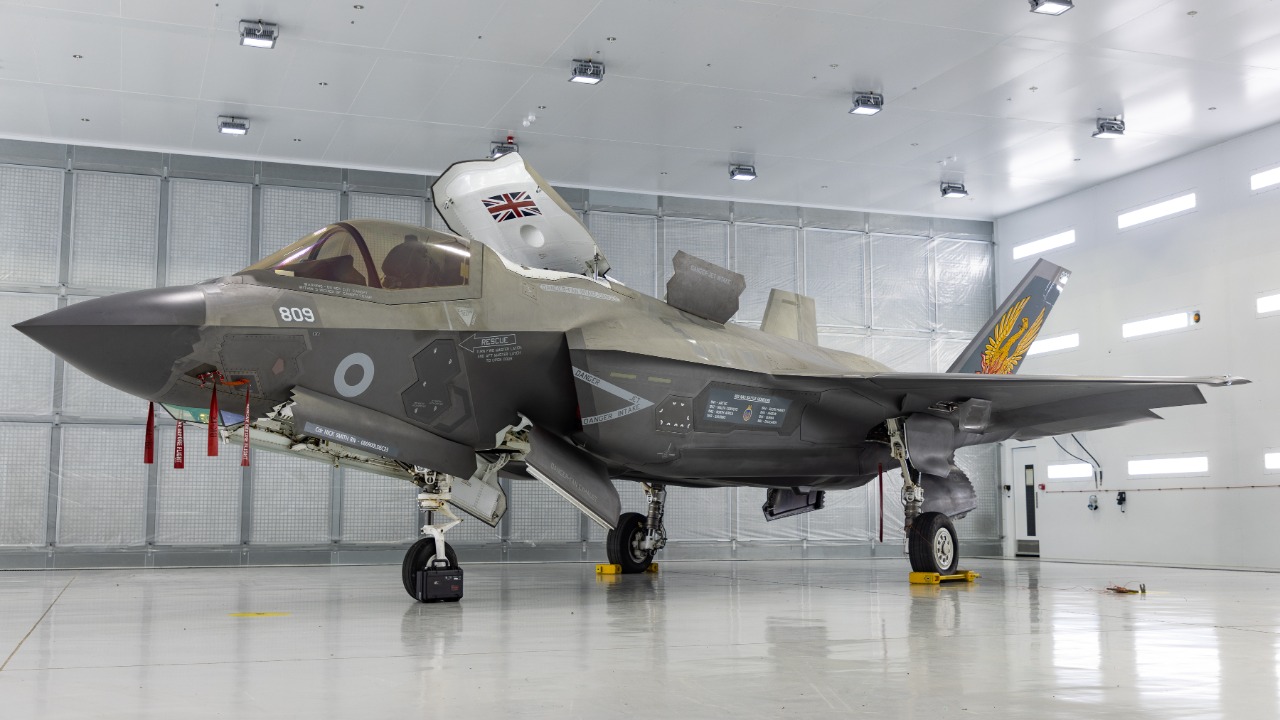
Canada’s long and often fraught journey toward a new fighter jet fleet has reached a tangible milestone, with the first F-35 for the Royal Canadian Air Force now moving through the assembly line. The aircraft’s construction signals that years of debate, delay, and political scrutiny are giving way to rivets, wiring, and flight testing in Texas.
For Canada, seeing its own F-35 take shape is more than a symbolic moment. It marks the point at which a contested procurement becomes a physical capability that will shape national defence, industrial policy, and alliance commitments for decades.
From ceremony floor to factory line
On a recent Monday, senior officers from the Canadian military travelled to the United States to attend a ceremony marking the advanced assembly of the country’s first F-35 at a major Monday production facility. The event highlighted that Canada’s first F-35 is in the final stages of assembly on Lockheed Martin lines, turning a long-discussed acquisition into a visible airframe. For Canada, which has wrestled with the F-35 choice for more than a decade, the sight of national markings on a stealth jet in a Texas hangar carries political and strategic weight.
The aircraft now in build is part of a broader production run that has been described as the first Canadian F-35. Now in Production Amid Ongoing. Representatives of the RCAF attend Key Ceremony at Fort Worth, underscoring that, whatever political debates continue in Ottawa, the program has moved into an execution phase. The jet is one of a planned fleet of 35 aircraft in early tranches, a figure that has become shorthand for both the scale of the commitment and the controversy around it.
A cornerstone of Canada and Canadian defence planning
Defence planners in Canada and Canadian leadership have long argued that a modern fighter fleet is essential to protect national airspace and meet alliance obligations. Official program documents describe the Future Fighter Capability Project as central to defending Canada and Canadian sovereignty while contributing to NORAD and NATO missions. The F-35 is expected to replace aging CF-18s that have struggled to keep pace with modern threats, especially in the Arctic and in high-end coalition operations.
Ottawa’s financial commitment reflects the scale of that ambition. The federal government has framed the F-35 acquisition as an investment estimated at nineteen billion dollars, described as the largest investment in the Royal Canadian Air Force in this generation. Official planning anticipates deliveries stretching toward the end of the next decade, with infrastructure and support systems in Canada built up in parallel to receive the jets.
Political hesitation and industrial bargaining
The fact that an aircraft is now on the line does not mean the politics have settled. Canada’s defence minister has stressed that the F-35 purchase remains under review even as the first jet is assembled, a message delivered in public remarks that acknowledged both the need to replace aging CF-18 fighter jets and the sensitivity of the price tag. Those comments, shared in a video posted and later updated, underline how politically charged the decision remains. Critics point to the long history of reversals around the F-35, while supporters argue that the aircraft is now the only realistic option that aligns with allied fleets.
That tension has roots in earlier efforts to balance capability with domestic industry. Canada delayed a final F-35 decision while Ottawa weighed a rival Gripen offer and sought stronger industrial returns from the F-35 program. Analysts noted that Canada’s long-delayed F-35A fighter jet program became a test case for how far a middle power could push for domestic work share without jeopardizing access to a high-end platform. The government’s eventual choice to proceed with the American jet, while still pressing for industrial benefits, reflected a calculation that alliance interoperability and stealth capability outweighed the alternative.
Point of no return for a contested program
Despite the rhetoric of ongoing review, many defence specialists argue that Canada has already crossed a practical threshold. One assessment concluded that Ottawa has already taken nearly all the steps it would have taken after a final contract, including securing training slots and upgrading bases such as Bagotville to F-35 standards. Canada has also committed to its first 16 jets with the United States, with Canada and Canadian officials indicating that the order for the country’s first 16 aircraft is proceeding, while some details with Lockheed Martin remain under review. With the first jet now in assembly, reversing course would carry high financial and diplomatic costs.
That reality sits alongside a narrative of missteps. One detailed critique argued that Canada Adopts The F-35 again, describing how Canada cycled through support, rejection, and renewed endorsement of the jet while still paying into the multinational program. Over that period, Canada has contributed tens of millions of dollars to remain a partner, even as domestic politics framed the aircraft as a symbol of procurement dysfunction. The current contract for a broader fleet, valued at about 27 billion dollars, is reflected in reporting that Canada has a contract to buy dozens of jets as part of the 27 billion dollar program, with the first 35 aircraft forming the core of the initial operational fleet.
Even as trade tensions flare between Canada and the United States, including disputes over tariffs on Canadian-made aircraft, the military presence at the F-35 ceremony in the U.S. underlined how tightly bound the two countries are in aerospace and defence. Reporting on the event noted that Monday’s gathering highlighted the first jet’s final assembly on Canada’s behalf at Lockheed Martin, even as trade officials sparred elsewhere. For all the controversy, the jet taking shape in Fort Worth is now the clearest sign that Canada’s fighter replacement saga is entering a new, more concrete phase, one measured in sorties and maintenance hours rather than talking points.