
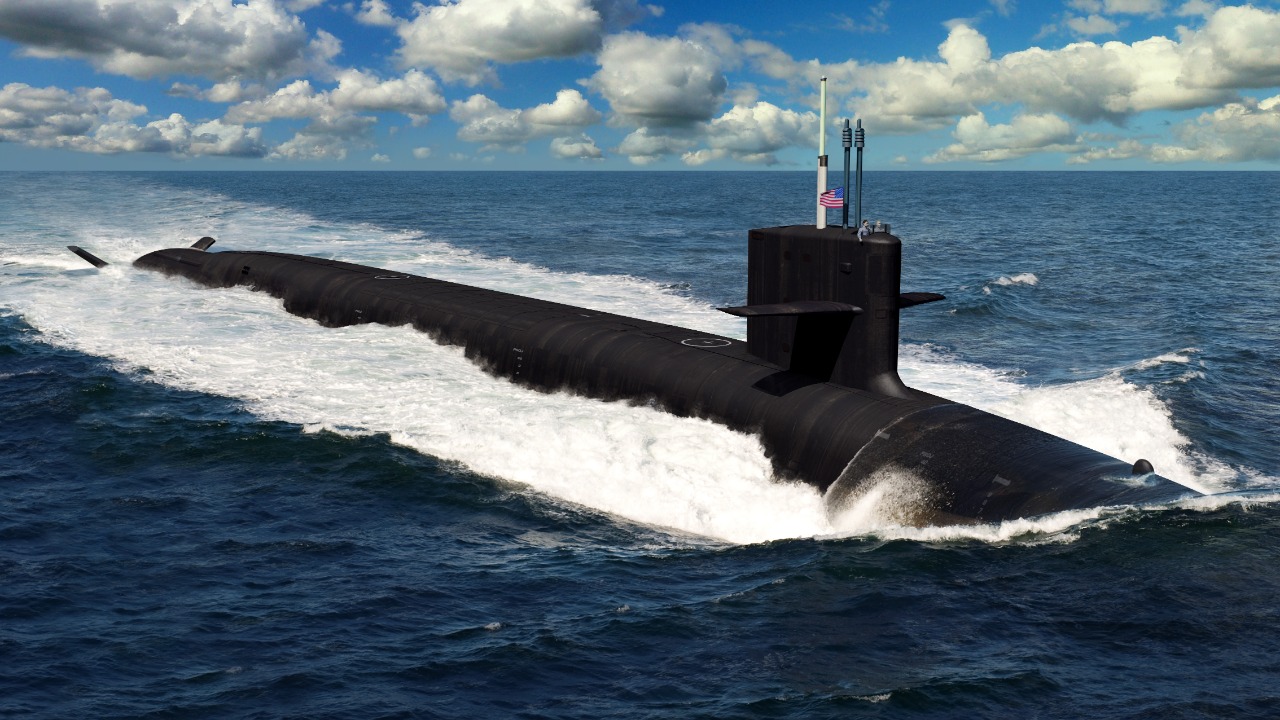
The United States is racing the calendar to field its next generation of nuclear missile submarines before the current fleet ages out. The Columbia-class program, already delayed, now sits at the intersection of industrial strain, technological risk, and unforgiving deterrence timelines. Whether Washington can stabilize this schedule will shape the credibility of the sea-based leg of the nuclear triad for decades.
I see a program that is both faltering and adapting, with pockets of real progress offset by structural weaknesses that money alone cannot fix. The question is not simply whether the schedule can be recovered, but whether the Navy and its partners can redesign how they build submarines fast enough to keep the nuclear deterrent intact.
The stakes: a deterrent on the clock
The Columbia-class boats are intended to replace the aging Ohio-class ballistic missile submarines that underpin the United States nuclear deterrent at sea. The Navy has said that SSBN-826, the lead boat, must be ready to start its first patrol by fiscal year 2031 to cover the retirement of the last Ohio-class submarines. That patrol date is not a planning nicety, it is the point at which gaps in continuous at-sea deterrence could emerge if the new hull is not ready. The Columbia boats are also larger and more capable than their predecessors, with analysts describing the Columbia Class as the Navy’s Biggest Nuclear Missile in terms of size and payload.
That scale comes with risk. A Congressional analysis notes that, During the period FY2021-FY2025, the Columbia-class procurement rate was 0.4 boats per year, reflecting how slowly such complex vessels can be brought into the fleet. At the same time, What GAO Found is that, Based on current construction performance, the Navy has already acknowledged schedule pressure on the first Columbia hull. The margin for further delay is thin, and the deterrent mission does not pause while the shipyards catch up.
A lead boat already behind schedule
The lead submarine, USS District of Columbia, is the bellwether for the entire class, and it is already late. Last year, the Navy estimated that District of Columbia would deliver in Fiscal Year 2028, one year later than initially planned, a slippage that Last projections did not anticipate. Independent assessments have described the Columbia program as roughly a year and a half behind, with The Columbia boats characterized as about eighteen months late relative to earlier plans, a lag that analysts warn could complicate The US Navy power projection doctrine.
Navy leaders have been candid with lawmakers that the first Columbia hull is about seventeen months late, telling Congress that SSBN-826 is roughly 826 m behind the original schedule, a figure that underscores how far the program has slipped even by the service’s own SSBN metrics. What GAO Found reinforces that picture, noting that, Based on current construction performance, the Navy expects the first Columbia class submarine to face continued schedule risk. When the lead boat slips, every subsequent hull tends to inherit that delay unless the industrial base can somehow accelerate later work.
Industrial strain and design risk
The Columbia-class program is colliding with the limits of the existing shipbuilding base. Columbia-class submarines are massive subs, so big that the existing infrastructure of the shipyards simply cannot sustain their construction tempo, and analysts warn that expanded facilities and new Columbia drydocks will become the norm rather than the exception. Since construction of the Columbia-class initiated 6 years ago, GD Electric Boat, Huntington Ingalls Industries, and Newport News have all been pressed to expand capacity, with a new floating dry dock delivered to Electric Boat to support final assembly and Since launching.
Technical risk compounds that strain. The turbine generator for the Columbia-class submarine is a first-of-its-kind design, essentially a new technology prototype that introduces additional uncertainty into the build, with program leaders warning that early assumptions about delivering by 2030 might be very optimistic for such a complex prototype system. Analysts who have examined the Columbia Class argue that the Navy’s Biggest Nuclear Missile Submarine Ever Has 2 Big Problems, pointing to supply chain fragility and workforce shortfalls as structural issues that the Big Problems that have already driven setbacks.
Money, contracts, and a restructured chain of command
Washington is trying to buy back time with cash and oversight. General Dynamics Electric Boat has secured a $2.28 billion contract modification from the U.S. Navy for the Columbia-class submarine program, a surge of funding that is meant to reinforce design work and stabilize production for the $2.28 billion effort. A separate award of about $2.3 billion is structured to spur Columbia construction, with a Congressional Research Service report highlighting how USS District of Columbia and USS Wisconsin, the lead and second boats of the class respectively, must stay on track to fulfill their nuclear deterrent role, a point underscored in the Congressional Research Service analysis.
Those dollars are flowing into a geographically dispersed industrial base. Work will be performed in Groton, Connecticut (70%), Newport News, Virginia (15%), and Quonset Point, Rhode Island (15%), a distribution that reflects how the Columbia effort leans on multiple yards and suppliers to execute the Work. At the same time, the Navy and the Pentagon are preparing to move new nuclear submarine construction efforts to a direct reporting structure, a shift in governance intended to tighten accountability and speed decisions for the Navy and the. Whether that bureaucratic realignment can translate into real schedule gains will depend on how aggressively leaders use their new lines of authority.
Can the schedule be saved?
There are signs that the industrial machine is finally starting to move at something closer to the required pace. General Dynamics reported a 60% progress in the construction of the first of the U.S. Navy’s new Columbia-class nuclear submarines, and Another significant development is that construction of the second submarine is already underway, indicating that the learning curve from the lead boat is beginning to benefit follow-on Another hull. A separate briefing noted that the first Columbia-class sub is about 60% complete and that the coming year will be pivotal for hitting key milestones, with program leaders stressing that additional workforce and supplier support is needed now to help Navy expedite that progress.
Yet the structural challenges remain stubborn. Issues for Congress for the Columbia-class program include the impact of an estimated 17-month delay in the delivery of the first boat, a concern laid out in a detailed Issues for Congress review. That same body of reporting notes that, During the period FY2021-FY2025, the Columbia procurement rate was 0.4 boats per year, and that the Report to Congress on Navy’s Columbia-class Submarine Program, On September 25, 2025, urged lawmakers to consider tools like block buys to sustain a rate of one boat per year in FY2026-FY2035, a recommendation captured in the Report. I see a narrow path in which new dry docks, concentrated funding, and tighter oversight can stabilize that cadence, but it will require sustained political will and a shipbuilding workforce that can grow as fast as the submarines they are being asked to deliver.